Bay Area home sales hit 11-year low for September

Orange County-based data firm Core Logic tallied up home sales across the Bay Area for September and found that the number of homes that changed hands was the lowest since 2007.

In September, Core Logic’s monthly tally indicated three straight months of year-over-year declines in the number of homes sold. At the time, analyst Andrew LePage suggested that lack of affordability was to blame (imagine that).

September marks the fourth straight month of decline; in fact, the month’s drop was as large as the entire summer’s combined decline. Here’s what we learned from the latest figures:

  • Across all nine counties, 5,970 homes sold publicly in the Bay Area. In September of 2017 there had been 7,667—an 18.9 percent year-over-year decline. That’s the lowest September total since 2007, when 5,014 homes sold.
  • As previously mentioned, this was the fourth straight month of year-over-year declines in the number of homes sold, with June down 8.6 percent, July 0.5 percent, and August 9.8 percent. Oddly, the 18.9 percent figure for September is exactly the sum of the three previous months’ declines combined.
  • The month-over-month figure from August to September was down even more: 22.1 percent. While month-to-month fluctuations are usually not considered as important, Core Logic says this is more than double the historical average decline between August and September, which is 11.5 percent over the past 30 years.
  • Both the largest number of sales and the largest decline occurred in Santa Clara County, where 1,357 homes sold—last year it was 1,737. Alameda County came in at number two, down from 1,558 in 2017 to 1,236 now. San Francisco’s decline was at 6.5 percent, from 385 last year to 360 in September.

The only thing that was up in September was prices, which leapt 9.3 percent compared to last year. However, this growth is less than the past few years at the same time.

Core Logic records the median sale price for a home in SF in September at $1.3 million and the price across the region as $815,000.

Article source: https://sf.curbed.com/2018/11/1/18051184/home-house-sales-report-september-2018-decine-sf

Posted in SF Bay Area News | Tagged | Leave a comment

Housing, by any means necessary


YIMBY Action’s mantra is to build as much new housing — all kinds of housing — as fast as possible. And they’re not afraid to anger anyone who might get in their way


YIMBY Action’s mantra is to build as much new housing — all kinds of housing — as fast as possible. And they’re not afraid to anger anyone who might get in their way


Just hours after Mayor London Breed was sworn into office earlier this year, about 50 members of YIMBY Action crammed into a cafe at Ninth and Mission streets for their monthly membership happy hour.

They drank complimentary beer and wine, provided by the building’s owner, developer Patrick Kennedy. The group’s executive director, Laura Clark, asked the crowd how many had attended Breed’s inauguration. About a dozen hands shot up.

“It has been an incredibly amazing day,” Clark said. “I want everyone to think about today — about this moment in time — as a major shift. We are finally seeing our government treating the housing shortage as an emergency. We are going to start seeing some real changes.”

The elevation of Breed — a powerful ally in San Francisco City Hall — was a watershed moment for the YIMBYs, the San Francisco-bred “yes in my backyard” movement that in less than four years has progressed from a few people plastering telephone poles with pro-housing fliers to an organization with 2,100 local dues-paying members. It has local chapters in a dozen San Francisco neighborhoods, 140 chapters around the country and world and lobbyists in Sacramento.

88f54 920x1240 Housing, by any means necessary

Ben Libbey, campaign manager for District Six supervisor candidate and YIMBY Action co-founder Sonja Trauss, colors in homes that have been contacted through phone and text banking at the YIMBY Action headquarters in San Francisco on Oct. 23.

(Jessica Christian / The Chronicle | San Francisco Chronicle)

This week, the YIMBYs’ pro-housing revolution is facing perhaps its biggest test. Its agenda is all over the Nov. 6 ballot. YIMBY-bred candidates are running for office in San Diego, Mountain View, Palo Alto, Oakland and other cities. YIMBY-supported measures will be voted on in dozens of cities across the state.

Related

In San Francisco, four Board of Supervisors candidates are card-carrying YIMBYs: movement pioneer Sonja Trauss in District Six, Theo Ellington in District 10, Trevor McNeil in District Four and Nick Josefowitz in District Two.

“Politicians are taking the YIMBYs’ energy and running with it,” said Jason McDaniels, a professor of political science at San Francisco State University.

Some of the YIMBYs’ biggest Bay Area battles will be decided in this election. Brisbane voters will decide whether to allow up to 2,200 units of housing on the 665-acre Baylands property just south of the San Francisco border. The group made the development a pet cause, showing up en masse at City Council meetings and drawing crucial support from sympathetic state lawmakers.

Matt Regan, senior vice president of policy for the Bay Area Council, a regional business association, said YIMBY advocacy also played a key role in another battle over housing density, pressuring Cupertino City Council in September to allow 2,900 housing units on the site of the failed Vallco shopping mall.

“I’ve been doing housing advocacy for 12 years, and for nine of those 12 years it was me, the developer and a bunch of angry old NIMBYs showing up at hearings,” said Regan. “Since the growth of the YIMBYs, it’s me, the developer, a bunch of angry old people and a bunch of angry young people.”

In Brisbane and Cupertino, he said, the YIMBYs “opened the eyes of local government officials that there is a large community out there that is not benefiting from the status quo.

“They feel the Bay Area is not a place they have a future,” Regan said. “They are mad as hell and doing something about it.”


88f54 920x1240 Housing, by any means necessary

YIMBY Action Executive Director Laura Clarke (left), chats with the organization’s Laura Fingal-Surma and Theo Gordon as they work on their computers during a YIMBY Action Leads meeting at the group’s headquarters in San Francisco.

(Jessica Christian / The Chronicle | San Francisco Chronicle)

The heart of the YIMBY San Francisco operation is a messy storefront on Mission Street near Ninth. For the past six months, the office has been home to YIMBY Action, Trauss’ campaign and CaRLA — California Renters Legal Advocacy and Education Fund — a YIMBY affiliate that sues communities, often in the suburbs, for blocking housing in violation of state law.

It shares the building with a cannabis dispensary, and frequently someone will wander in looking to make a pot purchase.

“I give them the housing pitch and they look confused,” Clark said. “I don’t let them out of here without some literature. The new flier has a smiling Muni bus on it — weed people should like that!”

On a Friday evening last month, about a dozen YIMBYs were sprawled on beat-up couches, laptops in front of them. Campaign signs were stacked against the wall. Piled on a front desk were stickers, buttons and posters with sayings like “Legalize Housing” and “Neighbors for More Neighbors.”

Trauss, exhausted from hours of canvassing apartment buildings, flopped on a couch. Other volunteers were coordinating campaign work over the Slack messaging network. YIMBY Action organizes primarily online: It oversees 85 public Slack channels, on which an average of 875 messages are shared each day. On Twitter, there are at least that many YIMBY-related postings in a given day.


The high-densitySoMa Square Complex, a high density development near Folsom and Third streets in San Francisco, Calif. is seen Saturday, Sept. 22, 2018. Complexes like this one align with the housing views brought forward by YIMBY Action.

(Jessica Christian / The Chronicle | San Francisco Chronicle)

All this activity came about because of the blossoming of jobs, mostly in technology, that grew out of the wreckage of the Great Recession. Before the economic downturn in 2008, the city had already shown signs of becoming an urban alternative to Silicon Valley, not just for startups but for established businesses like Google, which found that a San Francisco address helped with recruiting.

The city saw a 71 percent increase in tech jobs between 2010 and 2015. Salesforce decided to focus growth in the city. The new crop of tech companies — Twitter, Yelp, Dropbox, Square, Reddit, Airbnb, Lyft, Uber and others — all located in the city.

These companies found plenty of office space. But the new workers were less fortunate when it came to housing. Between 2010 and 2015, San Francisco produced one new housing unit for every 8.2 new jobs. The Bay Area as a whole was only slightly better, creating one unit for about every six jobs. The imbalance helped drive up housing costs in a region already among the most expensive in the country:

• The median house in the city now costs $1.62 million, double what it did five years ago.

• The average sale price of a house in San Francisco rose by $205,000 in the first half of 2018, the largest six-month increase in history, according to real estate agency Paragon.

• About 66 percent of homes in the city are valued at more than $1 million.

• Only 18 percent of Bay Area residents can afford a median-priced home.

To YIMBYs, the reason for the housing crisis is simple: Decades of restrictive zoning laws and political obstacles have led to a dramatic underproduction of housing.

Multifamily development is essentially illegal on 90 percent of the land in many Bay Area suburbs. Even in dense San Francisco, 72 percent of the land where housing is allowed is restricted to single-family homes. The down-zoning of city neighborhoods — much of it in the early 1980s on the west side of San Francisco — has left a new generation of urban dwellers with scant affordable rental or home-buying options.

YIMBYs advocate for relaxing zoning to allow for taller, denser buildings, and for eliminating community planning processes that allow residents to block, delay or reduce the size of developments. They bristle at most of the reasons longtime residents cite for opposing new housing: neighborhood charm and character, increases in traffic or lack of parking.

88f54 920x1240 Housing, by any means necessary

District Four candidate Trevor McNeil helps his son Nicasio, 1, reach the basket at Playland on 43rd Avenue in San Francisco.

(Gabrielle Lurie / The Chronicle | San Francisco Chronicle)

On the campaign trail in his development-averse Sunset District neighborhood, McNeil, a public school teacher with three small children, illustrates his YIMBY philosophy by pulling up an early 1930s picture of rolling sand dunes on his iPhone. It’s an image of 28th Avenue, at exactly the spot the home he rents now stands.

“When that house was built it added to the congestion and density and traffic, and I assume it disrupted the character of the neighborhood,” he says. “Now it’s a classic Sunset house. I live there with my family. I’m grateful that someone had the audacity to build it.”

Critics say the YIMBYs’ “build, baby, build” approach is ham-fisted and simplistic. Some characterize them as pawns of gentrifying developers, preaching an urbanist ideology that gives political cover to profit-driven builders whose towers attract high-earning residents and fuel the displacement of existing communities.

Others say YIMBYs are disdainful of the history and character that make San Francisco unique. YIMBYs, they charge, are perfectly willing to kill the city’s spirit to provide housing for high-income tech workers. Trauss has called neighborhood character “a cancer.”

“All the things we cherish as San Franciscans, they never mention,” San Francisco Planning Commissioner Dennis Richards said. “They … don’t seem to appreciate what it is about San Francisco that makes it special and how we might grow while maintaining that.”

At public meetings, Trauss and Clark and supporters regularly show up to speak in favor of projects. They also have disparaged neighbors opposed to development: On Twitter, YIMBYs have called Coalition of San Francisco Neighborhoods President George Wooding a “crypto-fascist.”

“Rather than extending an olive branch and sitting down to talk about how we can achieve more density, the YIMBYs’ approach has always been about confrontation,” said Wooding, a Midtown Terrace resident. “The west side is always getting punched in the mouth by YIMBY. We are supposed to be pilloried because we don’t want to have a 60-foot (tall) building besides a 26-foot home?”

This confrontational style has alienated even some residents who consider themselves pro-housing.

In 2015, Jim Worshell, president of the Hayes Valley Neighborhood Association and the San Francisco Victorian Alliance, invited several YIMBYs to a meeting. He said YIMBY organizer Brian Hanlon told the assembled neighbors: “We can’t wait for you to die and rip those pretty Victorians down.”

“That was their message: ‘I don’t care about preservation or you people with those old Victorians. It’s our time now and you should die. You are in the way,’” Worshell said.

Hanlon, now the head of California YIMBY, said he doesn’t remember the meeting or saying such a thing.

“I’ve said some dumb things, but I doubt I said that,” he wrote in a text. “I actually like lots of the old Victorians.”

S.F. State professor McDaniels said though the movement has matured, it remains “disruptive.”

“They don’t do things to make friends with the establishment,” he said. “They can be abrasive. They don’t apologize.”


88f54 920x1240 Housing, by any means necessary

Board of Supervisors District Six candidate Sonja Trauss prepares to canvas with her 10-month-old son Anton, her husband, Ethan Ashley, and volunteer Marielou Pascua.

(Jessica Christian / The Chronicle | San Francisco Chronicle)

Trauss, a Philadelphia native and self-described anarchist, came to the Bay Area in 2011 to help care for a sick relative. Having recently left the economics Ph.D. program at Washington University in St. Louis, she found work teaching high school and college math. She bounced from rental to rental, living in El Cerrito, West Oakland and then SoMa in San Francisco.

As the new tech boom began to take shape, Trauss struggled to find an affordable place to live. Open houses for apartments were mobbed; rent and transportation costs were eating up more than 50 percent of her income.

Trauss saw the problem as a deficit of new housing, so she started paying attention to things like zoning, height limits and land-use politics. She attended marathon Planning Commission meetings where residents lined up to oppose new housing units for seemingly every reason imaginable — shadows, neighborhood character, parking, traffic, gentrification, historic preservation, displacement.

The result, she found, was always the same: “Which is the building doesn’t get built,” Trauss said. “And if the building doesn’t get built, where are those people going to live? They are going to live in West Oakland.

“They are going to force out lower-income people, whether that’s in the Mission, Potrero or West Oakland,” she said. “Or the Tenderloin. Or North Beach.”

Trauss felt there was an untapped constituency of frustrated, pro-housing renters in the city. She thought if she could convince those people to speak out, the debate over housing production would become more balanced.

She started recruiting like-minded commenters from real estate-focused websites like Socketsite and Curbed and badgering them to attend public hearings. She created a mailing list and eventually founded the San Francisco Bay Area Renters Federation — SFBARF.

SFBARF started putting posters up around the city. The first were focused on Balboa Reservoir, a 17-acre, publicly owned parking lot next to City College. The posters read: “Housing Crisis? San Francisco needs all 6,000 units at the Balboa Reservoir. Tell the Planning Department In Person.”

A poster about the “Monster In the Mission” development at 16th and Mission streets said: “When we were promised 40: what’s the point in 10 stories?” Another, about a proposed project at 75 Howard St., read: “Go Big Or I Can’t Go home.”

Almost immediately, Trauss and her supporters became pariahs in some San Francisco progressive camps. The group Gay Shame put out its own poster, proclaiming “S.F. barfs on Sonja Trauss” and calling her the “grand marshal … of a big development-backed hit squad.”

That was news to developers, who were initially skeptical of the group, said Jason Check, whose Raintree Partners has built several housing projects in the city. Check recalled receiving a voice mail from Trauss offering support of a 93-unit project he was trying to get approved in Dogpatch.

“I remember saying, ‘I’m not sure if I should call this person back,’” he said. “We definitely felt a little cautious meeting with her because it was such a foreign concept.”

But after meeting with Trauss, he was convinced there was no ulterior motive.

“We didn’t solicit Sonja in any way or ask for her support, but she showed up to every hearing and brought some of her fellow YIMBYs with her.”

While they helped Check get his Dogpatch project approved, several of the YIMBYs’ most championed San Francisco projects continue to face strong opposition.

The 330-unit Monster in the Mission project has been stalled for more than five years. The Balboa Reservoir is moving forward slowly, but with many fewer housing units than most YIMBYs had hoped. An affordable housing project near the Forest Hills Muni Station was withdrawn in the face of opposition. The Planning Commission recently rejected a YIMBY pet project at a laundromat on Mission Street.


e3aa0 920x1240 Housing, by any means necessary

YIMBY Action visitor Lenny Van Boven sings his name on the walls of the group’s headquarters in San Francisco.

(Jessica Christian / The Chronicle | San Francisco Chronicle)

At the state level, the YIMBYs have been far more successful.

In 2017, the group backed state Sen. Scott Wiener’s SB35, which Gov. Jerry Brown signed. It expedites approval of housing projects with between 10 and 50 percent affordable units.

On Sept. 30, Gov. Jerry Brown signed AB 2923, which gives BART the power to rezone its parking lots for housing, even if local residents or elected officials oppose it. Assemblyman David Chiu of San Francisco, who wrote the bill with Assemblyman Tim Grayson of Concord, has aligned himself with the YIMBY movement, as have Wiener and state Sen. Nancy Skinner of Berkeley.

Chiu said that some anti-development homeowners, particularly in the East Bay, fought hard against the bill and that the YIMBYs were an important part of the coalition that pushed it through.

“The YIMBYs have brought a new energy to the state housing discussion,” Chiu said. “Many of us pro-housing legislators have believed that addressing our housing shortage must be a part of alleviating our housing crisis, and YIMBYs have created a real constituency around that idea.”

Amie Fishman, executive director of the Non-Profit Housing Association of Northern California, said the YIMBY movement has evolved somewhat from its early days, and now supports protections for existing low-income residents so they don’t get priced out of the Bay Area.

She also said the movement didn’t seem to realize that housing development advocacy was nothing new, that groups like hers had been doing it for decades.

“In the beginning, it was a pretty libertarian message — that deregulating the market would solve all of the problem,” Fishman said. “There was a huge pushback around that — the market will never on its own serve the lowest-income, highest-need communities. They have listened and have been more responsive.”

Richards, the planning commissioner, said he believes the YIMBY movement will continue to have have more success on the state level than locally.

“Their game is now in Sacramento,” he said.

Marjan Philhour, senior adviser to Mayor Breed, said that the movement, and the housing crisis generally, would continue to politicize a younger generation.

“They have an inclusive approach and reached a lot of people who might not have been inclined to vote, who were not engaged,” she said.

e3aa0 920x1240 Housing, by any means necessary

Multiple campaign posters are seen in the windows of the YIMBY Action headquarters in San Francisco, Calif. Tuesday, Oct. 23, 2018.

(Jessica Christian / The Chronicle | San Francisco Chronicle)

Tuesday’s election should provide an indication of how far the YIMBY movement has come — and how far it has to go. All four of the San Francisco supervisor candidates the group is backing are underdogs, including Trauss.

If she wins, Trauss said, she will fight to rezone the city’s west side. If she loses, she plans to focus on another part of the YIMBY agenda: using state laws to try to force other Bay Area towns to accept new development.

“I’ll just go back to suing the suburbs,” she said.

J.K. Dineen is a San Francisco Chronicle staff writer. Email: jdineen@sfchronicle.com Twitter: @sfjkdineen


-

Article source: https://www.sfchronicle.com/politics/article/How-powerful-is-Bay-Area-s-pro-housing-13352047.php

Posted in SF Bay Area News | Tagged | Leave a comment

San Francisco-area home sales suffer slowest September in 11 years

<!– –>


4b27d 105543366 GettyImages 875403094.600x337 San Francisco area home sales suffer slowest September in 11 years


Home sales in the San Francisco Bay area have been falling for months, but in September buyers pulled back in an even bigger way.

Sales of both new and existing homes plunged nearly 19 percent compared with September 2017, according to CoreLogic. It marked the slowest September sales pace since 2007 and twice the annual drop seen in August.

“Job growth and demographic trends have created plenty of housing demand, but the combination of higher home prices and increasing mortgage rates have priced out some buyers and prompted others to take a wait-and-see stance,” said Andrew LePage, a CoreLogic analyst who had much the same commentary in a report Tuesday on why sales in Southern California fell sharply as well.

He did note, as with Southern California, that this September had one less business day for recording transactions. Adjusting for that, the annual sales decline would be about 15 percent – still one of the larger declines in recent years.

The Bay Area report covers homes and condominiums sold in Alameda, Contra Costa, Marin, Napa, Santa Clara, San Francisco, San Mateo, Solano and Sonoma counties.

Unlike in Southern California, where home price gains shrank to 3 percent annually, the median price paid for Bay Area homes in September, $815,000, was still up 9.3 percent compared with a year ago. In both May and June, the median price hit $875,000, the highest on record.

“Although still larger than in many regions, the 9.3 percent year-over-year gain in the Bay Area’s median sale price was the lowest in 15 months,” LePage said. “Price growth could continue to weaken if sales continue to slow amid a rise in listings.”

He said this would be a welcome development for possible homebuyers, although there still could be a hurdle: monthly mortgage payments pushed up by higher rates.

“The principal-and-interest mortgage payment on the median-priced home was up 21 percent on a year-over-year basis this September because mortgage rates increased about 0.8 percentage points over that period,” LePage said.


4b27d 105528501 4ED2 SPEC IstheConsumer 102418.600x337 San Francisco area home sales suffer slowest September in 11 years


Buyers in the Bay Area had been hampered by high prices due to very low supply, but that dynamic is changing. Active listings in October were up 130 percent year-over-year in the San Jose-Sunnyvale-Santa Clara market and up 42 percent in San Francisco-Oakland-Hayward, according to realtor.com.

“Buyers have been struggling for four years to find homes in their price range, while dealing with bidding wars and multiple offer situations,” said Danielle Hale, chief economist for realtor.com. “The inventory increase will not solve the problem overnight, but it should provide some relief to those still in the market, especially if the growth we’re seeing in more affordable homes and condos holds steady.”

Affordability, however, continues to weaken, as mortgage rates rise and home values grow. While inventory is up, it is up from a critical shortage, and supply and demand are still not in balance.

4b27d 104006269 OLICK D  230 RGB.60x60 San Francisco area home sales suffer slowest September in 11 years

Playing

Share this video…

Watch Next…

News Tips


Article source: https://www.cnbc.com/2018/10/31/san-francisco-area-home-sales-suffer-slowest-september-in-11-years.html

Posted in SF Bay Area News | Tagged | Leave a comment

How To Prepare For The Next Real Estate Downturn

In 2005, everyone was buying houses. It was common knowledge you were stupid to wait. House prices flourished and loans flowed like drinks at an open bar. Lots of people made money-until they didn’t. In 2009 the music had stopped and people were frantically looking for someone to pass the hot potato to. By 2010, those “smart” people were the ones looking stupid. Foreclosures dominated the market place and the great real estate boom of ‘05 looked more like a ghost town as the real estate downturn hit full effect.

Fast forward to 2018 and it’s starting to look a little familiar. In Northern CA, we frequently see homes sell significantly over asking price, regardless of appraisals or the condition of the home. Demand is outpacing supply, and prices are rising again. In hot rental markets across the country, we continually see local investors totally puzzled by how much out of state folks are willing to pay for traditionally modest priced homes.

So what do you do? Is now the time to buy, or should we be waiting for the next crash? Are we in 2005 at the peak of the market, or are we in 2010, with plenty of room to run?

If you want to make the best decision, you have to consider all the facts. Before I make a black or white suggestion, let’s take a second to consider several market factors, strategies, and possibilities. There just may be a way to invest now, and still be primed to take advantage if the market crashes later.

Are we in a bubble?

When we refer to a “bubble”, we are typically referring to an unrealistic, unsustainable value in an asset class that can’t be reasonably expected to continue. In 2005, home values weren’t based on affordability, they were based on horrible loans that allowed people to borrow much more than they could afford over the long term. When those loans reset, nobody could pay them, and the market was flooded with foreclosures. Supply increased while demand dropped and the market went south.

In today’s market, we see a much different scenario. I work as a real estate agent in the SF bay area, and I’ve yet to see any funky, clearly foolish loans from any of the buyer’s I’ve worked with. Rates are generally fixed over 30 years, do not adjust, and are absolutely reasonable based on the buyer’s income. It’s obvious that home prices are up, what’s not often talked about is how wages are up too. Let’s not forget that there have been 13 years of wage increases since 2006. That’s a pretty healthy number. Prices may be higher, but they’ve increased in proportion to wages as well. The danger of a massive wave of loan defaults hitting the market all at once isn’t all that high.

So are we in a bubble? In some areas, possibly. But remember, as long as people can afford their payments, it would take some external event to cause a housing problem. Things like an overall recession, hit to the job market, etc. If that happens, many asset classes are going to take a hit, not just real estate values. The point is, don’t be lazy and assume just because home prices seem high that automatically means we are in a bubble or seeing a repeat of 2005. There are lots of other variables to consider.

What happens if I invest too early and the market crashes?

This seems to be every investors worst fear. It’s a bit of a catch-22. If you invest too early and the market crashes after, you missed the “opportunity of a lifetime”. If you wait for the market to crash, you could spend years not making any financial progress. Then, when it does crash, all you hear is how real estate will never recover and you end up too scared to pull the trigger. Either way, no matter the current market, it’s hard to take the plunge and jump in.

This question also assumes real estate markets are the same everywhere. A “crash” in one area doesn’t always mean there will be a crash in another. Some markets are driven by specific economic factors that aren’t affected by the rest of the country. Example? Texas. In 2009-2010, when many of the rest of the country (CA, AZ, NV, FL, to name a few) were all getting hammered, Texas went by relatively unscathed. The same goes for parts of the midwest that tend to operate independently of coastal markets.

So what’s the solution? Should you buy now, or buy later? Finding a way to have your cake and eat it too isn’t as hard as you may think. The trick is understanding why it is your actually afraid to buy now and miss out later. It can be summed up in two words-Opportunity Cost.

Opportunity cost is an economic term that refers to the price you pay to miss out on one option when you commit to another. In this case, buying house A can be a problem if you miss out on house B. If house B ends up being better (as in, you bought it after the market crashed and paid less), your opportunity cost would be the money you lost that you could have made if you’d waited for house B.

This fear of the unknown holds a lot of investors back. So how do you beat it? With the secret wise investors have been using for years. The BRRRR method.

What is the BRRRR method?

BRRRR is an acronym that stands for Buy, Rehab, Rent, Refinance, Repeat. It is the order of which you conduct the various stages in the investment cycle when you buy a rental property. When you BRRRR correctly, you can end up buying an investment property with zero money down. This often ends up resulting in a cash flowing property that’s been fully rehabbed and sometimes puts more cash in your pocket than you put in. When you recover 100% or more of your capital, opportunity cost ceases to be a factor to consider. It stops being about “House A, or House B?” and instead becomes “House A, then House B”.

How is this possible? When you buy a house traditionally, you put a hefty down payment down, then include money for closing costs and the rehab. The total of that money you put down makes up your investment basis that is used to calculate your ROI. With the traditional model, there is always a heavy opportunity cost. If you put 35k down, pay 5k for closing costs, and have a 10k rehab, that’s 50k of your money you cannot invest anywhere else.

In this case, if the market crashes, you don’t have that 50k to invest in the down market, so your opportunity cost is high. This is the reasoning behind the “fear of missing out” that keeps investors from getting started investing in real estate. So how do you overcome this? My solution is to remove the opportunity cost. If you can buy a property and recover the capital you used to buy it, what stops you from buying the next one too?

BRRRR’ing successfully is the way I accomplish this. In a hypothetical BRRRR deal, you would buy a fixer upper property for 60k that needs 40k of rehab work. Throw in the same 5k for closing costs and you end up with a total of 105k, all in.

At a Loan-to-Value ratio of 75%, if the property appraises for 135k once it’s rehabbed and rented out, you can refinance and recover $101,250 of the money you put in. This means you only left $3,750 in the property, significantly less than the 50k you would have invested in the traditional model. The beauty of this is even though I pulled out almost all of my capital, I still added enough equity to the deal that I’m not over-leveraged. In this example you’d have about 30k in equity still left in the property, a healthy cushion.

It’s not too difficult to save another $3,750. Significantly easier than $50,000. This means you’ll have all that money to put into the next house when the market crashes. If you do this effectively, you can pull out even more money than you put in (by buying great deals and rehabbing prudently), growing your capital and the ability to invest in future properties. Voila! No more opportunity cost.

How do I know which market to invest in?

While no one has a crystal ball and can tell where the market will crash and when, there are some pretty standard metrics you can use to hedge your bet against a crash.

Diversified Economy-You want to avoid any area that is dependent on one employer or economic driver. Detroit is a great example. When the auto industry failed, so did all the home values. With no one able to find work, all the rentals went vacant (and so did everything else). Other examples would be North Dakota (oil dependent), an area known only for tourism, or a coastal village in Alaska that is completely dependent on fishing.

C-class or better neighborhoods- Real estate investors tend to evaluate neighborhoods like school grades. A-class properties are the best spots in town, B-class are where the upper middle class lives, C-class are your average neighborhoods with lots of renters, and D class properties are problematic with high crime and high vacancy rates.

You want to avoid anything less than a C-class neighborhood. By investing in nicer neighborhoods in economically diverse markets, you avoid the worst of the negative factors when a market turns and can ride out the storm. For more information on how a property is classified, ask a local top producing real estate agent or property manager.

Cash Flowing Properties- If your property cash flows (brings in more income than it costs to own), it doesn’t really matter what happens to the value. If prices drop, that doesn’t impact you unless you sell. Experienced investors buy properties that produce income and only experience price appreciation as icing on the cake.

Look for properties in areas that meet the “1%” rule. If a property will rent for 1% of the purchase price every month (a $100,000 that rents for around $1,000 a month), it is very likely to cash flow positively. If you focus on buying in areas like this, and avoid bad neighborhoods and non-diversified economies, it won’t matter what the market does. Your investment will be safe.

If you’d like more information about these concepts, check out my book “Long Distance Real Estate Investing: How to Buy, Rehab, and Manage out of State Rental Property” where I spell out my system for choosing markets, building a team, and rehabbing properties. We can never know the future, but if you follow the advice in this post you’re much more likely to grow your wealth over time. Don’t wait to buy real estate, buy real estate and wait!


Article source: https://www.forbes.com/sites/davidgreene/2018/10/30/how-to-prepare-for-the-next-real-estate-downturn/

Posted in SF Bay Area News | Tagged | Leave a comment

San Francisco ranked fifth best city for tech jobs

The Computing Technology Industry Association [CompTIA], a nonprofit trade association for people in the technology industry, ranked which American cities are best for jobs in tech sector. Among the surprises, Silicon Valley hubs San Jose and San Francisco came in fourth and fifth, respectively, beneath cities in North Carolina and Texas.

The report, “Tech Town USA,” compared 20 metro areas “where demand for tech workers is greatest,” and compared how great demand for jobs in those areas were weighed against the local cost of living.

Despite the fact that Silicon Valley is, well, Silicon Valley, the top two spots on the list went to cities in North Carolina—Charlotte and Raleigh, respectively—with Austin coming in third. All California destinations ranked somewhere below.

Here’s a look at some of the results:


  • In this assessment, the best place to work in tech isn’t Silicon Valley but the Tar Heel State: “North Carolina was a major stand-out, with Charlotte earning the number one spot and Raleigh just behind at number two.”
  • The Bay Area underperformed, though the sheer power of Silicon Valley is still hard to ignore: “Despite cost of living factors, tech-heavy hitters like San Jose and San Francisco and themselves at number four and number five, respectively— as opportunity in these areas continues to skyrocket faster than housing costs.”
  • No big surprise here: The difference maker was the cost of living: In the rankings, San Francisco and San Jose earned high marks for job opportunities. But for ease of paying bills, SF came in dead last at No. 20 out of 20 cities. San Jose came in at No. 19.
  • Silicon Valley workers net huge paychecks, but sometimes it’s still just not worth it: “While tech workers in San Jose earn a median income of $122,242 per year—the highest salary on our list—would-be California dreamers need to take costs into account. Those who call Silicon Valley home understand that everything is more expensive—43.6 percent more than the average cost of living in the U.S.”
  • While housing is one element of the cost of living, the contrast is stark: According to the California Association of Realtors, the median price of a house in San Francisco and Santa Clara County is $1.5 million and $1.25 million, respectively. In No. 1 ranked Charlotte, North Caroline, it’s over $300,00. Median rent for a one-bedroom apartment in SF on Zumper is $3,650/month; in Charlotte, it’s $1,150/month.
  • Nevertheless, Silicon Valley remains the center of the universe, tech-wise: “A staggering 112,388 Bay Area IT jobs were posted between August 2017 and July 2018 (the second highest on our index) and demand for IT pros is projected to increase a whopping 15 percent by 2023.”

5433c shutterstock 302338073 San Francisco ranked fifth best city for tech jobs

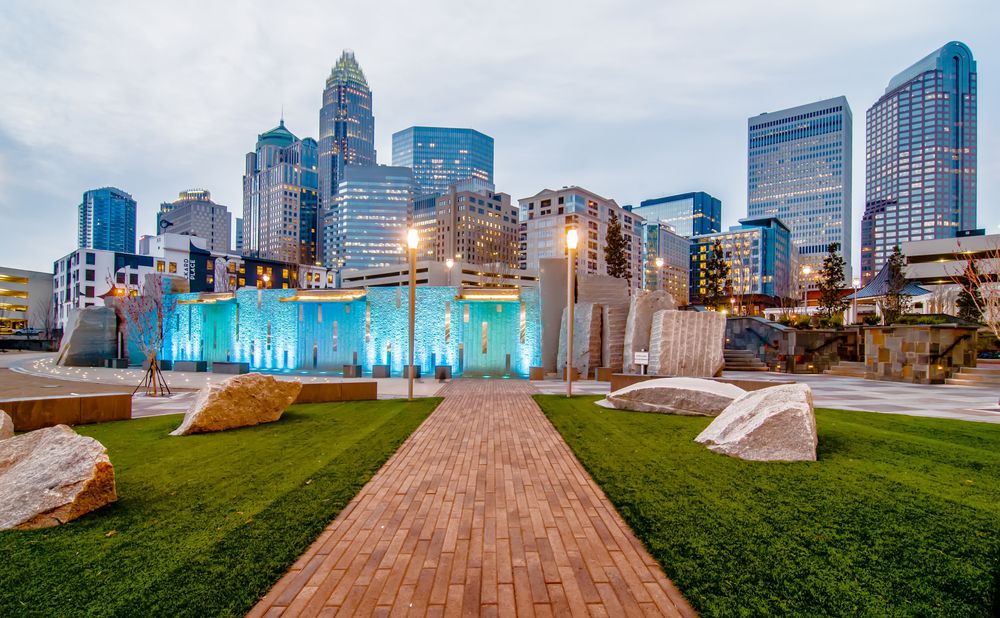
Charlotte is on the rise in some analyses.

Photo by 

On a finale note, CompTIA claims, “More residents left San Francisco than any other city in the last quarter of 2017, according to real estate website Redfin.”

However, as we’ve taken pains pains to explain, this is not accurate: Redfin doesn’t measure how many people move out of San Francisco, as it has no access to such data.

Rather, Redfin measures the number of Redfin users in the Bay Area—not just SF—who appear to be shopping for homes in other cities.

That figure is indeed going up, but San Francisco’s actual population—as well as the population of the Bay Area—continues to rise, largely on the extra bump provided by immigration.

Article source: https://sf.curbed.com/2018/10/29/18037272/best-cities-technology-jobs-sf-silicon-valley-north-carolina

Posted in SF Bay Area News | Tagged | Leave a comment