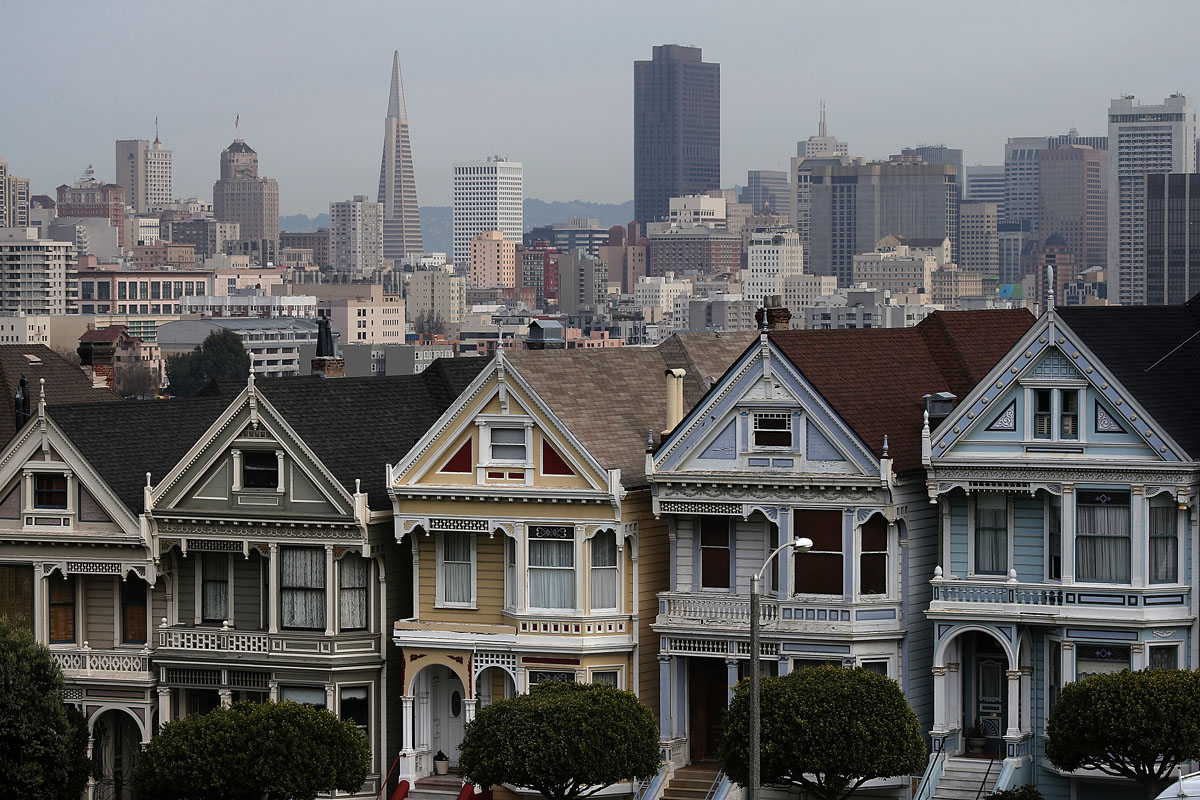
Real estate experts see slowdown in Bay Area housing market

SAN FRANCISCO (KPIX) — Though homes across the Bay Area continue to sell for record prices, some real estate experts say the market is beginning to level off.

“I think we’re seeing a little bit of leveling right now in the market. There’s a little more inventory, there are some price adjustments we haven’t seen before,” said Tim Yee, a real estate broker and the president of RE/MAX Gold Bay Area. “Properties are staying on the market a little longer, pricing seems to have leveled and we’re seeing some price reductions which, six months ago, we never saw.” 

Home sales in the Bay Area are down 17.2 percent over last year, according to the latest RE/MAX national housing report.

In the California Association of Realtors latest report, the vice president and chief economist Jordan Levine said, “California’s housing market is moderating from the 12-year-high levels experienced in 2021 as higher mortgage interest rates and soaring home prices are starting to have an adverse impact on housing demand.”

Yee says the interest rates are starting to impact those who are hoping to crack into the market.

“The starter part of the market is definitely impacted by the 1- to 2-percent change in the interest rates,” he said. “Of course, the first-time homebuyers feed up to the move-up buyers. So, if there’s not someone to buy their house, then the market takes that little shift.”

Yee thinks a leveling-off will be beneficial for buyers, many of whom have spent the past year writing offers on homes but, ultimately, haven’t been able to compete.

“I think the buyers will have more of an opportunity than they had,” Yee said. “We’re starting to see a little bit more inventory which is a great thing, because the inventory is still at historically low levels. But the more inventory there is, the more that the buyers will be able to be competitive in the market.” 

Yee doesn’t think the market leveling is indicative of a crash or a major correction.

“I think it was unsustainable, the market, the way it was,” he said. “I believe the market is going to level. I think it’ll be healthy but not crazy. A ‘normal’ market is a good thing for all of us.”

Article source: https://www.cbsnews.com/sanfrancisco/news/real-estate-experts-see-slowdown-in-bay-area-housing-market/

Posted in SF Bay Area News | Tagged | Leave a comment

Alameda residents fight housing plan to create 5,000 homes: ‘We are fearful paradise will go away’

Every city in the state must put together a draft housing element that spells out how it will accommodate new homes. As part of the plan, Alameda officials are proposing allowing multifamily apartments throughout the city and are prioritizing placing denser housing on nearly 100 acres of shopping centers and near bus and ferry connections. They also are encouraging more accessory dwelling units behind single-family homes.

In the past, smaller cities including Alameda have ignored the mandates, bowing to resident opposition. But Alameda officials say this time the state will levy fines or withhold funding for city projects, like infrastructure, if they don’t plan for the required number of units.

But residents are worried about parking, traffic and a loss of “neighborhood character” if more residents are welcomed.

“People want us to do as little as possible,” said Council Member John Knox White. “If there were no state laws that required us to do it .. we would be building little to no housing at all.”

These battles over housing elements have occurred throughout the Bay Area and the state.

When officials in Atherton, an exclusive Peninsula community, proposed building townhomes to meet their state-mandated goals, some residents adamantly opposed the plans — urging the city to pay a $100,000 monthly fine instead. In neighboring Menlo Park, city officials want to build affordable housing on Sand Hill Road, the center of venture capital and some of the most expensive commercial real estate in the world, despite opposition from residents. Critics have said San Francisco — which must plan for 82,000 units — has a draft housing element that’s flawed and could be rejected by the state.

“Look at Alameda, it’s a perfect example of what happens everywhere,” Knox White said. He added that the draft housing element’s proposed density increases would impact only 40% of the city’s residential neighborhoods.

In the past, Alameda has ignored the state’s requirements to zone for new units and even has baked a rule into the City Charter that prohibits multifamily homes, Knox White said.

And Alameda tried to get out from under the state mandates this time around. The city was one of 28 in the state that appealed its regional housing allocation numbers, or RHNA, arguing that it is prone to flooding and severe groundshaking during earthquakes. But the state rejected it.

Allowing multifamily buildings would undo a voter-approved City Charter from the early 1970s that prohibits these buildings. In 2020, city officials tried to convince voters to remove that element from the Charter with a ballot measure, but it failed.

Nearly all of the 100 residents who gathered Tuesday evening at a golf course on Bay Farm Island — a city district separated by an estuary — opposed the idea of adding housing, particularly multifamily buildings.

Residents shouted down Andrew Thomas, the city’s director of planning and building, urging him not to comply with state mandates.

As Thomas laid out the city’s plans, residents grew visibly angry that their nearby shopping center could be home to 300 new units — the only major change to Bay Farm Island’s housing stock based on the draft housing element.

“This sucks,” one woman said, shaking her head.

“What if there’s no room?” one person yelled.

When Thomas responded, “There is room,” people angrily yelled in response.

Thomas said the city plans to prioritize housing in commercial corridors, like shopping centers, and around transit. Though Alameda doesn’t have any BART stations, it has access to bus lines and three ferry terminals, he said.

Thomas said he hopes that some of the residents attending the meeting will be open to adding second units, or accessory dwellings units.

“You’re joking, right?” one person yelled.

Phil Rigano, a retired general contractor from San Diego, complained that the city is already grappling with too much congestion on its roads. Residents nodded in agreement, complaining that it sometimes takes 20 minutes to get off the island.

Rigano said his concerns are rooted in safety. He asked Thomas what the solution is. Thomas said more buses.

“In other words, there is no solution,” Rigano said shaking his head. “I think we should start recalling people.”

Many residents were concerned that the island’s golf course would soon be transformed into housing. Thomas said a developer has submitted a plan to purchase the property and add 400 housing units to the nearly 9 acres of the club, but he said that’s not part of the housing element and any plans would have to go through an environmental review process.

Raychel Cooke, a 36-year-old nurse, also criticized the city’s plans. She told The Chronicle that it’s up to the state to build more housing, not cities. She said the state should focus on creating more RV safe parking sites and Tuff Shed programs, which are similar to tiny homes, for homeless people.

Cooke also suggested that the state dock a cruise ship at the port and transform it into housing — similar to an idea that Oakland Vice Mayor Rebecca Kaplan had in 2019. At the time, the Port of Oakland said it was only equipped to handle cargo ships.

Michael Marx, who has lived in Alameda for 38 years and is a retired consultant for Visa, said he worries about the traffic and neighborhood character. But, he said, he hopes the city and its residents can find a compromise so that no particular neighborhood feels a “disproportionate brunt.”

“We feel we live in paradise and we are fearful paradise will go away with these changes,” Marx said.

Thomas acknowledged residents’ concerns, but emphasized, “The consequences of not doing it are going to be much more painful.”

The city will hold another community meeting June 9 and must finalize its housing element by the end of the year.

Sarah Ravani (she/her) is a San Francisco Chronicle staff writer. Email: sravani@sfchronicle.com Twitter: @SarRavani

Article source: https://www.sfchronicle.com/eastbay/article/Alameda-residents-fight-housing-plan-to-create-17199271.php

Posted in SF Bay Area News | Tagged | Leave a comment

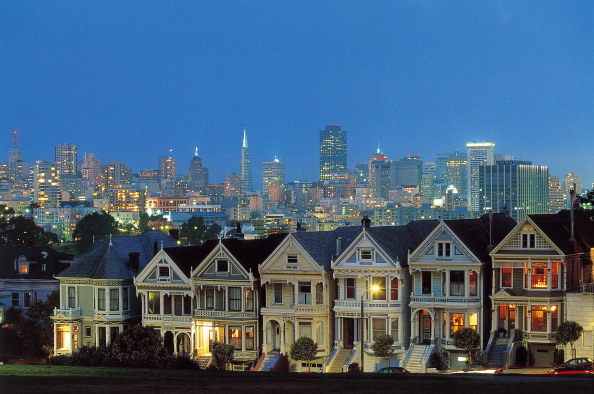
One of San Francisco’s Iconic ‘Painted Ladies’ is Back on the Market — Here’s What It’ll Cost You

A home on one of San Francisco’s most recognizable blocks is back on the real estate market. 

The Victorian-style home, one of the city’s “Painted Ladies” near Alamo Square Park, is listed for sale for $3,550,000. 

The 2,500-square-foot 19th century home made headlines in early 2020 when a San Francisco software engineer bought the property with hopes of remodeling. 


99236 paintedladies One of San Franciscos Iconic ‘Painted Ladies is Back on the Market — Heres What Itll Cost You


34631 CIUDADES CON MAS RATAS8 One of San Franciscos Iconic ‘Painted Ladies is Back on the Market — Heres What Itll Cost You

The home was built in the 1890s and has three bedrooms, two-and-a-half bathrooms and a two-car garage. 

The current owner of the “Painted Pink Lady,” Leah Culver, documented her time in the home and the remodel via social media over the last two years. 

The homeowner announced her intent to sell the property on Instagram on Friday. 

“I’ve come to realize that I do not have enough time or resources to dedicate to truly restoring this home with the care and attention to detail that it deserves,” the Instagram post said. 

The home is located in San Francisco’s Alamo Square neighborhood and is one of seven “Painted Ladies.” 

The home was previously listed in January 2020 for $2.75 million and sold for $3.5 million, according to Zillow at the time. 

The Victorian home was last remodeled into a duplex in the 1960s. 

San Francisco’s Painted Ladies are one of the city’s most famous (and photographed) landmarks. 

The homes face Alamo Square Park, along the 700 block of Steiner Street. 

To learn more about the property and to view the home listing, click here

Article source: https://www.nbcbayarea.com/news/local/san-francisco/pink-painted-lady-for-sale-san-francisco/2898913/

Posted in SF Bay Area News | Tagged | Leave a comment

Economic shocks yet to strike Bay Area home prices

Bay Area home prices showed no sign of slowing down in March, as buyers rushed in to take advantage of low interest rates before the recent turbulence in the economy hiked the cost of borrowing money.

Prices of existing single-family homes jumped 21.7% from the previous year, driving the median price of a Bay Area home to $1.25 million. In the highest priced county, San Mateo, the median price now sits just below $2 million, according to sales data from CoreLogic and DQNews.

High prices and increasing mortgage rates are closing the door on home ownership for even more middle-class families, agents say. On Wednesday, the Federal Reserve bumped interest rates up another half-percent, or 50 basis points, the largest hike in more than two decades. The rate on a standard, fixed 30-year mortgage now hovers around 5.3%.

“Our poor middle class is still getting hit,” said East Bay agent Janine Hunt. “There’s a phrase that we hear often: ‘I can’t even afford what I don’t like.’”

The squeeze of low inventory and high demand sent buyers digging deeper into savings, and sellers reaping windfalls from seven-figure offers above their list price.

Alameda County provided the most heat in the white-hot market, with the median price vaulting 30% year-over-year to $1.28 million. Santa Clara County home prices jumped 26% to $1.8 million, San Francisco increased 14% to $1.83 million, San Mateo County grew nearly 10% to $1.92 million, and Contra Costa County rose 5.8% to $899,000, according to CoreLogic data.

CoreLogic chief economist Frank Nothaft said demand swelled as buyers rushed in to take advantage of lower interest rates. The combination of higher prices and rising mortgage rates have begun to erode affordability for many homebuyers. “Silicon Valley and the Bay Area are the poster child,” he said.

U.S. home prices rose 20.9% in March from the previous year, the highest 12-month jump since CoreLogic began tracking the measure 45 years ago.

Overall sales of existing single-family homes fell 7% across the region, with transactions dropping in every county except Napa.

Agents say many homeowners have been reluctant to plant a for sale sign in their front yard. Bay Area sellers remain concerned about taxes on their gains, or feel locked into low interest rates on their current mortgages. The Russian invasion of Ukraine, inflation and a jittery stock market have also added uncertainty to the real estate market.

Burlingame agent Caroline Dinsmore said competition remains high, with buyers looking to get into a home before interest rates rise again. “There is inventory,” Dinsmore said, “but there’s way more buyers than inventory.”

Single-family homes listing for $2 million in San Mateo County are “kind of entry level,” she said. Buyers are still looking for updated homes, but are often settling for clean properties needing a few modern renovations, she said.

Even condo sales have picked up, as first-time buyers seek less expensive entries into the real estate market, she said. Townhomes and condos, with smaller units and common spaces, fell out of favor during the pandemic. The median price for a Bay Area condo increased 12% in March from the previous year, from $735,000 to $825,000.

Bay Area bidding wars and wild premiums over list prices continued.

Saratoga agent Mark Wong has kept an eye on April local sales data in Silicon Valley. In desirable cities, 57 properties sold for more than $500,000 over the list price, and 10 of those homes sold for more than $1 million above asking.

Some agents have been pricing homes well-below market rates to drive bidding wars, and competitive buyers are going for the win, he said. “That’s the mentality of Silicon Valley,” Wong said. “Nobody wants to lose, everybody wants to win.”

More homes have been coming up for sale in recent months, giving buyers a few more choices. For buyers, Wong said, “I think we’re starting to see some light at the end of a very, very, very long tunnel.”

More buyers are bumping up down payments to lower monthly costs, agents say. The rising interest rates can add hundreds or thousands of dollars to a mortgage payment.

But it’s still a strong sellers’ market. Hunt cited one example – a fixer-upper in Berkeley listed for $1.7 million that sold within 30 hours for an all-cash price of $2.8 million.

The three-bedroom, two-bath house came on a large lot with a backyard cottage unit. The sellers wanted to close a deal quickly, and the buyers were willing to overlook the need to patch up 100-year-old plaster and update some features. “She was a cutie, but she needed some love,” Hunt said.

But real estate experts expect some cooling toward the end of the year. More interest rate hikes are expected as the Fed battles inflation. Fewer buyers are expected to venture into the high-priced market. “We are expecting prices to rise,” Nothaft said, “but slower than in the last 12 months.”


Article source: https://www.mercurynews.com/2022/05/09/economic-shocks-yet-to-strike-bay-area-home-prices

Posted in SF Bay Area News | Tagged | Leave a comment

Track home prices in every Bay Area city and ZIP code

After years of sky-high home prices that have made the Bay Area synonymous with unaffordability, home values spiked to even higher levels in the past two years, thanks to the coronavirus pandemic.

Overall, from the beginning of 2020 through April 2022, the median home value in the San Francisco-Oakland-Hayward metro area, a region encompassing five Bay Area counties including San Francisco, Alameda and San Mateo, increased from $1.1 million to $1.49 million, about 32%, according to Zillow data. That includes a 20% increase in the past year alone. In the San Jose metropolitan area, home values increased by 39% since the beginning of 2020, with a 25% increase in the past year.

The map above shows which ZIP  codes in the region saw the largest increases over the past year. ZIP code 94587 in Union City in Alameda County saw the fastest growth at 31%. Only one ZIP code, 94060 in Pescadero in San Mateo County, had negative price growth, with home prices decreasing by 7%.

Advertisement

Two years of COVID-19 drove up the cost of real estate nationwide; the median home value in the U.S. surged from about $250,000 to nearly $350,000 — a 38% increase.

Though home values grew dramatically in the Bay Area, the jump was slightly smaller than the U.S. overall. That’s probably because of the city’s already-steep home values, combined with a pandemic-era trend of local home-seekers moving into the outer Bay Area and beyond for more space and better value — a phenomenon economists have called “the doughnut effect.”

Bay Area home prices have climbed steadily since about 2012, after dipping several years after the 2007-09 recession. But the past two years have driven unusually high costs even for the especially pricey metro area, propelled by a nationwide home inventory shortage that’s even more acute in the Bay Area. In a February 2022 report, the National Association of Realtors found that for every 1,206 households earning about the median income in San Francisco and San Jose, only one home in their price bracket was on the market.

More real estate coverage

Mortgage rates: Why Bay Area housing prices are unlikely to drop despite climbing rates

Time to buy? How to know if it is better to rent or buy a home in the Bay Area’s biggest cities right now

Property taxes: How some Bay Area home buyers are saving thousands a year

Boom town: Bay Area cities where homeowners have saved up to $30,000 on property taxes

The combination of low inventory, plus the increased desirability of homeownership in a pandemic in which people are spending more time at home, has driven frenzied bidding wars in the Bay Area housing market — but it’s also driven many families, even some wealthier ones, out of the city and into nearby regions such as Wine Country and Lake Tahoe, fueling bidding wars there too and drawing the ire of longtime residents.

The San Francisco and San Jose metro area’s home value jumps of 20% and 25%, respectively, in the past year is a major increase over such a short time frame. But it’s in line with the U.S. overall increase of 21%, and smaller than several other major metropolitan areas — such as Austin, Texas, where home values increased by a staggering 38%.

This trend is evident within and around the Bay Area as well. While home values in San Francisco grew by only 13%, in neighboring towns such as Pleasanton and San Ramon, home values shot up by 29% and 30%, respectively.

Advertisement

“People like location,” Ronnie Escalante, a Realtor in San Francisco, previously told The Chronicle. “People also like quality of life. These are nice neighborhoods where … you’re in the middle of everything.”

There are some signs that price acceleration is slowing a bit, in part because of mortgage rates increasing as the Federal Reserve tries to tackle rising inflation. But demand is so high now and inventory so low, these factors are unlikely to cause prices to decrease, according to experts.

Methodology

Housing value data comes from one of Zillow’s home value indexes. The value shown is based on single-family homes, condos and co-ops whose home value is between the 35th and 65th percentiles in a market. The values are adjusted based on short-term seasonal fluctuations. The data is updated on the third Thursday of every month with the previous month’s values.
Zillow’s home value index data represents an estimate of the typical home value in a given geography, such as a state or ZIP code. The data on this page is meant to compare regions and illustrate trends over time — it is not necessarily an indication of any individual home’s value.

43c2d sf square black Track home prices in every Bay Area city and ZIP code

Article source: https://www.sfchronicle.com/projects/real-estate/bay-area-home-prices

Posted in SF Bay Area News | Tagged | Leave a comment