Million-dollar homes now even more common in Bay Area

The Bay Area creates more million-dollar homeowners than anywhere in the U.S., and San Jose is leading the charge.

Since October 2017, San Jose has seen a 14 percent increase in the number of homes valued at more than $1 million, according to a new report released Thursday by Trulia. The city went from 56 percent to 70 percent of its homes valued at more than $1 million dollars, the biggest percentage jump in the U.S.

San Francisco and Oakland metros also ranked high in the report. About 8 in 10 San Francisco homes and 3 in 10 Oakland homes hit  the magic number.

The super-heated Bay Area real estate market continues to drive up personal wealth, at least on paper, in neighborhoods and bedroom communities once populated by blue-collar workers.

Trulia senior economist Cheryl Young said the skyrocketing Bay Area home prices have pushed buyers into previously overlooked neighborhoods. “People are starting to look further afield,” she said.

The median home value in the U.S. is $220,000, up nearly 8 percent during the last year. Just 3.6 percent of all U.S. homes are worth more than $1 million, Trulia said.

About 30 percent of California neighborhoods carry a million-dollar designation.

In San Jose, Evergreen, North Valley, Santa Teresa and Blossom Valley saw home values rise by at least 15 percent to break the $1 million valuations.

San Jose agent Sandy Jamison said prices were driven by the strong economy and housing shortage. But, she added, the market has cooled considerably. “Sellers need to price it right in order to sell the property,” she said. “They shouldn’t expect those high numbers.”

The Trulia valuations are estimates and can be higher or lower than the actual sales price, the company said.

The study also found Fremont added more million-dollar neighborhoods than any other city in the U.S. The East Bay city had 11 new communities where median home values broke $1 million during the last 12 months.

Fremont, home to the Tesla factory and several solar and electronics companies, saw these neighborhoods climb into seven-figure valuations: Ardenwood, Blacow, Cabrillo, Canyon Heights, Glenmoor, Grimmer, Irvington, Niles, Northgate, Parkmont and Sundale, according to Trulia.

Timothy Crofton, a real estate agent with two decades experience in Fremont, said the working class neighborhoods have been popular with immigrants coming to work in the tech industry. The influx of new immigrants and young families has improved the school system, he said.

When a neighborhood gets too pricey, he said, the adjacent community becomes popular. “It’s just a bridge from neighborhood to neighborhood,” he said.

“Fremont is a bedroom community,” Crofton said. “It was and always will be.”

Fremont agent Sunil Sethi said many of his clients work at Facebook, Apple and other tech firms on the Peninsula. Home prices in the East Bay, although expensive, are still a bargain compared to San Mateo and Santa Clara counties, he said.

Berkeley, San Mateo, Pleasant Hill and Redwood City also had multiple neighborhoods reach new, $1 million home value highs. And many cities tracked by Trulia have every neighborhood above the threshold, including Lafayette, Foster City, Menlo Park, Cupertino, Mountain View, Palo Alto and Sunnyvale.

Although Bay Area home sales have slowed in recent months, median sales prices have continued to climb year-over-year since 2012.

Despite higher household incomes in the Bay Area, record-setting home prices have made the region the least affordable in the country, according to the National Association of Home Builders.  The San Francisco metro was the hardest major city to buy into, and San Jose was the fourth most difficult.

“If you go anywhere outside the Bay Area,” said Young, “you’ll feel like you’re getting a deal.”


Article source: https://www.mercurynews.com/2018/11/08/more-homes-top-1-million-in-these-bay-area-neighborhoods/

Posted in SF Bay Area News | Tagged | Leave a comment

Camp Fire is most destructive wildfire in California history: 9 dead, 6713 structures incinerated

PARADISE, Butte County — The Camp Fire that devastated this bucolic Butte County town has claimed the lives of at least nine people, grown to 90,000 acres and destroyed more buildings than any other wildfire in California history.

By Friday evening, the fire had incinerated 6,453 homes and 260 commercial buildings in and around Paradise. The blaze was only about 5 percent contained and was threatening another 15,000 structures. Some 52,000 people remained evacuated from various towns. Authorities expect the death toll to increase in the coming days.

Before the Camp Fire, last year’s 36,807-acre Tubbs Fire was the most destructive wildfire in state history for destroying 5,636 structures in Napa and Sonoma counties. Twenty-two people died in that fire.

The nine people killed in the Camp Fire included four victims found in vehicles burned by the blaze in the area of Edgewood Lane, according to the Butte County Sheriff’s Office. Another individual was found outside a vehicle there. Three bodies were found outside homes and one was found inside a home. None of the victims have been identified.

In addition to the lives lost, three firefighters have been injured.

It took less than 48 hours for the Camp Fire to hit historic levels of devastation. The worst of the destruction was in Paradise, a town of 27,000 about 90 miles north of Sacramento that was overwhelmed by flames so quickly that many residents were barely able to grab car keys in their rush to escape.

It was only as the sun came up Friday that the full scope of the damage was exposed.

  •  Camp Fire is most destructive wildfire in California history: 9 dead, 6713 structures incineratedCamp FireSan Francisco Chronicle
  •  Camp Fire is most destructive wildfire in California history: 9 dead, 6713 structures incineratedA fire crew keeps an eye on the Camp FireSan Francisco Chronicle
  •  Camp Fire is most destructive wildfire in California history: 9 dead, 6713 structures incineratedThe Camp Fire burns in a Paradise neighborhoodSan Francisco Chronicle
  •  Camp Fire is most destructive wildfire in California history: 9 dead, 6713 structures incineratedA home in Paradise burns during the Camp FireSan Francisco Chronicle
  •  Camp Fire is most destructive wildfire in California history: 9 dead, 6713 structures incineratedA home in Paradise California burns during the Camp FireSan Francisco Chronicle
  •  Camp Fire is most destructive wildfire in California history: 9 dead, 6713 structures incineratedWhich Respirator Masks Protect Against Smoke?San Francisco Chronicle
  •  Camp Fire is most destructive wildfire in California history: 9 dead, 6713 structures incineratedSafeway Grocery in ParadiseSan Francisco Chronicle
  •  Camp Fire is most destructive wildfire in California history: 9 dead, 6713 structures incineratedParadise Elementary SchoolSan Francisco Chronicle
  •  Camp Fire is most destructive wildfire in California history: 9 dead, 6713 structures incineratedCamp FireSan Francisco Chronicle

The Camp Fire burns in Paradise on Nov. 8, 2018.

Video: San Francisco Chronicle

The burned walls of churches poked through ash. The blackened skeletons of gas stations, fast-food restaurants and supermarkets wobbled amid strong winds. Block after block, entire neighborhoods lay in ruin. Abandoned cars, charred to their frames, lined the two-lane roads in and out of town.

Beneath the smoke-filled sky, sheriff’s deputies continued to search for bodies amid the rubble while residents, scattered across the region at evacuation centers or in the homes of family and friends, wondered how they could possibly recover from such loss.

“I guess there won’t be much of my town left,” said Scott Lotter, a Paradise City Council member and former mayor. “It’s too soon to tell how much we’ve lost.”

The cause of the fire, which started Thursday morning, remains under investigation, but Pacific Gas and Electric Co. informed regulators Friday that a high-voltage power line near the area experienced a problem prior to the first flames.

Meteorologists were anticipating a lull in the extreme fire conditions Friday night to Saturday afternoon, but the winds were expected to pick up again Saturday and continue through the weekend.

The number of people battling the blaze increased to 3,223 by Friday evening, fthe 67 fire crews helped by 440 fire engines and 23 helicopters, according to the California Department of Forestry and Fire Protection, or Cal Fire. Help was requested from nearby states, including Oregon, Nevada, New Mexico, Wyoming and Washington.

“We are at a pivotal moment,” said Cal Fire Division Chief Todd Derum. “We are trying to take advantage of this moment and make the most progress we can. But the red flag warnings will come. It will kick this fire up, start new fires, or a combination of both.”

Dense smoke blanketed much of Northern California, including the Bay Area, nearly 200 miles away, where air quality was so bad that flights were canceled at San Francisco International Airport and residents were advised to stay indoors.

The blaze “has been an extremely challenging fire and has resulted in significant and catastrophic loss in that community,” said Mark Ghilarducci, director of the state Office of Emergency Services. “We are literally in a statewide red flag weather. We are basically looking at a very significant dangerous weather pattern through the rest of this weekend.”

Named the Camp Fire because of its proximity to Camp Creek Road near Highway 70 in the Feather River Canyon, the inferno started at 6:30 a.m. Thursday and quickly barreled through Paradise.

Many of the evacuees had to leave without cell phones or identification, and have had difficulties reconnecting with friends and family. On social media, scores of people have posted photos and last known addresses of missing relatives, many of them older or disabled individuals who may have had a hard time evacuating on their own.

Officials did not not have any immediate numbers on how many people were unaccounted for, though the Butte County Sheriff’s Office said it had 35 official missing person reports. The American Red Cross issued an alert for residents to register as “safe and well” on its website.

“I’m pretty sure my home is burned to the ground,” said Debbie Teter, 53, who was at work at her real estate office Thursday before she hastily evacuated to nearby Chico. “I’m pretty sure I won’t have a job either. My workplace is probably gone and selling property just won’t be happening.

“At my age,” she added, “I don’t want to have to start from scratch.”

The tree-lined houses and familiar shops and businesses that made Paradise a draw for retirees and a magnet for lifelong residents were hardly recognizable after the flames tore through town. Most of the business district along Skyway, the main drag, and the surrounding neighborhoods of single-family homes were burned.

Only the street-side signs of a Burger King and Jack in the Box revealed what the nearby piles of twisted steel and soot had once been. The First Assembly of God church and a Mormon church were charred. The Atria Paradise retirement community was destroyed. A few motels, a muffler shop and a used car lot were among the many other losses.

“The magnitude of the destruction we are seeing is really unbelievable and heartbreaking,” Ghilarducci said. “Our hearts go out to everybody who’s been affected by this.”

Some residents already were talking about rebuilding their tight-knit community. Others, though, were less confident. They’d lost not only homes, but the places where they shopped, got a cup of coffee or met friends for lunch. Many people said they wouldn’t know how to begin to recover what they’d lost.

Donny Veteto, 43, had moved to Paradise only a month ago. The home in which he’d rented a room burned down while he was at work in Chico. He was lucky — he happened to be driving his motor home that day — but he lost everything else.

“I’d like to go back to Paradise, but I don’t know when that will happen,” Veteto said. “Nobody can go back right now.”

Lotter, the former mayor, evacuated with his wife, daughter and son-in-law, along with their pet rabbit and two dogs. As he drove away with his family, flames were just 50 feet from City Hall, Lotter said. It took him nearly two hours to go a half-mile.

He learned on Friday that he’d lost his home to the fire, and found little consolation in news that the movie theater he owns in town survived. He said it was easier to count the number of homes and businesses that were untouched than those that were destroyed.

“If you have a perfectly good business in the middle of a desert, it really doesn’t do you any good,” Lotter said.

Butte County schools were closed Friday and will remain so through Nov. 23, according to the county Office of Education. Officials said they need time to assess the damage to school buildings and determine how best to support families affected by the fire.

November is remarkably late in the fire season for such an intense blaze, fire officials said. And at least two more massive fires were threatening communities in Southern California, including one that forced evacuation of the entire city of Malibu. The late-season wildfires fueled by dry conditions represent California’s new normal, officials said.

“Everyday is fire season somewhere in California,” Cal Fire Director Ken Pimlott said.

Bob Schofield, 54, has lived in the Paradise area for 26 years and spent 23 of those years as a volunteer firefighter. Among the worst blazes he responded to was the Humboldt Fire in 2008, which burned 23,000 acres in three days, he recalled.

The Camp Fire burned three times that in 24 hours.

“I don’t have much hope that the house is there,” Schofield said Friday from a friend’s house in Marysville, where his family was staying after evacuating Paradise. “If it was there it would be by the grace of God. It was right in the path of the fire.”

Schofield, a music teacher, was at the middle school campus Thursday morning when the district announced it was shutting down all Paradise schools. He turned on a radio to learn more about the fire and heard that his home was in an area being evacuated.

Students whose parents couldn’t get to them quickly enough were put on buses or in teachers’ own cars and taken to a shelter in Chico. Schofield called his wife and 15-year-old son, both at the high school, and told them to meet at their house on Woodglen Drive. They were packing when someone knocked on their door and told them the fire was close.

They left with their three dogs and two rabbits around 9:15 a.m., leaving behind keepsakes such as photos, school awards and Schofield’s collection of nearly 300 fire engine replicas. The first one had been a gift from his grandmother when he was 4.

“You can’t replace the awards or the photos, you can’t replace all of that,” he said. “But we have insurance on everything else.”

Santa Rosa Fire Capt. Jack Thomas, who on Thursday led a strike team against the Camp Fire, couldn’t help but have flashbacks to last year’s deadly Wine Country fires, which flattened entire neighborhoods.

“When I got here, I thought, ‘Oh my God, this is exactly what we saw in Santa Rosa,’” he said. “We got churches down, a mobile home park burned and a retirement home halfway involved. It’s really the same situation.”

Chronicle staff writers Lizzie Johnson and Kimberly Veklerov contributed to this report.

Kurtis Alexande, Sarah Ravani and Erin Allday are San Francisco Chronicle staff writers. Email: kalexander@sfchronicle.com, sravani@sfchronicle.com, eallday@sfchronicle.com Twitter: @KurtisAlexander @SarRavani @ErinAllday

Article source: https://www.sfchronicle.com/california-wildfires/article/At-least-five-dead-as-Camp-Fire-lays-waste-to-13378522.php

Posted in SF Bay Area News | Tagged | Leave a comment

More homes top $1 million in these Bay Area neighborhoods

The Bay Area creates more million-dollar homeowners than anywhere in the U.S., and San Jose is leading the charge.

Since October 2017, San Jose has seen a 14 percent increase in the number of homes valued at more than $1 million, according to a new report released Thursday by Trulia. The city went from 56 percent to 70 percent of its homes valued at more than $1 million dollars, the biggest percentage jump in the U.S.

San Francisco and Oakland metros also ranked high in the report. About 8 in 10 San Francisco homes and 3 in 10 Oakland homes hit  the magic number.

The super-heated Bay Area real estate market continues to drive up personal wealth, at least on paper, in neighborhoods and bedroom communities once populated by blue-collar workers.

Trulia senior economist Cheryl Young said the skyrocketing Bay Area home prices have pushed buyers into previously overlooked neighborhoods. “People are starting to look further afield,” she said.

The median home value in the U.S. is $220,000, up nearly 8 percent during the last year. Just 3.6 percent of all U.S. homes are worth more than $1 million, Trulia said.

About 30 percent of California neighborhoods carry a million-dollar designation.

In San Jose, Evergreen, North Valley, Santa Teresa and Blossom Valley saw home values rise by at least 15 percent to break the $1 million valuations.

San Jose agent Sandy Jamison said prices were driven by the strong economy and housing shortage. But, she added, the market has cooled considerably. “Sellers need to price it right in order to sell the property,” she said. “They shouldn’t expect those high numbers.”

The Trulia valuations are estimates and can be higher or lower than the actual sales price, the company said.

The study also found Fremont added more million-dollar neighborhoods than any other city in the U.S. The East Bay city had 11 new communities where median home values broke $1 million during the last 12 months.

Fremont, home to the Tesla factory and several solar and electronics companies, saw these neighborhoods climb into seven-figure valuations: Ardenwood, Blacow, Cabrillo, Canyon Heights, Glenmoor, Grimmer, Irvington, Niles, Northgate, Parkmont and Sundale, according to Trulia.

Timothy Crofton, a real estate agent with two decades experience in Fremont, said the working class neighborhoods have been popular with immigrants coming to work in the tech industry. The influx of new immigrants and young families has improved the school system, he said.

When a neighborhood gets too pricey, he said, the adjacent community becomes popular. “It’s just a bridge from neighborhood to neighborhood,” he said.

“Fremont is a bedroom community,” Crofton said. “It was and always will be.”

Fremont agent Sunil Sethi said many of his clients work at Facebook, Apple and other tech firms on the Peninsula. Home prices in the East Bay, although expensive, are still a bargain compared to San Mateo and Santa Clara counties, he said.

Berkeley, San Mateo, Pleasant Hill and Redwood City also had multiple neighborhoods reach new, $1 million home value highs. And many cities tracked by Trulia have every neighborhood above the threshold, including Lafayette, Foster City, Menlo Park, Cupertino, Mountain View, Palo Alto and Sunnyvale.

Although Bay Area home sales have slowed in recent months, median sales prices have continued to climb year-over-year since 2012.

Despite higher household incomes in the Bay Area, record-setting home prices have made the region the least affordable in the country, according to the National Association of Home Builders.  The San Francisco metro was the hardest major city to buy into, and San Jose was the fourth most difficult.

“If you go anywhere outside the Bay Area,” said Young, “you’ll feel like you’re getting a deal.”


Article source: https://www.mercurynews.com/2018/11/08/more-homes-top-1-million-in-these-bay-area-neighborhoods/

Posted in SF Bay Area News | Tagged | Leave a comment

Midterm Results: How is Real Estate Impacted?

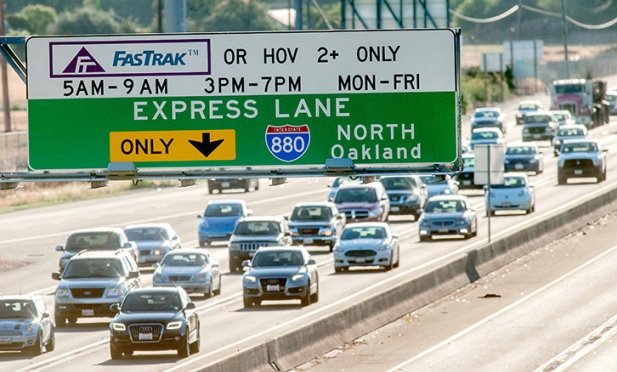
09f4f sf express lanes Midterm Results: How is Real Estate Impacted? Prop 6 would have repealed a 2017 transportation law’s taxes (credit: Metropolitan Transportation Commission).

SAN FRANCISCO—After months of political mailers and television commercials, the midterms are finally in the rear-view mirror. Here’s a look at some of the propositions impacting real estate that were passed or defeated in Tuesday’s election.

Article source: https://www.globest.com/2018/11/08/midterm-results-how-is-real-estate-impacted/

Posted in SF Bay Area News | Tagged | Leave a comment

Live election results, Bay Area and California

Sometimes the news media hypes stories. Tonight’s election is not one of those times.

Tens of millions of people are casting votes today that will decide not just the direction of the United States for the next two years, but whether President Donald Trump will be able to move forward with his agenda — or become mired in investigations and see it grind to a halt. Trump’s wish list for the coming year includes another big tax cut, more tariffs on foreign goods, tougher immigration controls, relaxed environmental laws and the possible firing of Special Counsel Robert Mueller. 

Democrats need to have a net gain of 23 seats in the 435-seat House of Representatives to retake control from the Republicans for the first time in eight years. If that happens, San Francisco’s Nancy Pelosi will be the odds-on favorite to become speaker again, which would put her second in the line of succession for the presidency, behind Vice President Mike Pence. And if they prevail tonight, Democrats not only will block most of Trump’s legislative agenda in 2019 and 2020, but they also will push to make his tax returns public, force his White House aides and cabinet officials to testify under oath in investigations, and stall many of his plans — from expanding offshore oil drilling to building a wall on the Mexican border — by denying funding for those things in the federal budget.

In short, tonight is an up-or-down vote on Trump’s presidency.

Polls show Democrats are favored to win back the House. But dozens of races are very close. And as voters learned in 2016, sometimes “sure things” end in surprises.

Apart from the House, there are other marquee events this evening. They include which party will control the U.S. Senate. Which party will win governor’s races to determine who sets the voting rules for the 2020 presidential election and who draws congressional districts for the next decade. Also up in the air: The fate in California of the gas tax, rent control and billions of dollars in homeless funding, hospital money and water projects.

Polls on the East Coast begin closing at 3 p.m. Pacific time. Most states begin reporting their results by 5 p.m., and California polls close at 8 p.m.

What to watch for:

1) Will the House turn Democratic and stall Trump?

The U.S. Capitol (J. Scott Applewhite/Associated Press)

There is no bigger question tonight. It’s common for a president’s party to lose seats in the House of Representatives in midterm elections. Since 1974, the average loss has been 22 seats. But when presidents have low public approval ratings, those losses are often bigger.

Currently, Trump has a very low approval rating — just 40 percent in the latest Gallup Poll. That’s lower than President Obama’s (45 percent) and President Clinton’s (46 percent) at the same time in their presidencies. In the 2010 midterms, Obama’s Democratic Party lost 63 seats in the House. Similarly, in 1994, Clinton’s Democrats lost 53 seats. But when George W. Bush’s approval rating was at a sky-high 63 percent in 2002, not long after the Sept. 11 attacks, Republicans gained six House seats.

Bottom line: Things look bad for the Republicans tonight. Democrats have raised more money. There are more open seats than normal due to 40 House Republicans retiring. Polls show Democrats ahead or tied in many races, with at least two dozen Republican incumbent House members struggling at 47 percent or lower in their re-election polls. Women, college graduates and young voters have been overwhelmingly calling for a change in the country’s direction. And Monday, multiple news outlets reported that Trump’s advisers were telling him to brace for the loss of the House.

But it’s not a guarantee. Republicans have two big trends in their favor. The economy is strong. And because of their big wins in 2010, Republican governors and state lawmakers drew district lines favorable to Republicans. That kind of gerrymandering has given Democrats a bigger hill to climb today in many states as they seek to take back House seats. Trump has worked in recent weeks to rally his base, appealing to their distrust and dislike of immigrants with increasingly tough anti-immigration messages, and by sending troops to the U.S.-Mexican border to address a rag-tag caravan of migrant refugees who is 700 miles away.

By about 5 p.m. Pacific time, we’ll start getting key clues on which side voters are choosing.

The action begins in states like Florida, Virginia and Pennsylvania. Pay particular attention to races like Kentucky’s 6th congressional district where Democrat and former Marine combat pilot Amy McGrath is locked in a neck-and-neck race with Republican incumbent Andy Barr in a district that Trump won in 2016 by 15 points. If Barr, who voted to repeal the Affordable Care Act, loses, it’s a sign that the Democrats’ emphasis on health care is paying off.

Similarly, watch Virginia’s 7th district in the suburbs of Richmond, which has been held by  Republicans for 47 years. There, former CIA analyst Abigail Spanberger is nearly even with Tea Party GOP incumbent Dave Brat, an economics professor, in the polls.

One big change this year? California really matters. Seven of California’s 53 House seats are in districts where Hillary Clinton won more votes than Trump in 2016, but which are currently held by Republicans.

Democrats are hoping wins in these five districts now held by Republicans will put them over the top nationally:

- CA-10 (Modesto) – Incumbent Republican Jeff Denham trails narrowly in polls to Democrat Josh Harder, a 32-year-old venture capitalist and Stanford graduate.

- CA-21 (San Joaquin Valley) Incumbent Republican David Valadao leads Democrat T.J. Cox, a Fresno businessman.

- CA-25 (Northern L.A. and Ventura counties) Incumbent Republican Steve Knight narrowly leads Democrat Katie Hill, an executive director of a non-profit group assisting the homeless.

- CA-45 (Orange County) Incumbent Republican Mimi Walters trails Democrat Katie Porter, a UC-Irvine law professor, in polls.

- CA-48 (Huntington Beach) Incumbent Republican Dana Rohrabacher is polling dead even with Democrat Harley Rouda, an attorney and real estate investor.

And Democrats dearly want victories in these two seats held by Republicans who chose not to run for re-election:

- CA-39 (Los Angeles and Orange counties)  Democrat Gil Cisneros, a former Frito-Lay manager who won $266 million in the lottery and set up a foundation to send Latino students to college, narrowly leads Republican Assemblywoman Young Kim, the first Korean-American elected to California’s Legislature, in the race to succeed retiring incumbent Ed Royce.

- CA-49, (Northern San Diego County) Democrat Mike Levin, a clean tech entrepreneur, leads Republican Diane Harkey, a former assemblywoman and mayor of Dana Point, in the race for retiring incumbent Darrell Issa’s seat.

Finally, there’s the ugliest congressional race in California, the 50th district, in Eastern San Diego County. There, five-term incumbent Republican Duncan Hunter, a Marine combat veteran and staunch conservative whose father held the seat before him, faces a very tight race after he was indicted in August on charges of stealing $250,000 in campaign funds to pay for vacations, golf outings and flying a pet rabbit across the country.

As polls have gotten within a few percentage points, Hunter has used anti-Muslim TV ads and speeches to attack his challenger, Democrat Ammar Campa-Najjar, a 29-year-old former aide to President Obama who is half Latino and half-Muslim. Campa-Najjar is “working to infiltrate Congress” with the support of the Muslim Brotherhood, Hunter said in one ad, and is “a national security threat,” he said in another. Campa-Najjar has countered that he is a Christian who had a security clearance in the Obama White House, a clearance that Hunter, facing multiple felonies, would not be able to get. Democratic money is flooding into the conservative district, but Hunter still has a slight lead in the polls.

If control of Congress comes down to these close California House races, the outcome might not be known for several days, or even weeks, because California law allows mail-in ballots to count as long as they are postmarked by Election Day.

 2) Sleeper story of the night? Governor’s races

 
Former President Barack Obama rallies with Democratic gubernatorial candidate Andrew Gillum (left) and Democratic Senate candidate Bill Nelson in Florida on Nov. 2, 2018 (Associated Press)

If Democrat Gavin Newsom beats Republican John Cox and succeeds Jerry Brown, it will be — amazingly — the first time a Democratic governor has been succeeded by another Democratic governor in California in 131 years. The last time that happened was in 1887, when George Stoneman, a former Union Army cavalry officer who moved West after the Civil War, was succeeded by fellow Democrat Washington Bartlett, then mayor of San Francisco. Stoneman only served one term, and moved back to New York after political opponents burned his house down. Bartlett, a Georgia native, sailed to San Francisco in 1850 for the Gold Rush, opened the first daily newspaper on the West Coast, and died only nine months after taking office as governor from kidney disease and other health problems.

In deep blue California, Newsom has a double-digit lead in the polls and is widely expected to win easily. But in other key states, Democrats are also poised to make big gains. And that could be one of the most important stories of this election.

Currently, Republicans hold 33 of the nation’s 50 governor’s offices. Democrats hold 16, and one, Bill Walker of Alaska, is an independent. Many top analysts, such as Larry Sabato of the University of Virginia, say Democrats could pick up a net of 10 more governorships on Tuesday. Most of those could come in states that are critical in the 2020 election, including Florida, Michigan, Ohio, Iowa, Wisconsin, Nevada and Illinois. The governors who are elected tonight will be in office in 2020 to oversee the presidential election in their states. Democratic victories would likely mean opening more polling places, expanded voting hours and fewer rules Republicans have put in place that critics say have led to voter suppression. And they will be in office when their states draw new congressional district boundaries after the 2020 Census, giving Democrats a further advantage in the decade ahead. 

Republicans have a chance to oust Democratic governors in Oregon and Connecticut, and take Alaska. But given last-minute trends, Democrats like Andrew Gillum in Florida, Tony Evers in Wisconsin and Richard Cordray in Ohio may be knocking off their Republican rivals. Among the most closely watched races is Georgia, where Stacey Abrams is seeking to become the first black female governor in the United States, and is locked in a very close race with Republican Brian Kemp.
 
3) Can Republicans hold the U.S. Senate?

The math in the U.S. Senate, which decides the fate of Supreme Court justices, is simple. Republicans have 51 seats. And Democrats have 49. Democrats need to pick up two to gain a majority.

That should be simple in a blue wave election right? Hardly. Democrats have the most difficult map in generations. Of the 33 seats up for re-election, 25 of them are Democratic, and just eight are Republican.

There are 11 races considered close. Of those, incumbent Democrat Heidi Heitkamp in North Dakota trails Republican Kevin Cramer by 11 points. If she loses as expected, the Democrats would have to win nine of the remaining 10 to capture the Senate.

That means winning closes races in Nevada, Arizona, Indiana, West Virginia and Missouri, and then pulling off upsets in Texas, where Democratic congressman Beto O’Rourke is working to topple Republican Ted Cruz but still trails in the polls, or Tennessee, where former Nashville Mayor and Democrat Phil Bredesen trails Republican congresswoman Marsha Blackburn in the race for retiring Republican Bob Corker’s seat.

Bottom line: Republicans are the odds-on favorite to hold a majority, or even pick up a seat or two. But Democrats are holding out hope that a huge blue wave could help them run the table.
 
4) Democratic sweep in California?
 

The biggest races in California are sleepers. Registered Democratic voters dramatically outnumber registered Republicans, 43-24 percent, with 27 percent of California voters having no party preference.

That means every Democratic candidate essentially starts with an 18-point lead over their Republican rival.

Lt. Gov. Gavin Newsom has a big lead in the polls, and in fundraising, over San Diego businessman John Cox in the governor’s race. And Democratic Sen. Dianne Feinstein has a similarly big lead over fellow Democrat Kevin de Leon. Look for both of those races to be called shortly after the polls close at 8 p.m.

Two Democrats in the same race? That’s because California’s top-two primary rules allow the top-two vote-getters to advance to the general election, even if they are both from the same party.

Democrats are expected to similarly win the race for state treasurer, lieutenant governor, secretary of state and controller. 

Two races offer some drama, however. First is state superintendent of schools, where Assemblyman Tony Thurmond of Oakland, backed by teachers unions, trails fellow Democrat Marshall Tuck, a charter school advocate and former education adviser to Los Angeles Mayor Antonio Villaraigosa, in a bitter showdown that has drawn $50 million in campaign contributions. Advocates of each man see the election as a showdown over the future of California schools.

And in the race for state insurance commissioner, Steve Poizner, a Los Gatos tech investor and former Republican, seeks to become the first independent to win statewide office in California history. Poizner, who had served in the post from 2007 to 2011, faces Democrat Ricardo Lara of Bell Gardens, one of the state senate’s most liberal members, and a backer of single-payer health insurance. Poizner, attempting a political comeback after being beaten by Meg Whitman in the 2010 Republican primary for governor, says he hopes to usher in a new area of non-partisanship in state government.
 5) Big money in ballot measures
 

Most of the attention is on the race for control of Congress. But Californians will decide whether to spend billions of dollars as they cast their votes.

The most closely watched state ballot measure is Proposition 6, which was placed on the ballot by Republicans hoping to repeal a 12-cent gasoline tax approved by Gov. Jerry Brown to raise $5 billion a year in road repairs. The GOP didn’t follow through with funding, however, and the measure has fizzled in the polls amid a wave of opposition from labor unions, Democratic leaders and some business organizations like the Silicon Valley Leadership Group.

Voters also will decide whether to approve lots of bonds: $4 billion for low-income housing programs and veterans home loans (Prop 1); $2 billion for homeless programs (Prop 2); $8.8 billion for water projects (Prop 3); and $1.5 billion for children’s hospitals (Prop 4).

That’s a lot of money. Remember, bonds are like mortgages. The government borrows money for the big expense and pays it off over 30 or 40 years with interest, usually doubling the overall cost. But voters like them. Since 1993, Californians have approved 79 percent of the 49 bond measures on the statewide ballot.

There are also lots of spending proposed in Bay Area counties:

- Proposition C in San Francisco, is a new tax on businesses, pushed by Salesforce CEO Marc Benioff, that would raise $300 million a year for homeless programs by increasing the gross receipts tax on corporate revenue by about .5 percent. It would affect roughly 400 of the city’s largest companies and has split the tech community, with Twitter CEO Jack Dorsey opposed. As many as 400 companies in the city would be affected.

- Proposition A in San Francisco, a $425 million bond measure to fund earthquake retrofitting and repairs to the city’s aging seawall for three miles between ATT Park and Fisherman’s Wharf, funded by a property tax hike of $130 a year per $1 million of assessed value.

- Measure T, a $650 million bond measure in San Jose to fund emergency and disaster responses, flood control, infrastructure and road, funded by a property tax hike of $110 a year per $1 million of assessed value.- Measure V, a $450 million bond measure in San Jose to fund housing programs for low-income residents and homeless people, funded by a property tax hike of $80 a year per $1 million of assessed value.

- Measure AA in Oakland, a $198, 30-year parcel tax to raise about $30 million annually for preschool and early childhood education programs.

- Measure W in San Mateo County, a half-cent sales tax increase to raise $80 million a year for roads, highways, bike lanes, SamTrans buses and Caltrain.

- Measure P in Mountain View, a “head tax” of up to $149 a year per employee of large companies like Google to raise roughly $6 million a year to go to the city’s general fund.

The economy is good. Bay Area housing prices and salaries are up. But will voters be overwhelmed by all the new spending? Or continue to fund government programs that have widespread support in liberal-dominated areas?

Article source: https://www.mercurynews.com/2018/11/06/election-night-live-blog-bay-area-california-national-voting-updates/

Posted in SF Bay Area News | Tagged | Leave a comment