San Jose predicted to be nation’s hottest market again in 2019

Is San Jose on deck to be the hottest real estate market in 2019? If so, it would be the second year in a row the South Bay neighborhood takes that title. But not all signs point to “yes.”

Despite some recent cooling in the Bay Area market overall, San Jose experienced the nation’s highest year-over-year appreciation in home values and rents in 2018.

According to Zillow, we should expect more of the same this year.

A recent study shows that a combination of employment and market factors put San Jose on top again: “San Jose has the lowest unemployment rate and the most jobs per person among the 50 largest U.S. metros, along with the highest home values and forecasted home-value appreciation,” said Zillow.

No slump for San Jose?

Yet white hot markets of 2018 have been hit by ice of late, a reality the study doesn’t seem to fully address.

Seattle offers the most striking example of a hot market gone cold. The Seattle Times wrote in Seattle this January,”the median house is nearly $100,000 cheaper than last spring. And across King County, the number of condos available for buyers has more than quadrupled in the past year.”

And in fact, Seattle didn’t even make the top 10 predicted markets for this year, by Zillow’s figures.

San Jose, while not experiencing anything like Seattle’s reversal, has also changed.

Year-over-year, sold home prices have soared 16 to 25 percent or more (depending on size), but month-over-month, prices have been coming down since peaking in July. The gallery above includes a breakdown of that action.

Similarly, rents shot up alarmingly between 2017 and 2018 as a whole, but a closer look shows them declining slowly and steadily starting in September of last year.

The Mercury News observed in November, 2018 the South Bay slowed markedly in October of last year, due to a combination of seasonality and buyers “taking a wait-and-see approach before plunging into a record-setting market.”

Indeed, CoreLogic’s third quarter report showed sales in home sales in Santa Clara, Alameda and Contra Costa counties down 4 percent from the same time last year,,

One factor in this decline is increased inventory. “For-sale inventory in San Jose has doubled in recent months,” acknowledges Zillow.

Another factor to consider is changes in federal tax laws. Given that changes in tax structure will make home ownership more expensive for many Californians, buying power may have decreased overall.

On the other hand, San Jose employees are better poised than most to absorb this bump. Data show “the typical household income growing by 6.8 percent” currently in the area, Zillow pointed out.

Method

To find the hottest housing markets, Zillow looked for places where we expect home values and rents will outpace the nation in 2019, strong income growth, good job opportunities with low unemployment rates and a growing population.

These data suggest the top ten cities for 2019 are:

  1. San Jose, Calif.
  2. Orlando, Fl.
  3. Denver, Colo.
  4. Atlanta, Ga.
  5. Minneapolis, Minn.
  6. San Francisco, Calif.
  7. Dallas, Texas
  8. Nashville, Tenn.
  9. Jacksonville, Fl.
  10. San Diego, Calif.

Check out some homes for sale in what’s projected to be the hottest market (again) in the nation. As the gallery shows, it doesn’t seem like all of them are flying off the market; the examples we found are among many in San Jose that have lingered on the market and suffered one or more price cuts.

But then, it’s early days to be making predictions about 2019 and Bay Area real estate.

Anna Marie Erwert writes from both the renter and new buyer perspective, having (finally) achieved both statuses. She focuses on national real estate trends, specializing in the San Francisco Bay Area and Pacific Northwest. Follow Anna on Twitter: @AnnaMarieErwert  

Article source: https://www.sfchronicle.com/realestate/article/San-Jose-predicted-to-be-nation-s-hottest-market-13536976.php

Posted in SF Bay Area News | Tagged | Leave a comment

What price hike? Bay Area home prices barely inched up in November

In most places, if home prices jumped up to a median of $835,000, alarm bells would ring, and wannabe buyers would think twice. In the Bay Area, November’s price hike is significant for another reason — it actually suggests good news if you’re searching for a home.

That’s because throughout the nine-county region, the median price of an existing single-family house increased just 1 percent last month compared to the year before, according to data released Friday by real estate firm CoreLogic. In some counties, including Santa Clara, the median sale price fell — further evidence that the Bay Area’s runaway market has hit a slowdown. Experts blame mortgage interest rates rising this fall, coupled with buyer fatigue. The number of recorded sales dropped 14 percent from the year before, making last month the slowest November in three years.

“There’s still a lot of people unable and unwilling to buy at the prices they faced over the last couple of months,” said CoreLogic analyst Andrew LePage.

Still, as Bay Area prices remain among the highest in the country, experts say prospective buyers should be cautious before celebrating, and owners with wealth concentrated in their homes have no need to panic.

The median sale price for an existing house, excluding condos, in Santa Clara County was $1.15 million in November, down 2 percent from $1.175 million at the same time last year, according to CoreLogic. It’s the first time prices have dropped in the county on a year-over-year basis since August 2016 and the largest drop since January 2012, LePage said.

Sales of existing homes in Santa Clara and San Mateo counties dropped 15 percent last month from the year before, while sales fell 11 percent in Alameda County and nearly 9 percent in San Francisco. Across the Bay Area, November marked the sixth straight month of declining sales.

“I saw in November a huge pause,” said San Jose agent Gustavo Gonzalez, president-elect of the Santa Clara County Association of Realtors. “I don’t know what happened, but the market just kind of stopped for a few weeks. And then in December it kicked up again.”

Case in point: a San Jose house that he listed for $700,000 in early November. The home sat for four or five weeks, then suddenly received multiple offers in December and recently sold above asking price.

Gonzalez speculates buyers got spooked last month over talk that the real estate market had gone as high as it could, prompting them to wait in hopes prices would come down.

“Nobody wants to buy at the peak,” he said.

Prices dropped more dramatically in November in Napa and Sonoma counties, where wildfires destroyed homes, communities and lives in October 2017. The median sale price for an existing house fell nearly 11 percent in Napa County and almost 8 percent in Sonoma County compared to last November. Prices rose in those communities following the fires, LePage said, so last month’s dips might be attributable to a correction of that spike.

296fa SJM L CORELOGIC 1229 90 01 What price hike? Bay Area home prices barely inched up in November

Other counties had modest or no price changes — Alameda County saw its median sale price for an existing single-family home rise 3 percent, while prices remained flat in San Francisco and San Mateo counties.

In the East Bay, real estate agent William Doerlich is seeing more price reductions and noticing that homes aren’t selling quite as quickly or for as much money as they did a few months before.

“It’s definitely been a bit of a slowdown, but you know what? When you’ve been in the hyper market we’ve been in for the last seven or eight years, it’s not a catastrophe,” said Doerlich, who served as 2017 president of the Bay East Association of Realtors. “Because if you talk to other people in other areas of the country and they look at our numbers now, they’re going, ‘Wow, that’s a fantastic market.’ ”

Mortgage interest rates also are playing a role in the fluctuations. The average rate for a 30-year fixed-rate mortgage jumped up almost 1 percent between November 2017 and last month, rising from 3.9 percent to 4.8 percent, according to Freddie Mac. That means that while the median price of an existing single-family home rose just 1 percent in the Bay Area, the monthly mortgage payments on that house rose 13 percent, according to LePage.

The counties that saw the most dramatic year-over-year price increases were those with some of the Bay Area’s cheapest homes. In Contra Costa County, the median price of an existing single-family home rose 6 percent to $600,550. In Solano County, the median price jumped 7 percent to $430,000.

“That’s where the most people can afford to buy, so they’re seeing more demand at this point,” LePage said.

The region’s year-over-year median sale price has climbed every month since April 2012 — a record-setting streak.

Doerlich is confident the Bay Area will have a strong 2019. The demand is there, he said.

“I’m still getting calls this time of year,” Doerlich said. “I got a call from someone on Christmas Day.”


Article source: https://www.mercurynews.com/2018/12/28/what-price-increase-bay-area-home-prices-barely-inched-up-in-november/

Posted in SF Bay Area News | Tagged | Leave a comment

Sound Off: What’s your prediction for Bay Area real estate in 2019?

A: What an exciting time to be in San Francisco real estate: adjusting interest rates, chaotic political environment, volatile stock market, short term rental restrictions.

Can anything else be added to the formula? Yes — low unemployment, limited construction, city-based IT/biotech/hi-tech companies and rumors of IPOs.

This seemingly incompatible recipe has created an extremely expensive market for renters and buyers. “Super commutes” are becoming more prevalent.

Buyers should consider a “hold” position of five to seven years, as we are at a nearly 10 year bull market and are seeing signs of “cooling” appreciation. Flip buyers should be particularly astute with purchase/remodeling costs to hedge against more modest gains. Sellers should be aware that buyers are price sensitive and “location location location” still rings true.

Though the holiday feast may suggest a lethargic market, those prepared to strike may find themselves with less competition or an opportunity to negotiate.

Paul Ybarbo, Sotheby’s International Realty, 415-640-7281, paul.ybarbo@sothebyshomes.com.

A: The Bay Area real estate market shifted in 2018 with buyers gaining a bit of control. The market will be more balanced in 2019, bringing stable prices and opportunities for both buyers and sellers.

Sellers will still be able to lock in profits, but higher interest rates and high prices will result in less demand and more days on market. Proper pricing and choosing an agent who is expert at marketing and making deals will be essential.

Cooling demand will give buyers more time to investigate and make an informed decision.

The Bay Area’s innovative companies will create wealth and buoy the market. Several local companies plan to go public in 2019, and each IPO event should create new millionaires who will diversify into real estate.

There are warning signs in other markets—including New York and Los Angeles—where the market has been slowing. Consumer confidence is up right now, but markets can turn by a terrorist attack or a natural disaster. There is also political risk, with a federal government that is stagnated and in chaos. Markets hate that unpredictability.

John Solaegui, Compass, 415-999-0673, john@havengroupsf.com.

A: Based on 2018 data I can extrapolate trends for the first quarter of 2019 but not beyond. Since the mid 2018, single family prices have decreased 2 to 10 percent. Smart sellers adjusted by lowering asking prices. Still, homes that sold within 30 days closed an average of 115 percent above list, or about $100,000 on a $900,000 home.

San Leandro has been the most active market recently. This is not surprising given it has the lowest average price per square foot and reasonable access to employment centers. No question buyers are out looking. One new listing in Montclair, which had its first open two days before Christmas, had around 40 buyers come through and is considering three offers.

More housing will come on the market in the first quarter of 2019, but there are still more buyers than sellers. Prices have already adjusted and rates are stable, thus there is no further downward pressure on prices.

Astrid Lacitis, Vanguard Properties, 415-860-0765, astrid.lacitis@gmail.com.

Article source: https://www.sfchronicle.com/realestate/article/Sound-Off-What-s-your-prediction-for-Bay-Area-13504629.php

Posted in SF Bay Area News | Tagged | Leave a comment

After lull, Bay Area rents are rising again, but not like before

After two years of low to negative growth, Bay Area rents picked up steam in 2018, especially in the second half of the year, according to a quarterly survey of large apartment complexes by RealPage, a real estate analytics firm.

The average Bay Area asking rent grew 4 percent in the fourth quarter from the same period in 2017, its fastest pace in almost three years. But it’s still not close to the stratospheric rates that persisted from 2011 through 2015, when they often reached into the double digits.

 After lull, Bay Area rents are rising again, but not like before

Bay Area rents are expected to grow a little more slowly this year, thanks to an expected increase in new apartment completions.

“The demand is there, but it’s tough to digest that much new supply at once, especially given the luxury price point for pretty much all of that product,” said Greg Willett, chief economist with RealPage.

Nationally, rents grew 3.3 percent in the fourth quarter. The fastest-growing large markets were Phoenix and Las Vegas, which each grew 7.4 percent. Among smaller markets, Midland-Odessa, Texas, topped the charts at 21.3 percent.

But rents in the Bay Area are still among the priciest in the nation. The average asking rent for all sizes of apartments in the San Francisco, San Jose and Oakland metro areas now stands at $3,335, $2,789 and $2,302, respectively, according to RealPage. The only pricier area is New York City, at $3,571.

Other surveys rank San Francisco as the nation’s most expensive market, but as I’ve pointed out before, there is no single, reliable source of rental data, like there is for home sales, which get entered into county recorders’ offices. Rental surveys differ, sometimes widely, depending on where they get their data, what type and size of rental units they cover and whether they look at individual cities or metro areas that usually span multiple counties.

RealPage data is based on a long-running quarterly survey of complexes with at least 50 units. The three Bay Area metro areas it covers include all counties except Napa, Solano and Sonoma.

According to its survey, Bay Area rent growth still lags the peak years of 2014 and 2015, when it ranged from 8 to 12 percent annually. It started slowing in 2016 and went negative in late 2016 to early 2017. After that it started slowly climbing back, accelerating in the second half of last year.

A survey of single-family homes and apartments listed for rent on HotPads, Zillow and Trulia, all part of Zillow Group, showed a similar trend.

“After months of stagnant or weakening rent appreciation in the Bay Area, rent growth has been increasing since this summer as mortgage rates rose and Bay Area homes continued to sell at higher prices — particularly in San Jose,” said Joshua Clark, a HotPads economist. Using a “repeat rent methodology,” looking at the same units being rented over time, he estimated that Bay Area rents in December were up 3.6 to 4 percent over December 2017.

Allison Landa and Adam Sandler were bracing for the worst when they got an eviction notice in August from the owner of the one-bedroom cottage in Berkeley they had rented for 13 years. The owner, who lived in the main house, was selling the property.

After discovering, to their dismay, that their unit was exempt from Berkeley’s rent control laws, “we hit the rental market really hard,” Landa said. With a 3-year-old son and “two fairly rowdy dogs, we were scared to death. I thought, my God, will we have to leave the Bay Area?”

But Landa found the market “better than I expected. The open houses were not as competitive. We were offered several places. I wonder if the market is softening a little bit,” she said.

After a three-week search, the family rented a two-bedroom duplex in Berkeley for $2,800 a month. That’s a big jump from the $1,700 they paid on the cottage, but the new place is much larger and “more compatible with what we needed,” Landa said. After their son Baz was born, “we knew we needed to move, the fear of the market was keeping us from doing that.” They made sure their new place is rent controlled and hope to stay for many years.

RealPage predicts that rises in rents will slow a bit this year — to 3.7 percent in the San Francisco metro area, 3.9 percent in San Jose metro and 2.2 percent in Oakland metro — thanks to a big jump in new construction. Most of that is luxury apartments, but in theory that will put pressure on rental pricing down the line.

In the San Francisco metro area, which also includes San Mateo and Marin counties, RealPage expects that about 4,000 new units will be completed this year, about double last year’s number. In San Jose metro (Santa Clara and San Benito counties), the number will nearly triple to about 6,400. And Oakland metro (Alameda and Contra Costa counties) could see as many as 6,800 completions compared with about 1,000 last year.

Essex Property Trust, a San Mateo company that owns and develops apartments on the West Coast, is projecting far fewer completions. In its third-quarter earnings supplement, it projected 2,500 units being completed in San Francisco, 2,750 in San Jose and 3,500 in Oakland metros. It noted that a shortage of construction labor has pushed some completions from 2018 into 2019, and some expected in 2019 into 2020.

“For 2019, we expect 3.1 percent market rent growth in the Essex markets, with California slightly outperforming Washington and the best results in San Jose and San Diego. Oakland is expected to lag due to increasing apartment deliveries,” CEO Michael Schall said in a conference call.

Some people think that Oakland could become like Brooklyn, “where we have a saturation in rental housing,” said Cheryl Young, senior economist with real estate website Trulia.

Young thinks that won’t happen, because “the need for new housing (in the Bay Area) is really strong. The last time we ran our rent versus buy report, back in July, we finally saw that in San Francisco and San Jose, it’s cheaper to rent than buy.”

Normally “it’s almost always cheaper to buy if you stay in your house seven years,” she said. But in the Bay Area, “the rental market has been fairly flat while at the same time the price of homes has been escalating. As that keeps diverging, we will still need a lot of rental housing because homeownership is so unaffordable for so many people.”

Kathleen Pender is a San Francisco Chronicle columnist. Email: kpender@sfchronicle.com Twitter: @kathpender

Article source: https://www.sfchronicle.com/business/networth/article/After-lull-Bay-Area-rents-are-rising-again-but-13528213.php

Posted in SF Bay Area News | Tagged | Leave a comment

SF wants to use new map of flood-prone areas to inform property buyers


  • f4e8b 920x920 SF wants to use new map of flood prone areas to inform property buyers

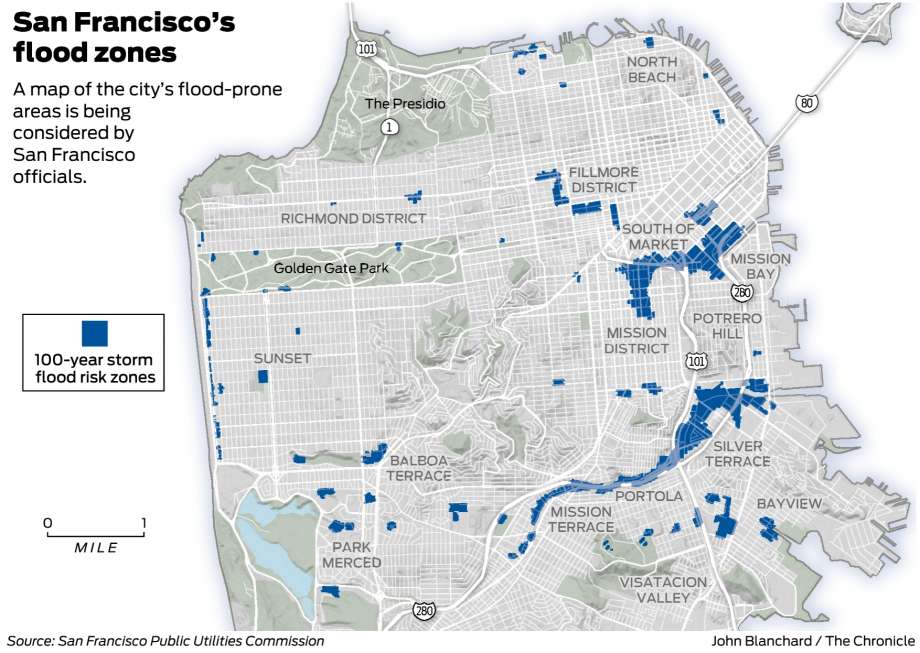
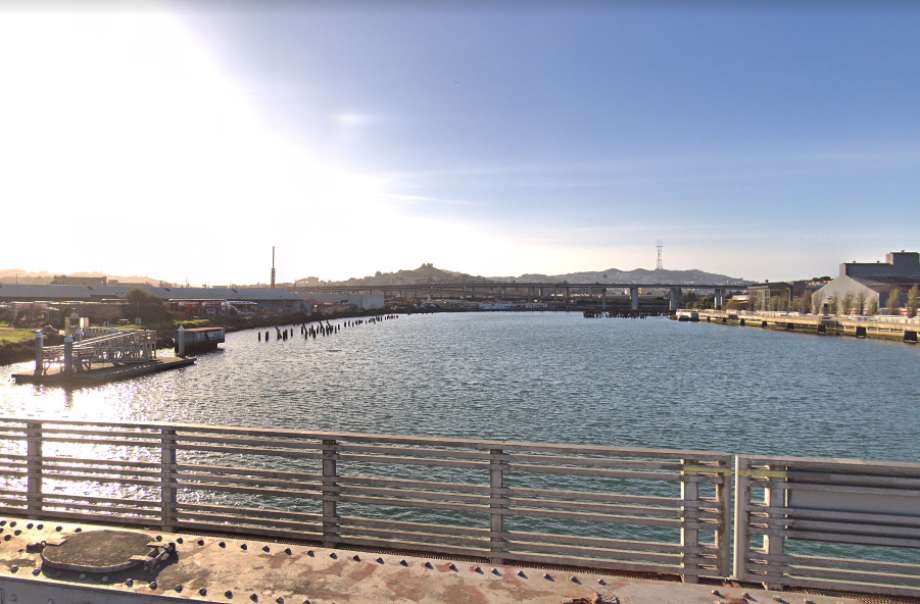
    In the coming months, the San Francisco Public Utilities Commission hopes to get the Board of Supervisors to introduce and pass an ordinance that would require property owners to notify prospective buyers when the building for sale lies in a flood-prone part of the city. Statistically, there is supposed to be a 1 percent chance of a 100-year storm happening in any given year. But San Francisco has experienced two such storms since 2000. Predictably, the most flood-prone areas are those in low-lying areas and those that were built on top of bodies of water, like the Islais Creek.

    less

    In the coming months, the San Francisco Public Utilities Commission hopes to get the Board of Supervisors to introduce and pass an ordinance that would require property owners to notify prospective buyers when

    … more


    Photo: Google Earth

  •  SF wants to use new map of flood prone areas to inform property buyers

Caption

Close

In the coming months, the San Francisco Public Utilities Commission hopes to get the Board of Supervisors to introduce and pass an ordinance that would require property owners to notify prospective buyers when the building for sale lies in a flood-prone part of the city. Statistically, there is supposed to be a 1 percent chance of a 100-year storm happening in any given year. But San Francisco has experienced two such storms since 2000. Predictably, the most flood-prone areas are those in low-lying areas and those that were built on top of bodies of water, like the Islais Creek.

less

In the coming months, the San Francisco Public Utilities Commission hopes to get the Board of Supervisors to introduce and pass an ordinance that would require property owners to notify prospective buyers when

… more


Photo: Google Earth


Some San Franciscans could soon have one more box to check in the paperwork that piles up when they’re trying to sell their properties.

In the coming months, the San Francisco Public Utilities Commission hopes to get the Board of Supervisors to introduce and pass an ordinance that would require property owners to notify prospective buyers when the building for sale lies in a flood-prone part of the city. The city’s Building Inspection Commission unanimously greenlighted the ordinance on Wednesday, clearing the way for supervisors to take it up.


And, for the first time in city history, the areas most at-risk for flooding from excessive rainfall have been identified. Last year, the SFPUC completed a mapping project detailing roughly 2,000 parcels that are likely to experience serious flooding during a 100-year storm — one that brings enough rainfall to drench more than half a city block with at least six inches of water.


The Federal Emergency Management Agency has mapped regions of the city likely to flood from coastal and creek flooding, but the city hasn’t previously had a map showing places at-risk from rainfall.

If the proposed ordinance moves ahead, property owners would use the map to determine if their parcel is in a flood-prone area, triggering a disclosure to would-be buyers.


f4e8b 920x1240 SF wants to use new map of flood prone areas to inform property buyers


Exactly how the map might impact property values or flood insurance rates is unclear. But SFPUC officials see it as an important layer of transparency when property is changing hands. It also reflects the agency’s broader efforts, including major infrastructure improvements, to make the city more resilient to the effects of climate change, which is expected to bring heavier rainstorms to San Francisco.

Statistically, there is supposed to be a 1 percent chance of a 100-year storm happening in any given year. But San Francisco has experienced two such storms since 2000. Predictably, the most flood-prone areas are those in low-lying areas and those that were built on top of bodies of water, like the Islais Creek.


In danger of flood?

To see if your San Francisco home or business lies in a flood-prone area, insert your address in the SFPUC’s interactive map at www.sfwater.org/floodmap


Sarah Minick, a utility planning division manager with the SFPUC’s wastewater division, said that the agency “takes seriously” the prospect that the map could impact property values.

“We understand it can be concerning to people. However, we feel that the public policy initiative of making people more flood-resilient is important and that, because we do have this information, to be able to provide it to the public, it seems absolutely a good-government move to do so.”


Real estate professionals, who are expecting the ordinance to pass, say they’ve already been brokering sales with disclosures based on the flood map.

“Every buyer has to judge this for themselves — is (the flood risk) something I want to deal with or not?” said Kevin Birmingham, president of Park North Real Estate. “We haven’t seen an effect on value, but could this report change things? It could, but there’s no guarantee one way or the other.”

Through the SFPUC’s RainReadySF initiative, the city works to inform the public about the hazards of flooding while providing incentives for preventative measures, like handing out free sandbags and grants to reimburse flood victims who want to upgrade their properties to prevent future damage.

“We’re hoping awareness will also lead to actions that can help folks,” Minick told the Building Inspection Commission on Wednesday. “It can be as simple as folks saying, ‘Now that I know (about the flood risk), I’m not going to store all of this valuable electronic equipment in my garage.’”

Last year, the SFPUC also sent letters to about 4,000 property owners informing them that their parcels were in flood-prone areas.


But Riz Gache didn’t need a letter to inform him that he was in a flood zone. His home, like dozens of others near the border of Mission Terrace and Glen Park, has flooded multiple times in recent years — twice in one week in December 2014. The flooding ruined his basement and home office, causing tens of thousands of dollars in damage.

Gache successfully petitioned the city to pay for some of the damage. Dozens of others have sued. In a single case, one with more than 40 plaintiffs claiming the city should pay for the damage their property sustained from flooding, officials have authorized just over $1 million in settlements. Three plaintiffs are still waiting to settle their cases.

To Gache and others, the flood map and the rest of the SFPUC’s efforts to make the city more resilient to big storms is a fig leaf for the much larger — and vastly more expensive — infrastructure improvements they believe will prevent future flooding.

Such improvements would likely cost several billion dollars. He and some of his neighbors started a website called “Sandbags Not Solutions,” to get the word out about their flooding problems and to call for the city to fix what they see as infrastructure deficiencies.

“This is not a solution,” Gache said of the flood map. “It’s a new thing where they’re saying, ‘Hey, we’ve got climate problems, we’re going to have more rain.’ It’s B.S. For us, it’s utility repair. That’s what you needed to do.”

Dominic Fracassa is a San Francisco Chronicle staff writer. Email: dfracassa@sfchronicle.com Twitter: @dominicfracassa

Article source: https://www.sfgate.com/bayarea/article/SF-wants-to-use-new-map-of-flood-prone-areas-to-13539452.php

Posted in SF Bay Area News | Tagged | Leave a comment