Oakland strike highlights housing struggles for teachers

Cris Bautista teaches high school in Oakland, California, but to afford to live in the San Francisco Bay Area, he commutes an hour or more to an apartment he shares with another teacher and works weekends at a coffee shop.

The English and history teacher is among the Oakland educators who went on strike for a week, winning an 11 percent pay raise with the argument that their salaries were not nearly keeping up with the soaring cost of living in a region flush with technology industry money. As evidence, they point to the district’s above-average turnover rate.

Their predicament has been so illustrative of a national inequity problem in America’s wealthiest communities that the tentative contract — which also comes with a one-time 3 percent bonus — is a triumph that stands out among the dozen major teacher strike movements that have swept the country in the past year.

“The contract will help ensure more teachers stay in Oakland and that more come to teach in our classrooms and support our students,” said Oakland Unified School District Superintendent Kyla Johnson-Trammell in a statement.

Educators’ struggles to afford housing have also been at the heart of union strife in other high-priced cities from Seattle to Los Angeles, part of a wave of teacher activism that has swept the country since a statewide teachers’ walkout last spring in West Virginia.

It’s an issue that school districts, community groups and others have been working to address in affluent areas to help retain teachers, and to make it easier for them to live in and stay involved with the communities they serve.

In California, where the affordability crisis is especially acute, school districts from Santa Clara in Silicon Valley to Los Angeles have created affordable housing programs to serve their staffs. The Los Angeles Unified School District started offering apartments on or near its school campuses in 2015, but affordable housing income guidelines have limited the number of teachers living in the units, which are leased instead to lower-paid support staff like bus drivers and teacher assistants.

In January, the Los Angeles teachers union won a 6 percent pay raise after a six-day strike.

A business group called Landed launched in 2015 to offer down payment assistance to teachers and has contributed to the home purchases of nearly 200 educators in California, Washington state and Colorado, according to founder Alex Lofton, who said the startup was inspired by a Stanford University program to help its staff. Landed takes a cut of either the profit or loss when the home is resold. The real estate program began with seed money from Facebook CEO Mark Zuckerberg’s philanthropy to help teachers and it hopes to eventually broaden to other “essential” community professionals like firefighters and nurses.

The Oakland Education Association and its 3,000 teachers walked out on February 21 to demand increases in what they say are some of the lowest salaries for public school teachers in the Bay Area. Salaries for Oakland teachers start at $46,500 a year and the average salary is $63,000, according to the union. In neighboring Berkeley, a starting teacher makes $51,000 a year and the average salary is $75,000, the union said.

Bautista said if he could afford to live in Oakland, he would offer more after-school tutoring to his students. But he can only afford to live an hour away in Fremont, where he pays $1,300 for his share of an apartment. By comparison, Oakland’s median rental housing price is $3,380 for a two-bedroom home, according to Zillow.

“I would like for my career to be in Oakland,” said Bautista, who said he left a position in a wealthier school district that paid him $10,000 more, in order to work with Oakland’s diverse, underserved student population. “At the same time, money is a concern.”

The teachers say the income gap is forcing many of them to leave the district or profession entirely.

Desiree Carver-Thomas, an expert on teacher turnover at the Learning Policy Institute in Palo Alto, said about 20 percent of educators leave the district annually, but some schools, particularly in poorer east and west Oakland see up to 30 percent of their teachers disappearing. Ismael Armendariz, first vice president of the Oakland teachers union, said it’s the worst at West Oakland Middle School, which over a three-year period retained only 9 percent of its teachers.

“That’s a problem because that kind of instability has an effect on student achievement,” Carver-Thomas said.

An Oakland school district spokesman said it recently began exploring the possibility of facilitating more affordable housing in the city.

“It’s very much in our mind because we know how expensive it is to live here,” spokesman John Sasaki said.

But Oakland teacher Grace Bigler says the concept of “teacher housing” or assistance programs are insulting to the profession and don’t address the inequity issue at the root of the problem.

“Teacher housing is kind of Band-Aid on a deep wound,” Bigler said.

In some areas, solving the issue of affordable housing for teacher has been a decades-long effort.

Eagle County Schools, which serves the ritzy ski-town areas around Vail, Colorado, has for the past twenty years sought a developer to build on district-owned property because it struggles with teacher recruitment and turnover, which hovers around 12 percent. But that on-going proposal has been hampered by dueling interests: making a profit alongside affordable housing for teachers.

“It’s a real crisis for everyone in our community to have this situation,” said Dan Dougherty, a district spokesman.

The school system has recently turned to the Habitat for Humanity nonprofit to create below-market price homes for teachers who must help build it. The district also offers eight temporary housing units to get new teachers into the district.

___

Follow Sally Ho on Twitter: https://twitter.com/_SallyHo

Article source: https://www.sfchronicle.com/news/education/article/Oakland-strike-highlights-housing-struggles-for-13657895.php
Posted in SF Bay Area News | Tagged | Leave a comment

Tiny homes make up less than 2% of San Francisco house sales

In recent years, so-called “tiny homes,” loosely defined as units of 500 square feet or less, have been a byword in real estate marketing and development, proposed as an efficient fix for the housing crunch and the homeless crisis.

(Enterprising thieves have even started stealing entire houses in some communities where tiny homes thrive.)

But according to real estate site Property Shark, tiny homes make up only a tiny portion of the Bay Area home buying market.

In a study published in February, the site compiled sales by square footage in ten U.S. cities, including San Francisco and San Jose.

The results: Only 1.7 percent of homes sold in San Francisco since 2010 have measured 500 square feet or smaller. It’s even less in San Jose; in fact, Property Shark analyst Patrick McGregor reports a big fat zero when it comes to tiny home sales in the South Bay.

However, a Property Shark spokesperson clarifies to Curbed SF that these figures are an estimate and that the mere 36 tiny homes sold in San Jose during the eight year span gets rounded down to zero in the results.

Note that these numbers combine every sort of home available, from single-family houses to condos and apartments.

That seems like it might deflate the optics a bit—after all, far fewer houses are built at less than 500 square feet compared to apartments, so including single-family homes in the equation handicaps the results a bit.

In response to Curbed SF’s inquiry, Property Shark explained that nationwide nearly 70 percent of tiny homes sold were condos (11,801 units in total), while just 22.3 percent were houses. Townhouses comprised just 0.1 percent of the overall, with the remaining 7.8 percent classified as “other residential.”

McGregor does note that while relatively few people are buying tiny homes—the biggest returns were in Manhattan, with 2.1 percent of the market—today appears to be a great time to develop them for renters.

According to rental site Rent Cafe, of all the new apartments built in San Francisco since 2010, 24 percent were “tiny homes.” In San Jose that figure comes in at only one percent. And according to San Francisco’s most recent housing inventory, the city built 12,016 new condos and apartments since 2010, although those figures do not include 2018’s contributions.

Article source: https://sf.curbed.com/2019/3/1/18246204/tiny-homes-propety-shark-market-share-housing-crisis

Posted in SF Bay Area News | Tagged | Leave a comment

Bay Area home prices ‘totally random’ as sales slow

The median Bay Area home price rose at its slowest year-over-year pace in two years in January as a slowdown that hit the real estate market in September continued into the new year.

The median price paid for a new or existing home or condo in deals that closed in January in the nine counties was $730,000, down 7 percent from December and up 2.2 percent from January of last year, according to a report released Thursday by research firm CoreLogic. In January 2018, the median price rose 13.8 percent from a year earlier.

Prices rose in the double digits for 13 consecutive months until September, when the market downshifted amid a big jump in inventory. Buyers backed off during the past three months of the year amid a jump in interest rates, a sharp stock market correction and general lack of affordability.

Many sales that closed in January were struck in December.

By the end of February, the stock market had recovered most of its losses and mortgage rates were the lowest in more than a year. The average rate on a 30-year mortgage this week is 4.35 percent, down from nearly 5 percent in November and 4.43 percent a year ago, according to Freddie Mac.

The market now “is totally random,” said agent Alexander Clark of TheFrontSteps Real Estate in San Francisco.

 Bay Area home prices ‘totally random’ as sales slow

He listed two homes on Page Street last spring “that literally flew off the shelves,” he said. He listed another on Page Street just after Labor Day that didn’t sell until January, after he had taken it off the market. The buyer had seen it in September. Another house he sold on Page Street that closed in late January took just as long.

On the other hand, one of his buyers is in contract on a home in San Francisco that got eight offers, and “we had to go a ridiculous amount over list price to get it,” he said. “There is no rhyme or reason” in the market.

The number of Bay Area homes and condos sold in January was 3,857, down 27.8 percent from December and down 14.9 percent from January of last year. That was also the lowest number sold in the month since January 2008, CoreLogic reported. Sales typically slow between December and January, by an average of 29.1 percent over the long run.

The market usually picks up in February, as buyers try to get ahead of the spring rush.

Clark said he’s getting a lot fewer emails with subject lines such as “Still available,” “Motivated seller,” and “Can’t believe it’s still there” than he was getting from November to January.

But it’s nowhere near as frenzied as it was this time last year.

“Buyers are definitely being a little more picky; there is more to choose from,” Clark said.

Instead of listing homes far below the expected sales price, hoping to incite a bidding frenzy, agents seem to be setting prices closer to what sellers hope to get, in case they get only one offer, he added.

On the Peninsula, the market started to shift at the end of February, said Judy Citron, an agent with Compass in Palo Alto. “There is less inventory, the weather is getting better. I have started selling homes with multiple offers again,” she said.

But instead of homes getting five or seven bids like they did last year, it’s more like two or three.

“What the downturn in September did was give a little shock of reality to sellers who need to readjust their expectations a little bit,” she said.

Some buyers, remembering what happened after Facebook went public, want to get in before a number of large companies go public this year, she said.

In a recent study, Zillow looked at what happened to home prices in census tracts with a lot of Facebook employees after the company’s May 2012 IPO. It found that between March 2012 and March 2013, home values in these tracts rose 20.9 percent, compared with 16.8 percent for the 13 surrounding counties.

Most of the large companies that could go public this year — Lyft, Uber, Slack, Airbnb and Pinterest — are in San Francisco. Palantir is in Palo Alto. Of these, only Lyft and Slack have acknowledged filing paperwork to go public with the Securities and Exchange Commission. Uber has not confirmed reports that it too has filed.

“I believe we will go up slightly in the spring, but we will not see the double-digit appreciation like we had” last year, Citron said.

Kathleen Pender is a San Francisco Chronicle columnist. Email: kpender@sfchronicle.com Twitter: @kathpender

Article source: https://www.sfchronicle.com/business/networth/article/Bay-Area-home-prices-totally-random-as-13653146.php

Posted in SF Bay Area News | Tagged | Leave a comment

$1.955M home offers views and a chance to own in rarely available SF neighborhood


  • a14bc 920x920 $1.955M home offers views and a chance to own in rarely available SF neighborhood

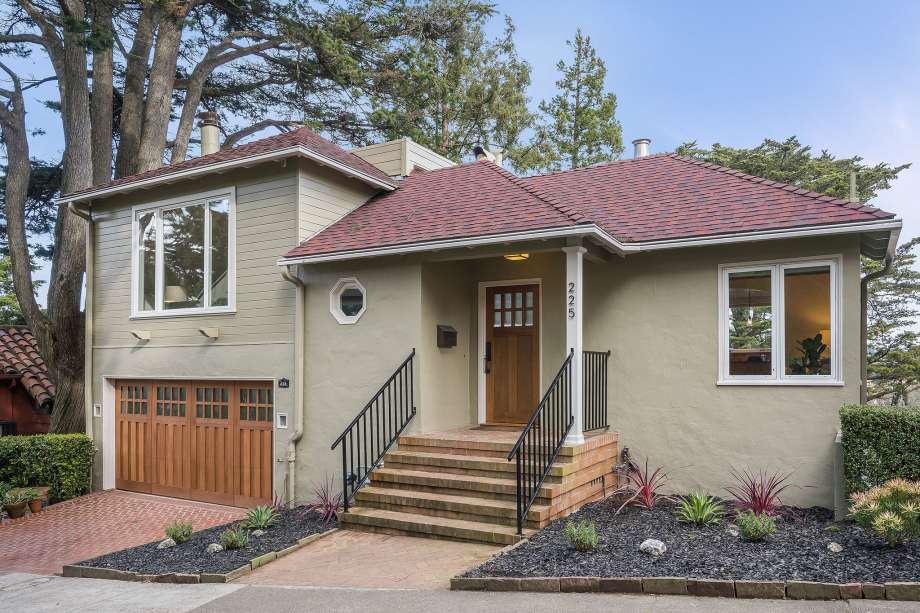
    Rarely available and with a rare SF view, this Edgehill Way neighborhood home asks $2M

    Rarely available and with a rare SF view, this Edgehill Way neighborhood home asks $2M


    Photo: Denis Doni

  •  $1.955M home offers views and a chance to own in rarely available SF neighborhood

Caption

Close

Rarely available and with a rare SF view, this Edgehill Way neighborhood home asks $2M

Rarely available and with a rare SF view, this Edgehill Way neighborhood home asks $2M


Photo: Denis Doni


Circa 1948, this Edgehill Way abode offers some lucky new buyer a unique home with panoramic views — and for the rest of us, a chance to peek inside a property located in a rarely available neighborhood.

The home


Composed of 2,346 square feet on two levels, the home, according to the official listing, is three-bedroom, two-and-half bathroom. However, there’s flexibility here, as currently there is both a formal living room and a cozy, wood-paneled den that might easily be converted into a fourth bedroom.

Also cozy is the fact that the house offers not one, not, two, but three fireplaces (one of which is in the master suite).

Other features of note: gorgeous tile in master bath, closets with built-in organizers, a formal dining room overlooking forested hills and an open-concept kitchen.


ALSO: Two vintage Oakland homes under $800K come to market: one untouched, one revamped

A deck, complete with telescope, offers stellar views possible only from this vantage: the Sutro Tower, angular cypress trees, tall redwoods, the city and the Bay beyond.

Strategically placed windows offer partial versions of this panorama throughout the home.

The property

The lot is 4,000 square feet, surrounded by trees redwood and cypress trees. There’s also a spacious garage.

Despite the sylvan, almost bird’s nest feel of the place, in fact 225 Edgehill Way is walking distance to Forest Hill and West Portal.

The deal

As we said, homes for sale in this area are rare. There are no recorded sales for Rockridge Terrace in the past 30 days, so the median information available is based on list price only — currently at $1.955 million, asking $833 per square foot.

This home asks exactly that much per square foot, with a price tag of exactly that median– because it also the only home that has listed in the area in the last 30 days.

See the complete listing here.

Anna Marie Erwert writes from both the renter and new buyer perspective, having (finally) achieved both statuses. She focuses on national real estate trends, specializing in the San Francisco Bay Area and Pacific Northwest. Follow Anna on Twitter: @AnnaMarieErwert.


Article source: https://www.sfgate.com/realestate/article/Edgehill-Way-home-offers-views-and-a-chance-to-13617608.php

Posted in SF Bay Area News | Tagged | Leave a comment

What will happen to SF home prices if Slack, Airbnb, Uber and Lyft go public?


  • 672a5 920x920 What will happen to SF home prices if Slack, Airbnb, Uber and Lyft go public?

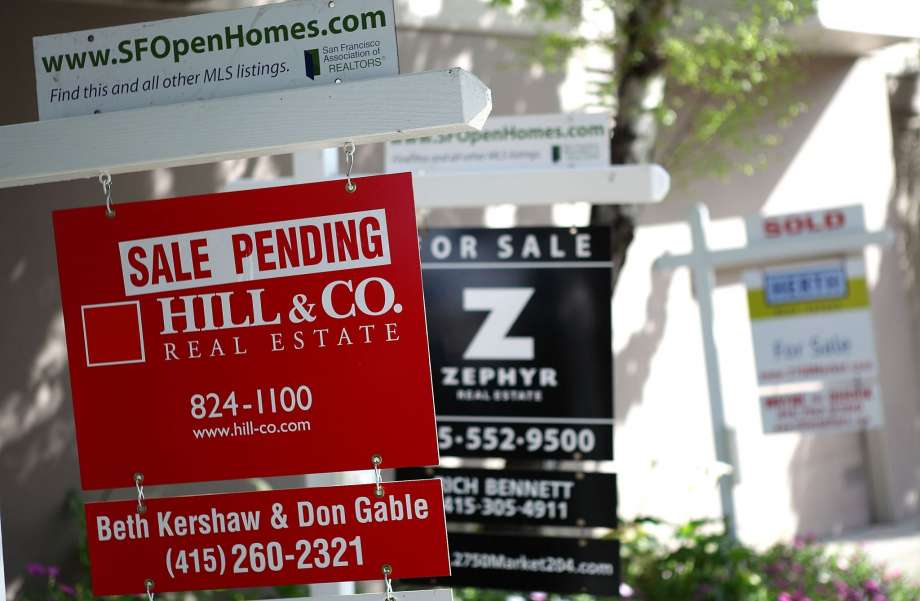
    FILE PHOTO: Real estate signs are posted in front of homes for sale in San Francisco, California.

    FILE PHOTO: Real estate signs are posted in front of homes for sale in San Francisco, California.


    Photo: Justin Sullivan/Getty Images

  •  What will happen to SF home prices if Slack, Airbnb, Uber and Lyft go public?

Caption

Close

FILE PHOTO: Real estate signs are posted in front of homes for sale in San Francisco, California.

FILE PHOTO: Real estate signs are posted in front of homes for sale in San Francisco, California.


Photo: Justin Sullivan/Getty Images


If tech firms including Uber, Lyft, Airbnb and Slack go public this year, what will the effect be on Bay Area real estate?

We can look to the Facebook Effect for insight.


The Facebook Effect

Facebook’s public offering had such a profound impact on the Bay Area that real estate insiders named it. The “Facebook Effect,” felt full force in the spring of 2012 leading up to the company going public in May, continued to reverberate for the rest of that year — and perhaps still does.

Facebook went public on May 18, 2012. On May 17, Julian Herbon of Basis Point wrote of multiple buyers hovering around limited properties, out-bidding one another with a frenzy unseen even in a market well accustomed to frenzy.

“It’s what some are calling The Facebook Effect on San Francisco real estate,” Herbon explained. One of the “main themes that set fire to this trend starting in late-2011 was a “rush to buy before IPOs set ever higher bars for tech firm valuations.”


ALSO: 15 years and a luxe remodel add $2.755M to Russian Hill home’s price tag

Tech valuations

In Hebron’s example, tech valuation refers to the idea that the perceived value a company has increases when it goes public; and then, those individuals who hold stock in the company are suddenly owners of some (sizable) portion of that increased value.

Hebron cites LinkedIn’s and Zynga’s IPOs as evidence, and then points out that Facebook dwarfed them all, especially after the latter acquired Instagram (which was still another high-value tech company), bringing numbers to the billions instead of just millions.

In 2012, valuations of then still-private Bay Area based companies were eye-popping:

– Twitter: $8b+

– Dropbox: $4b

– Square: $1-2b

– Path: $1b

– Airbnb: $1b

-Pinterest: $1.5b

-Quora: $1b

“You can argue against these absurdly high valuations all you want but thousands of liquid millionaires are being created before and after these firms go public—and the impact on our property market is real,” wrote Hebron.

Effect on prices 

There is no denying the effect is real. In studying census data, Zillow determined that starting around Facebook’s 2012 public offering “home values in the census tracts where likely Facebook employees lived rose faster than in those not home to Facebook employees.”


More precisely: Every 10 Facebook employees living in a given census tract at the time of Facebook’s IPO in May 2012 were associated with an additional 1.6 percentage points of home value increase over that year.

Using designated areas closest to Facebook Headquarters in Menlo Park, Zillow found that between 2012 and 2013, home values around likely Facebook employees climbed 21 percent, compared to 17 percent in all other Bay Area census tracts.

“This faster growth translated into an extra $29,800 in appreciation for the typical home in these Facebook-employee-heavy areas compared to homes in the rest of the Bay Area,” said the report.

What’s the next IPO to make an impact?

Rumored to be racing ahead of Uber, Lyft has filed filed a statement with the U.S. Securities and Exchange Commission for an initial public offering. If all goes as planned, Lyft could be the first major tech IPO of 2019.

According to NBC News, Lyft’s currently enjoying a $15.1 billion valuation.

Uber, meanwhile, also plans to go public this year. In 2018, Investopedia wrote “Ride-hailing company Uber Technologies Inc could be valued at $120 billion, when it finally goes public next year.”

Meanwhile, both AirBnb and Slack are in the mix to go public, but perhaps without banks, in the manner that Spotify went public in 2018.

Patrick Carlisle, data analyst with Compass Realty, told SFGate that “If the big IPOs actually occur, and the market reacts enthusiastically, one can only assume it will put upward pressure on prices in those areas where the unicorn employees live in greatest numbers.”

But then again, maybe not.

It may be a countervailing factor in a cooling market, as opposed to a accelerating factor in a hot market. There are a lot of political and economic “plates in the air” right now, and financial markets have been extremely volatile. In recent weeks, the economic indicators have been mostly quite positive, but just weeks ago they were quite negative, so we can’t take for granted what direction indicators will go in the near future. We simply don’t know.

What would happen to Bay Area real estate if all four go public in 2019? If the Facebook Effect is precedent, we could be in for a dramatic year.

Anna Marie Erwert writes from both the renter and new buyer perspective, having (finally) achieved both statuses. She focuses on national real estate trends, specializing in the San Francisco Bay Area and Pacific Northwest. Follow Anna on Twitter: @AnnaMarieErwert


Article source: https://www.sfgate.com/realestate/article/What-will-happen-to-SF-home-prices-if-Slack-13598371.php

Posted in SF Bay Area News | Tagged | Leave a comment