Silicon Valley could have 5,000 new millionaires after this year’s tech IPOs

At least 5,000 tech workers could become millionaires after their companies go public later this year, according an analysis from a big data realtor in Silicon Valley.

Compass big data realtor Deniz Kahramaner estimates that at least 5,000 employees across eight companies — Airbnb, Instacart, Lyft, Palantir, Pinterest, Postmates, Slack and Uber — could become millionaires after their company goes public in 2018.

“All these IPOs are coming, and $150 billion to $250 billion are going to be unlocked in market capitalization over the next two years,” explains Kahramaner. “All those newly rich tech employees are going to have a significant impact on the real estate market.”

A new record

This year’s 5,000-plus tech IPO millionaires would surpass the estimated 1,000 millionaires who emerged in 2004 from Google’s (GOOGGOOGL) IPO and the 1,000-plus millionaires in 2012 after Facebook (FB) went public. That this year’s crop will surpass those time periods probably isn’t surprising given the number of companies marching towards an IPO in 2019. But it does speak to sheer amount of wealth that’s about to flood the San Francisco Bay Area.

6a2cd spaceball Silicon Valley could have 5,000 new millionaires after this years tech IPOs Silicon Valley could have 5,000 new millionaires after this years tech IPOs

The markets where all that wealth could be felt most? Real estate and rentals. Kahramaner projects that up to 2,400 of those tech millionaires could potentially purchase properties priced at $1 million or under, while on the very high-end, just over 200 millionaires may purchase properties priced $10 million and over. These purchases will likely drive the local real estate market further. In fact, Kahramaner predicts that no San Francisco property will be priced under $1 million in five years, as a result.

Anthemos Georgiades, CEO of the apartment rental listing site Zumper, which tracks rental pricing trends across the U.S., says that while he foresees a measurable uptick in rental pricing this year in San Francisco of around 10%, these new tech millionaires won’t all jump on real estate once they’re able to sell their shares. (Employees are usually subject to six-month lockups post-IPO that keep them from selling their shares.)

The biggest impact

“The biggest impact from the imminent 2019 IPOs will be felt on the luxury end of the residential rental market, with the most likely zip codes affected being those within a short commute from the new public companies’ headquarters, like Uber and Airbnb,” Georgiades explains, pointing to San Francisco neighborhoods such as South of Market.

However, some of these millionaires, many of whom will be millennials, may opt to spend their money on rentals or experiences instead. A Zumper rental survey published last November indicated that 33% of renters now don’t believe the American Dream involves home ownership. The company surveyed 5,339 respondents in the U.S. last year across all 50 U.S. states.

“The mainstream argument is that the newly liquid employees will all buy homes overnight, but this is unlikely to be true,” Georgiades contends. “There will very likely be a measurable uptick in home prices this year in SF, but there are also some headwinds that will balance some of this out. … We will see many millennial employees invest their capital in experiences like traveling instead of real estate assets.”

Be that as it may, that won’t stop realtors, vying for some of that IPO money, from trying.

Methodology

To calculate the number of IPO millionaires, Kahramaner devised a general capitalization table, one which breaks out startup equity distribution among early employees, based upon discussions with members of YCombinator, the 14-year-old startup incubator with alumni such as Airbnb, Dropbox, and Stripe. He assumed the valuation of each IPO company would be equal to the latest venture capital financing round. (Uber’s valuation, for instance, would be $72 billion.)

Kahramaner also assumed two stock dilution factors for each of the eight companies approaching an IPO: that each financing round the startup held diluted the company’s stock a certain percentage (10% for the initial seed round, 22% for Series A) and that executive hires, like Uber hiring CEO Dara Khosrowshahi in 2017, diluted employee stock value further. After the dilution, if a $72 billion company has an employee with 1% stock, for instance, that employee becomes worth $720 million upon IPO — at least on paper. Jake Jolis, a partner at VC firm Matrix Partners, said the methodology was sound, as did Selma Hepp, VP of Business Intelligence at Compass real estate.

More from JP:

Article source: https://finance.yahoo.com/news/lyft-uber-slack-airbnb-ipo-millionaires-123523288.html

Posted in SF Bay Area News | Tagged | Leave a comment

With Alain Pinel buyout, Compass could become Bay Area’s biggest real estate brokerage

The current issue of Gentry magazine has a two-page ad with the headline “Big Brother or Real Estate Brokerage?” The copy reads: “Some brokerages use your information to make money on more than just real estate and mortgage transactions. We don’t. Your data is yours. Our job is to safeguard it. Period.”

The ad is for Alain Pinel Realtors. The unidentified “Big Brother” is Compass, the venture-funded New York firm that’s been gobbling up Bay Area brokerages including — as of last Monday — Alain Pinel.

Compass bills itself as a technology firm, but it’s never been very clear, at least to outsiders, what its technology does.

“One of our big questions” about Compass was what it does with data it gets about buyers and sellers from agents, said Alain Pinel President Mike Hulme. Some agents from Alain Pinel and other firms were using that question “as a talking point” with potential clients. “This was a way for brokers like ourselves to spin it and make it a scary situation,” he said.

Hulme said he had to be convinced that Compass would not misuse data about buyers and sellers gleaned from agents before agreeing to the buyout. When he was shown the “market plan” Compass shows investors, “we couldn’t find anything, truly, that was concerning in regards to data.” Hulme said he’d retract the Big Brother ad, which has run in various publications since last fall, if he could.

 With Alain Pinel buyout, Compass could become Bay Area’s biggest real estate brokerage

Compass has assured its agents their data is theirs alone. “We will never contact your clients without your permission,” it said in a data pledge. “The data is not where the money is, the money is creating a technology platform that makes agents better at their job,” said Kevin Knight, Compass’ general manager for Northern California.

Hulme’s father, Paul Hulme, founded Alain Pinel 30 years ago and built it into a powerhouse in Silicon Valley and the Peninsula. In the Bay Area, it ranked second to Coldwell Banker and its sister brands in sales volume in 2017, according to Real Trends, a research and consulting firm.

Compass first approached Alain Pinel in August, right after it acquired Paragon Real Estate Group and just before it announced the acquisition of Pacific Union International. Those two firms ranked 10th and third, respectively, in 2017 Bay Area sales volume.

The Hulmes rebuffed Compass in August, and bulked up by buying Hill Co., a smaller San Francisco firm that also catered to the high-end market.

Alain Pinel, with almost 1,300 agents, was the nation’s seventh-largest residential real estate brokerage in terms of sales volume in 2017, though only 73rd in the number of transactions, according to Real Trends. Its average sales price was $1.6 million, the nation’s highest.

Compass responded by poaching some of Alain Pinel’s top agents, including Judy Citron, who was the nation’s 20th largest individual agent by sales volume last year; and Mary and Brent Gullixon, who ranked as the nation’s 18th highest-volume team, according to Real Trends.

It’s important to remember that the customers of brokerage firms are agents, not buyers and sellers of homes, who are the agents’ clients. Most agents are independent contractors who share a portion of their commissions with their affiliated brokerage, usually in exchange for office space, marketing and other services.

Compass has been luring top agents with some combination of cash, stock, marketing money and more favorable commission splits, according to firms that have lost agents to Compass.

Citron said she joined Compass in early November, not for the money, but because “I wanted to align myself with a forward-thinking company.” Compass has “an amazing platform” that lets her see, all in one place, where all of the web traffic to her listings is coming from, so she can target her marketing better.

After losing some of its top producers to Compass, “we thought joining them versus fighting them was in our best interests,” said Hulme. He wouldn’t disclose the purchase price, but said it was “significantly less” than it would have been before his company lost agents to Compass.

D.J. Grubb, president of Grubb Co. Realtors in the East Bay, called the deal “a hostile takeover. They (Compass) go in and poach … the upper performers, create insecurity and then buy at a wholesale price.”

Compass was co-founded by Ori Allon, who has a Ph.D. in computer science and previously worked for Twitter and Google, and Robert Reffkin, who hails from Goldman Sachs and McKinsey.

“There are two world views emerging for the future of real estate,” Knight said. “One is that technology will ultimately replace agents. The other is that technology will ultimately make agents better at the things they are already great at. We espouse the second view.”

Compass has raised a total of $1.2 billion in venture capital from investors, including Salesforce CEO Marc Benioff and Thrive Capital, founded by Joshua Kushner, brother of President Trump’s son-in-law Jared Kushner.

Its latest fundraising round, $400 million in late September, was led by the SoftBank Vision Fund and Qatar Investment Authority. SoftBank Vision Fund had previously invested $450 million in Compass in December 2017.

The Vision Fund is part of Japanese conglomerate SoftBank, but its biggest investor is the Saudi Arabian government’s public investment fund, controlled by Crown Prince Mohammad bin Salman. He and the Vision Fund have been under fire since Washington Post contributor Jamal Khashoggi was brutally murdered at the Saudi Arabian consulate in Istanbul in October.

Many Bay Area companies have taken money from the Vision fund or from Saudi Arabia directly, including Uber, Lyft, Tesla and Slack.

In a statement, Compass CEO Reffkin said, “The death of Jamal Khashoggi is beyond disturbing because the freedom and safety of the press is something that is incredibly important to me.”

Compass said its latest financing gave it a private-market valuation of $4.4 billion. The nation’s largest residential real estate brokerage, the publicly traded Realogy Holdings, has a market value of only $1.4 billion. Its brands include Coldwell Banker, Better Homes and Gardens, Century 21, Climb, ERA and Sotheby’s International Realty.

Realogy has about 300,000 agents worldwide. Compass has about 10,000, all in the United States.

With its three acquisitions, along with agents it picked off from other firms, Compass could surpass Coldwell Banker and its sister firms as the Bay Area’s largest real estate broker. Coldwell Banker itself grew by acquiring a string of local companies, including Cornish and Carey, Fox Carskadon, Cashin Co. and Contempo Realty.

Steve Murray, president of Real Trends, said Compass probably entered the Bay Area because of its high home prices and the fact that it was one of the only big markets that still had large independent brokerage firms to acquire.

“I’ve seen their technology and it’s good but it’s not strikingly better” than what’s out there, Murray added. “The main thing is they are integrating a transactions system, customer relationship management system, their app, website, sales data, and online marketing tools.”

Hulme said Compass is “trying to improve the agent experience” and also “getting out in front of consumers. They want to get the majority of listings” so when you type a home address into Google, the first thing that comes up is not Zillow or Redfin but Compass.

Knight said its focus on consumers is secondary to its focus on agents. To that end, Compass recently acquired Contactually, which makes a customer management system used by agents at many firms.

Some firms that compete with Compass say they are severing ties with Contactually. “We had about 40 agents using Contactually. We do have some that are proactively removing their data from the platform,” said Tim Proschold, a vice president with the Sereno Group.

“We will not maintain that contract,” Grubb said. “Why would I support my competition? They are going into the data business. When they control the data, they control the customer.”

Kathleen Pender is a San Francisco Chronicle columnist. Email: kpender@sfchronicle.com Twitter: @kathpender

Article source: https://www.sfchronicle.com/business/networth/article/With-Alain-Pinel-buyout-Compass-could-become-Bay-13675236.php

Posted in SF Bay Area News | Tagged | Leave a comment

Thousands of New Millionaires Are About to Eat San Francisco Alive

As the idea of the coming I.P.O.-palooza took on currency, sellers started pulling their houses off the market. The broader California housing market has softened, and home sales are down, but here’s one fix for that.

“Even if just half the I.P.O.s happen, there’s going to be ten thousand millionaires overnight,” said Herman Chan, a real estate agent with Sotheby’s. “People are like, ‘I’m not going to sell till next year, because there are going to be bajillionaires everywhere left and right.’”

One of those is his client Rick Rider, a 61-year-old C.E.O. who decided not to publicly list his Bay Area house until some of the I.P.O.s have happened.

“Our particular house is not a family home. It’s a Double Income No Kids sort of home,” Mr. Rider said. “So it would potentially play well for a lot of the people that would be benefiting from the I.P.O.s.”

The spending wars will likely stay close to work.

“The millennial tech workers are really looking for convenience,” said Christine Kim, the president of Climb Real Estate. “They seem to not want to own cars, and food deliveries are really easy now, and they want to be close to entertainment, so they’ll stay in the city.”

When Google in Mountain View and Facebook in Menlo Park went public, their workers were spread across the Bay Area, and so the impact on housing was diffuse. Now, many of the biggest start-ups are based in San Francisco, in part thanks to the city’s tax breaks. Brokers say San Francisco is where the workers want to stay.

Article source: https://www.nytimes.com/2019/03/07/style/uber-ipo-san-francisco-rich.html

Posted in SF Bay Area News | Tagged | Leave a comment

Here’s what you need to know about the controversial Bay Area housing plan

Democratic Assemblyman David Chiu stepped into a political typhoon Thursday, when he introduced a state bill to create a Bay Area housing authority that would put tax measures on the ballot.

To Chiu and other housing advocates, this is the first step toward filling the state’s 3.5 million-home deficit, and developing communities in which families can afford to live near jobs, schools and hospitals.

“Right now, people have to drive farther to work, they can’t get their kids into good schools and they live far away from services,” said Matthew Lewis, spokesman for the pro-housing advocacy group California YIMBY. “We know, by every metric, that’s what is freaking Californians out.”

Chiu’s bill, AB1487, would create a new regional agency to raise funds for affordable housing construction — through, say, the sale of bonds accompanied by a tax increase, though those details still have to be worked out. If voters approve the funding mechanisms, they could generate $1.5 billion a year to be disbursed among the nine Bay Area counties. Communities would receive a portion of the money and still make their own land-use decisions.

But the notion of a new agency and more taxes infuriates some city leaders who say the government is running roughshod over local control.

Here’s a closer look:

The problem: Since the recession ended in 2009, the Bay Area has added 722,000 jobs but built only 106,000 homes, an imbalance that’s had severe consequences. It’s raised the price of real estate, pushing people farther and farther away from the urban core, in search of cheaper housing. As a result, workers spend two or three hours a day commuting. More people are moving into rural areas and wildfire zones.

The crisis has deepened for decades. Though the state sets regional housing goals, it never penalizes cities that fail to meet them. For the most part, communities are left on their own.

Building housing is complicated, and cities have many tools to make it happen or not. Residents often object to new development, saying it mars the look and feel of their communities. Politicians resent the state intervening to tell them what to build and where to put it. Affordable housing is costly to build without subsidies, and developers won’t commit to projects that won’t make a profit.

The region is tightly interconnected, Chiu said, so a city council obstructing development in Burlingame puts pressure on Oakland and San Francisco. And, ultimately, the effects ripple, creating a severe economic split between homeowners and renters, and older and younger generations.

Most local leaders recognize this crisis. But many don’t want to cede their decision-making power to the state — or to a new regional body that represents another layer of government.

The proposed solution: Chiu’s idea for a regional agency called Housing Alliance for the Bay Area derives from a controversial 10-point plan that originated two years ago, when the Metropolitan Transportation Commission and the Association of Bay Area Governments convened a panel of mayors, tech executives, tenant advocates and developers to tackle the crisis together.

Called Committee to House the Bay Area but nicknamed CASA, the panel put together an ambitious blueprint that calls for production of 35,000 homes a year, including 14,000 that are affordable to low-income families, and 7,000 that are affordable to moderate-income families.

The panel also called for preservation of 30,000 units of existing affordable housing, and protections for 300,000 households that are on the verge of getting displaced.

The document was intended as political ammunition for legislators, and several have picked up parts of it already — more than 200 housing bills were introduced this session.

Chiu’s AB1487 would create an agency to fund and shepherd the policies. It would introduce regional parcel or sales tax measures, spending the money on affordable housing production, rental assistance for tenants, and other forms of aid. It would help cities acquire land to build affordable housing and deliver reports on the region’s housing progress.

CASA estimates that the Bay Area needs to fill a $2.5 billion funding gap to meet its affordable housing goals. If it passes, AB1487 would provide more than half that money, and Chiu hopes that other state and local measures would provide the rest.

How it would work: Housing Alliance for the Bay Area would include members of the Metropolitan Transportation Commission, members of the Association of Bay Area Governments and appointees of Gov. Gavin Newsom, who has elevated housing as a top policy priority.

If voters approve the agency’s future funding measures, then 75 percent of the tax money generated by a county would stay within that county.

While the agency aims to build thousands of affordable units each year, it wouldn’t strip land-use authority from cities or counties, and it wouldn’t have the power of eminent domain to seize private property.

Why some cities object: Despite widespread concern about the housing shortage, some city leaders oppose a new layer of government bureaucracy making decisions on how tax money is spent. Many also felt alienated by the CASA process, saying it favored three big cities — San Francisco, Oakland and San Jose.

“Moving forward with legislators, I’d love to ensure that other voices are heard besides the big three,” said Los Gatos City Councilwoman Marico Sayoc. She hasn’t taken a position on Chiu’s bill yet, but she already has some questions. Namely, how will the money be distributed? And if most of it comes back to the county, then why does it have to be diverted to an agency in the first place?

How it could get complicated: It’s still unclear what will happen if cities refuse to build. Right now there is no real mechanism for the state to override local land-use authority. When Newsom proposed withholding transportation dollars from cities that don’t meet their housing targets, he ignited a political flame war.

Chiu hopes that other zoning bills will address these questions, or that the governor will come up with a way to coerce housing production. He said he wants the Housing Alliance to provide desperately needed funding, but not serve as an enforcement arm.

“We want HABA to be a carrot, not a stick,” he said.

Rachel Swan is a San Francisco Chronicle staff writer. Email: rswan@sfchronicle.com Twitter: @rachelswan

Article source: https://www.sfchronicle.com/bayarea/article/Here-s-what-you-need-to-know-about-the-13671882.php

Posted in SF Bay Area News | Tagged | Leave a comment

This Mother-Son Real Estate Duo Has Handled Nearly $500000000 in SF Home Sales

It is no secret that the San Francisco real estate market is among the world’s most desirable. From extravagant mansions priced multiple times beyond your expected lifetime earnings to run down, single-room shacks which are somehow still beyond your budget, properties in S.F. make international news constantly.

 This Mother Son Real Estate Duo Has Handled Nearly $500000000 in SF Home SalesSan Francisco’s most expensive home | Photo: Jacob Elliott

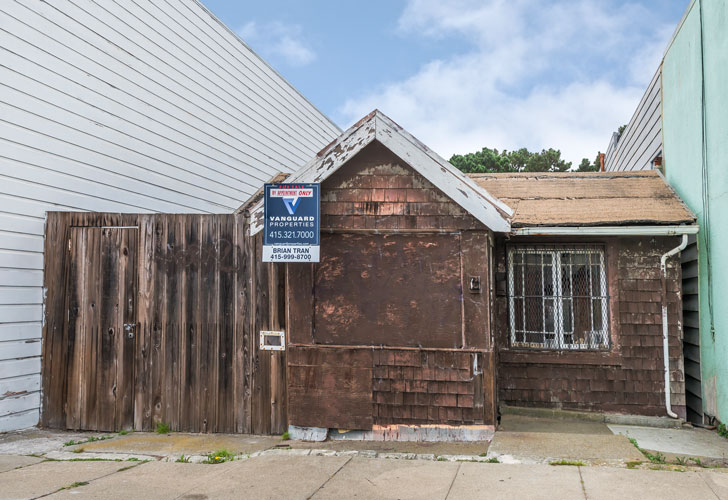
f9040 img 9309 This Mother Son Real Estate Duo Has Handled Nearly $500000000 in SF Home SalesThis shack priced to sell at $350,000 | Photo: Vanguard Properties

With so many properties with extreme price tags, some SF real estate agents are bound to have staggering sales records alongside. In line with that premise, a mother-son team – Caroline Kahn Werboff and David Werboff – have collectively bought and sold nearly $500,000,000 (Yes, that’s half of a billion!) in Bay Area homes.

This is a mind-boggling number considering the fact that businesses with dozens of employees fail to reach those sales numbers across decades of operation.

The continued success of the Werboffs is only one part of what has granted this team recognition on SFists’ Top Real Estate Agents list for March of 2019. Werboff Residential has glowing reviews from their happy clients, is among the 100 top performers in Bay Area Real Estate, and has been honored by Sotheby’s International Realty in the top 2% of agents nationwide since joining the brokerage in 2012.

f9040 top sf real estate agents san francisco This Mother Son Real Estate Duo Has Handled Nearly $500000000 in SF Home Sales
David Werboff (Left) Caroline Kahn Werboff (Right)

David and Caroline are surely power real estate agents in San Francisco who are known fondly by families in search of a home, bachelors looking to find their ‘pads,’ and some of The City’s notable executives. As David elaborates, “We have represented many top business executives, and even entire boards of major companies in their residential San Francisco transactions. These clients have been everything from local to even international.”

Have a look at the Werboff’s appearance on SFist’s Top Real Estate Agents in San Francisco.

Article source: https://sfist.com/2019/03/01/this-mother-son-real-estate-duo-has-sold-nearly-500-000-000-in-s-f-homes/

Posted in SF Bay Area News | Tagged | Leave a comment