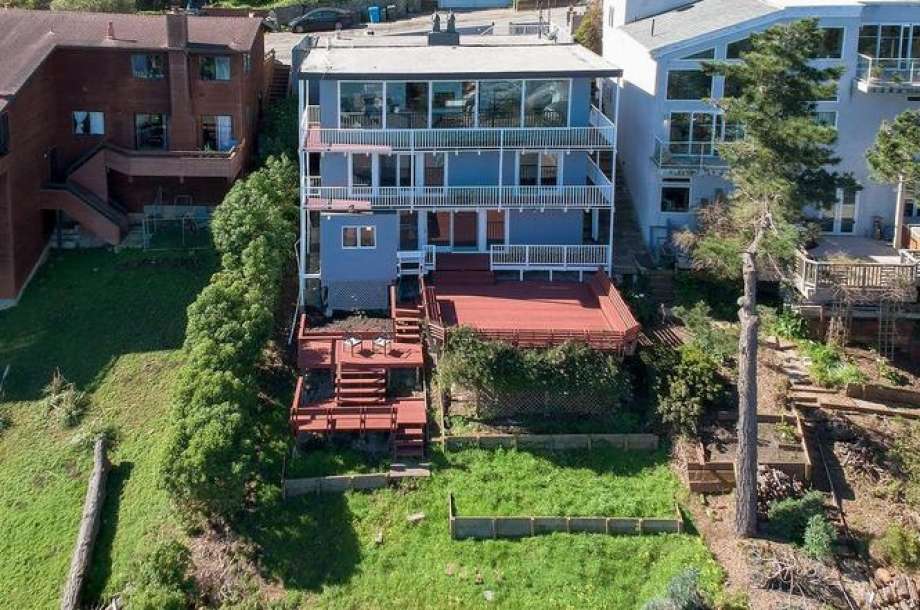
In Pacifica, this home on Olympian Way in San Pedro Point asking $1,999,000 is 3 bed, 3 bath, 3,340 Sq. Ft., on the market over 20 days. It has a 5,000 square foot lot and a view of the ocean.
In Pacifica, this home on Olympian Way in San Pedro Point asking $1,999,000 is 3 bed, 3 bath, 3,340 Sq. Ft., on the market over 20 days. It has a 5,000 square foot lot and a view of the ocean.
Photo: RMLS
Caption
Close
In Pacifica, this home on Olympian Way in San Pedro Point asking $1,999,000 is 3 bed, 3 bath, 3,340 Sq. Ft., on the market over 20 days. It has a 5,000 square foot lot and a view of the ocean.
In Pacifica, this home on Olympian Way in San Pedro Point asking $1,999,000 is 3 bed, 3 bath, 3,340 Sq. Ft., on the market over 20 days. It has a 5,000 square foot lot and a view of the ocean.
Photo: RMLS
Ah, the suburbs. Generally, these locations– peripheral to some major metropolis– offer a slower pace of life, easy parking, and better home prices where the dollar buys more home and land (think front yard and backyard!). But in the Bay Area, that’s not always the case. Some of our suburban real estate is actually more expensive than our major cities.
We’ve chosen 15 Bay Area suburban cities–to the south, north and east and on the Peninsula–to highlight, where median list prices run the gamut from $615,000 to $3.899 million.
Stats:
In the real estate roundup above, a few facts deserve special attention. Based on 30 days of market activity, Palo Alto commands the highest list price, which should surprise no one since this area arguably isn’t really a suburb at all. Though surely some people living in Palo Alto commute to San Francisco, many work in the much closer the Silicon Valley. The zip code hosting the most expensive home for sale in Palo Alto is enjoying a median list of $3.889 million, and a sale-to-list ratio of 102 percent.
In the opposite corner (geographically and economically), there is San Leandro. This East Bay area could be considered a suburb of both San Francisco and Oakland. The median list in the most expensive zip in San Leandro now is $617,475. With this price is a 102 percent sale-to-list ratio.
The area enjoying the highest sale-to-list ratio is that of Brisbane. In the neighborhood hosting the most expensive home in Brisbane, buyers are offering up 109 percent of asking prices.
Take our suburban tour in the gallery above.
Anna Marie Erwert writes from both the renter and new buyer perspective, having (finally) achieved both statuses. She focuses on national real estate trends, specializing in the San Francisco Bay Area and Pacific Northwest. Follow Anna on Twitter: @AnnaMarieErwert.
San JoseThe San Jose housing market has cooled more than any other in the country — and it’s still the hottest in the nation, according to a recent Zillow survey.
The bidding wars and quick cash sales have abated, and home sellers are cutting prices more often and waiting longer to close deals than a year ago. But middle-income families still struggle to afford the median priced home of $1.2 million in the San Jose metro area. A typical family needs to put about $600,000 down to fit that mortgage comfortably in their budget.
“Buyers are not being forced into crazy bidding wars to leapfrog each other into a house,” said Zillow economist Jeff Tucker. But, he added, “It has been the hottest market in the country. In a lot of ways, it still is.”
The Bay Area housing market has rocketed up and pushed out many would-be buyers. Median sale prices for existing homes have climbed, year-over-year, every month since April 2012, according to real estate data firm CoreLogic. These rising prices — the median sale price in January for the nine-county region was $750,000 — have slowed Bay Area home buying to its lowest level in a decade.
Sales slumped nearly 13 percent in January from the previous year. Agents say homes priced over $2 million are spending longer on the market, and CoreLogic data found transactions for luxury homes in San Mateo and Santa Clara counties dropped by more than 25 percent in December and January.
Real estate agent Ramesh Rao said higher-end properties in Cupertino and Saratoga are taking longer to sell. “At the moment, it is neither clearly a sellers’ market nor a buyers’ market,” Rao said in an email. “The market is moving sideways.”
Zillow measured the slowdown by charting home listings with a price cut, the length of time it takes to sell, and the sale-to-list price ratio. Last year, homes in San Jose metro took 41 days from listing to close, a remarkably quick turnaround given the typical steps a home sale requires — bank approval, inspections and insurance. It took 49 days in the San Francisco and Oakland metro area.
“That’s just lightning fast,” Tucker said. Some of the quick deals could be attributed to all-cash offers with buyers agreeing to take properties as-is, with no contingencies, he said.
San Jose homes now take about 60 days from listing to closing, while homes in the East Bay and San Francisco take 57 days to finalize a sale, according to Zillow.
About 15 percent of homes listed in the San Jose metro area took a price cut. Homes still sold for a robust 97 percent of asking price. Last year, the typical property sold for a 7 percent premium over asking price.
In the East Bay and San Francisco, 11.5 percent of sellers dropped prices and sold their homes for an average of 98.6 percent of the asking price.
But even as the market cools, median home values have surpassed $1 million in the San Jose metro area and ticked up to $957,000 in the San Francisco metro. At those prices, a family in Santa Clara County making the county’s median income of about $107,000 would need to put $614,000 down to keep mortgage payments at 30 percent of their monthly earnings.
Agents say demand remains robust, despite the few hints of a slowdown.
Agent Mark Wong of Alain Pinel said demand is strong for entry-level homes, listing for about $1 million, on the Peninsula. Wong sold two homes recently in Mountain View and San Jose for more than the asking price and with no contingencies. Both sellers accepted offers within two weeks, he said.
On a recent weekend, Wong had 50 people tour an open house during a rainstorm. “Lots of people still want to get into the market,” he said. “I don’t think it’s slowing down.”
Will Doerlich with Realty One in San Ramon said homes for sale have increased in East Bay cities, and sellers have been willing to accept more contingencies on offers.
But in San Ramon, Dublin and Pleasanton, he said, “it’s extremely busy and extremely competitive, still.”
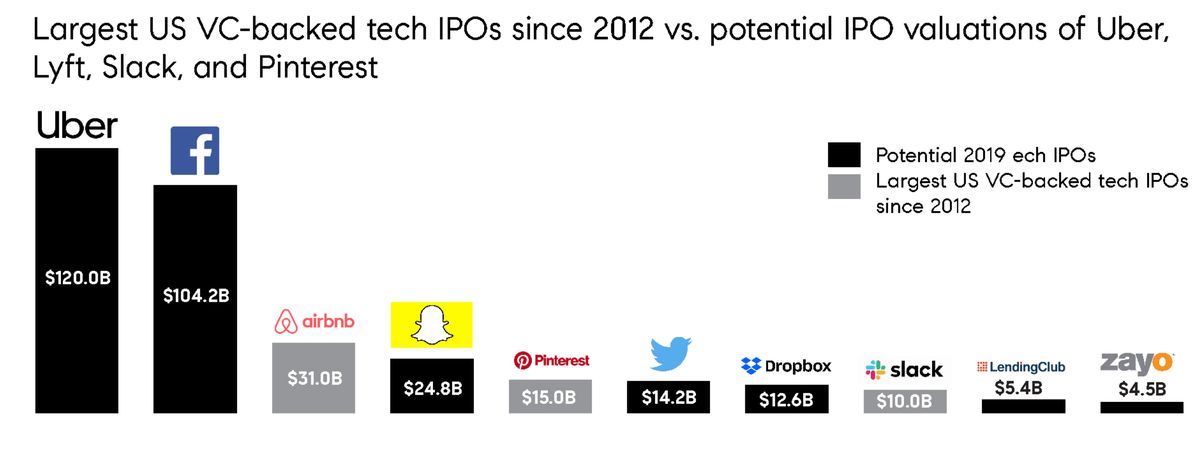
Marco Carvajal, a long-time real estate agent with Vanguard Properties, says the city’s upcoming frenzy of initial public offerings (IPOs) has become an everyday topic of conversation among San Francisco’s very plugged-in residents. Over the next two years, some of the decade’s biggest tech firms, among them Pinterest, Uber, and Airbnb, are expected to go public, with Lyft alone just announcing it would seek a value between $21 and $23 billion. Talk of IPOs and potential IPOs has everyone thinking about money, home values, and the threat of another prosperity bomb accelerating the city’s already sky-high cost of living.
“When I go to the dog park, my 75-year-old neighbor starts to drill me on how the Pinterest IPO will impact the value of her home,” says Carvajal.
The Bay Area is no stranger to tech firms, money, and the instant wealth created when startups go public. When Facebook and Twitter went public in 2012 and 2013, respectively, the region quickly found itself home to roughly 2,500 new millionaires.
The upcoming IPO storm of 2019 and 2020, expected to include eight to 10 major companies, may dwarf that. Many estimate that at least 6,000 new millionaires, some of whom are sure to seek out housing upgrades, will be clustered within a relatively small city that sells roughly 6,500 homes a year, according to Patrick Carlisle, an analyst for the real estate company Compass.
Carvajal expects many of these new millionaires to drop money on new homes, since so many have been stuck in a familiar Bay Area trap: paying stratospheric rent for apartments near the office without having enough left over to save for a down payment. Many of his clients, who didn’t want to be quoted for this article, can’t wait to stop paying someone else’s ridiculous mortgage and start paying their own.
All this new tech money will change the market. But the frenzy many expect won’t come to pass, he believes.
“This IPO rush isn’t going to be a bonfire,” says Carvajal. ”You’ll be adding kindling to the fire the entire year. It’s going to be a constant burn.”
CBInsights, The 2019 Tech IPO Pipeline
Are there any limits to the Bay Area boom?
A recent New York Times article asserted that “San Francisco Will Drown in Millionaires” once the IPOs start taking place this year, and painted a picture of newly flush software engineers bidding for $5 million single-family homes. Recode estimated late last year that this unprecedented string of big-name IPOs will create a new wave of public companies worth more than $100 billion in total. All that new money has “got to go somewhere,” and might as well go toward high-priced real estate.
There are already plenty of things for these newly minted tech stars to spend their money on, including funding the next wave of startups. But San Francisco’s many real estate analysts, along with academic researchers looking at the impact of past IPOs, don’t foresee as wild a ride in the housing market, or huge upward price fluctuations, as some have suggested.
“What they say is going to happen isn’t going to happen,” says Randy Shaw, a San Francisco housing activist. “They continue to spread fear without mentioning the full story. Cities aren’t helpless to combat affordability; they just need the right policy. There are currently 1,100 affordable housing units being built in the Mission, either under construction or in the pipeline.”
Instead of causing next-level bidding wars over the city’s few available homes, the IPOs will likely be a countervailing factor in a market that’s cooled since last spring, says Carlisle at Compass. He feels the fear of new money radically re-reshaping the Bay Area is overhyped.
“We’re just bumping our heads against the limits of affordability, which continued to be the biggest social and political issue in the Bay Area,” says Carlisle. “Buyers are looking at a 1,500-square-foot ranch house and going, ‘No, I don’t think I’ll spend $2 million for that.”
Anecdotally, Carlisle and others have heard from buyers and sellers that the market is already anticipating the IPO wave. Some buyers, fearful of being shut out when new tech wealth, and all-cash offers, push them out of the housing market, are rushing to close. Some sellers are holding off, waiting to get better prices later this year. Carlisle told San Francisco Chronicle reporter Kathleen Pender that 2,493 listings across the Bay Area were withdrawn or expired in December, compared with only 1,154 in December 2017.
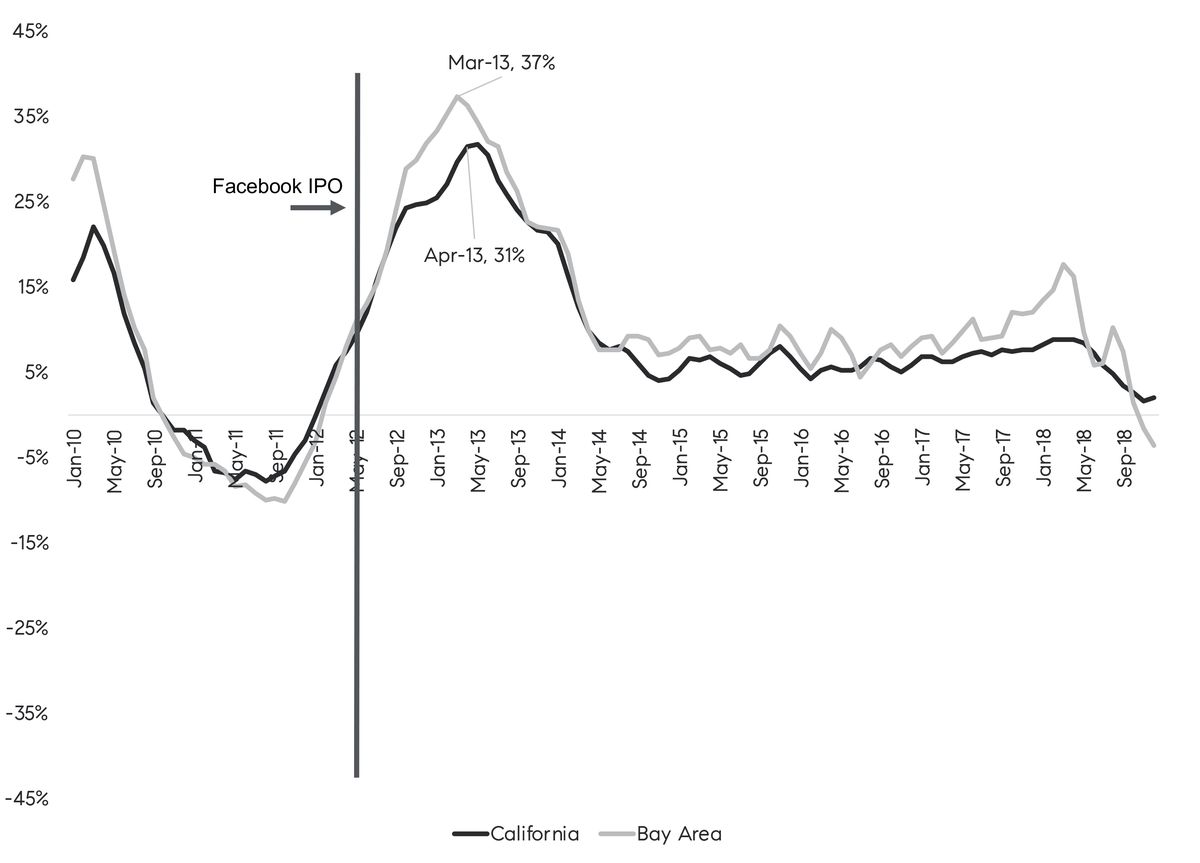
Facebook’s 2012 IPO had significant impact on the San Francisco housing market, but analysts suggest that’s due to the then-rising, port-recession housing market.
Selma Hepp: Data via California Association of Realtors
How IPOs work, and how they impact the housing market
How will these upcoming IPOs differ from those in the past?
“We’re simply in a different market,” says Selma Hepp, chief economist for Compass.
Hepp believes the impact will be wide-ranging. Her research suggests that Airbnb, Uber, Pinterest, and Slack may collectively be worth more than $176 billion after they go public and could impact some 10,000 area workers. But the underlying market fundamentals again suggest a cooling market.
Unlike, say, Facebook’s 2012 IPO, which was an accelerant at a time when the economy was really starting to push past the recession, sales activity in the Bay Area is down—February sales numbers were 10 percent lower year-over-year in San Francisco, and 16 percent lower in the Bay Area as a whole—and housing undersupply is still a major issue. In addition, prices have risen significantly since 2012. Median home prices in the Bay Area are about 2.2 times higher today than they were seven year ago.
Recent studies trying to determine the impact of IPOs and Bay Area housing prices suggest that Carvajal’s hypothesis, which points to gradual, sustained impact, may be more historically accurate.
The study “Cash to Spend: IPO Wealth and House Prices,” released last November by academics Barney Hartman-Glaser, Mark Thibodeau, and Jiro Yoshida, examined 725 IPOs by California companies between 1993 and 2017, analyzing the impact public stock sales had on homes within certain distances of company offices, and how different stages of the IPO cycle impacted the market.
For the sake of the study, the complete IPO process is broken down into three distinct steps. First, a company announces it’s going to go public, known as the public filing. Then, it issues the stock on the actual market and gets an initial valuation, known as an issuing. Many companies place restrictions on how soon employees can sell stock after issuing, so there’s usually a third step, the lockup expiration, that occurs 90-180 days after issuing.
The authors of “Cash to Spend” discovered the impacts were front-loaded. Homes within a 10-mile range of a tech company’s headquarters rose by 1 percent when a company announced the IPO (compared to the value three months before), 0.8 percent when the company went public, and showed no additional gain after the lockup period. The issuing event had the most impact: housing prices went up 3.3 percent, 1.7 percent, and 1.3 percent for a 1-, 5-, and 10-mile radius, respectively.
That suggests tech workers were able to trade off future wealth almost immediately, and didn’t have to wait to cash their actual stock. The researchers concluded that California mortgage lenders, experts on the machinations of IPOs and tech financing, were familiar enough to lend as soon as it was clear the stock wealth was coming. In other words, the spigot of money won’t be turned on all at once.
Which San Francisco neighborhoods will feel the most impact?
Another recent study, conducted by Zillow, looked at the Facebook IPO in 2012 and examined the census tracts near the company’s HQ in Menlo Park. It found home values rose 20.9 percent in the year of the IPO, compared with 16.8 percent for surrounding counties without as many Facebook employees.
But the Facebook study offers a significant contrast with today’s market. With home values significantly higher, and new construction in San Francisco at its regular, sluggish pace—even for condos—there isn’t a flood of available inventory, nor are there an exceptional number of high-end, ultra-luxury properties on which to bid.
Despite the incredible overall wealth being generated, there are finite numbers of early employees and executives making, say, $10 million from these public offerings. Carvajal says he sees the medium end of the housing market, homes in the $3 million to $5 million range, feeling a slight bump, but believes the biggest impact will be homes in the $1.5 million to $3 million range, the “starter home” segment that has been so competitive lately.
Compass’s Carlisle believes Miraloma Park, Bernal Heights, and the Sunset, despite having limited housing stock in construction or development, will see the most of what he predicts will be a limited housing price bump, because what’s available is within that more modest, sub-$3 million range.
“These have homes within the range of well-paid, youthful high-tech workers,” he says. “If the pressure comes roaring back, it’ll probably be in those neighborhoods.”
But how long can this upward march of home prices continue? Carlisle points to 2015, when a famous Berkeley economist Ken Rosen, looking at the market’s instability and the city’s reliance on tech jobs, said that “there will be blood in the streets of San Francisco,” predicting a massive crash. The city’s housing market received a second wind shortly after that, and a new burst of appreciation and value.
Will new IPOs create a third wind in an abnormally long upcycle? The perpetual optimism of Silicon Valley, especially when it comes to stock prices, may finally reach the limits of the region’s already inflated housing market.
Everyone knows living in the San Francisco Bay Area isn’t cheap, especially for people like teachers, firefighters, and service-industry workers whose wages haven’t kept up with the skyrocketing cost of housing in one of the nation’s most expensive places to live.
But increasingly, even tech workers — some of the Bay Area’s highest-paid residents — are having a hard time achieving the bedrock of the American Dream: home ownership. These workers average six-figure salaries but increasingly can’t afford to buy a house in San Francisco, where the average home value is around $1.34 million and the median down payment needed was around $250,000 last year. And although there’s been a bit of a slowdown in recent sales, that’s expected to change quickly. A new class of freshly minted tech IPO millionaires are set to “eat San Francisco alive,” as described in a headline of a recent New York Times story.
When Joshua Davis, 28, a software engineer at a machine learning startup who said he makes upward of $100,000 a year, was looking to buy a one-bedroom condo in Oakland, he knew most places would be far above his budget of $500,000. So he considered fixer uppers. He was hoping he could find somewhere that, with a little bit of work, could be a place to settle down — somewhere he could paint the walls any color he wanted.
But he quickly realized that was an unrealistic goal. One place he saw had a rotted mud sill, the structure that provides separation between the house and its foundation. Someone showing the house offered do a “Mickey Mouse job” to repair it for $20,000, but Davis knew that would only be a temporary fix. The house was seriously structurally flawed.
“These were the kinds of places that were affordable,” said Davis, who gave up on the idea of buying a home for now. He’s hoping the market will eventually calm down. In the meantime, he’s paying around $2,300 a month for a one-bedroom apartment in Downtown Oakland.
Davis isn’t alone. Around 70 percent of tech workers for top tech companies living in the Bay Area say they can’t afford to buy a house near where they work, according to a recent study from the workplace chat app Blind, which polled around 3,000 tech workers. Many of the employees surveyed are high-skilled talent — engineers, product managers, and data scientists — who may be able to make rent but can’t afford to buy a home.
The fact that these relatively highly compensated employees like Davis are having problems is a sign that the housing situation in the Bay Area has become an untenable and unsustainable situation for tech’s workforce. And while tech giants like Facebook can afford to pay their employees a median salary of $240,000, other smaller players in the industry are wondering how much higher salaries can go to keep up with the cost of housing, and how much longer tech workers will live in an area they can’t afford.
Companies like Facebook and Google have already started to build housing specifically for their own employees next to their sprawling mega-campuses. At one point, Facebook offered a $10,000 bonuses to employees who lived near the office to alleviate the strain of housing costs and reduce commute time. Almost every major tech company provides private, free shuttle buses that transport workers from Silicon Valley — where tech campuses like Google and Facebook are located — to relatively more densely populated areas like San Francisco and Oakland.
Last month, Facebook CEO Mark Zuckerberg and his wife, Priscilla Chan, helped back a philanthropic fund that seeks to raise $500 million toward preserving affordable housing in the San Francisco Bay Area. So far, the Chan Zuckerberg Initiative has committed $40 million toward the fund. While half a billion dollars is a lot, it won’t be enough to single-handedly change the market dynamics of housing in the Bay Area, where for every 4.5 jobs created, only one new home is added, according to the Building Industry Association of the Bay Area. But it’s a sign that tech companies are taking the issue of rising housing costs in their headquarters seriously.
“I do think the large corporations want to work with cities to address the housing issue because they want to expand and they want their employees to have a place to live,” said Lisa Matichak, the mayor of Google’s hometown of Mountain View.
And with a new wave of San Francisco tech companies an hour to the north like Uber, Lyft, Slack, and Airbnb expected to go public soon, there will be thousands of new millionaires who may further crowd the housing market, further driving up prices. While there will be a cohort of freshly minted IPO techies, there will be many more who don’t win in the startup lottery.
“I’m guessing with all these IPOs from Lyft and Airbnb and stuff, these prices are only going to go up,” said Davis. “If these prices get crazier and crazier, I don’t know if I’ll able to afford to live out here.”
A housing crisis
Housing prices in the San Francisco Bay Area have skyrocketed at such an extreme rate that the housing shortage and homelessness in the city has been deemed a “human rights violation” by a UN official. In the past seven years, the percentage of households that can afford to purchase a median-priced home in the San Francisco Bay Area has decreased by over 50 percent, according to the California Association of Realtors.
Of course, the people this hits the hardest arepeople working in sectors that aren’t as high paid as tech — like the service industry, teaching, and law enforcement. A recent study found that a whopping 90 percent of workers in Silicon Valley have seen their real wages, meaning their annual salaries adjusted for inflation and rising cost of living expenses, decline over the past 20 years.
That means economic inequality is getting worse in tech’s capital during the same time period that companies like Facebook, Twitter, and Uber have popped up and created billions in value for those lucky enough to be early investors or employee shareholders living in the area.
Some labor advocates have blamed tech for contributing to this economic disparity. A few years ago, protesters hurled rocks at tech worker commuter buses that have become symbols of new money and gentrification. Tech is changing the face of what were once working-class, immigrant neighborhoods in San Francisco like the Mission, where Facebook CEO Mark Zuckerberg owns a home he bought for $10 million in 2013. But now, even many of those tech workers sitting in the shiny charter buses also can’t afford to live in the Mission, or any of the equally expensive Peninsula suburbs along the way to Facebook’s Menlo Park headquarters.
“If the engineers and programmers of the world can’t afford to keep up with rising costs, how in the world are other people ever going to afford to live comfortably here?” said Jeffrey Buchanan, director of public policy at Bay Area-based labor-backed nonprofit, Working Partnerships USA.
The tech worker affordability divide
When it comes to purchasing power to buy property, not all tech workers are created equal.
At major tech companies like Google and Facebook, over 50 percent of workers are contract workers — many of whom make less than their full-time salaried counterparts. There are reports of Google employees who sleep in their vans in the parking lot — taking their showers in the office gym and eating meals in the company kitchen. The engineers doing this are extreme cases; most programmers making six figures may not be able to afford a home, but they can afford a place to rent.
The options are more limited for many others, like the unionized Google janitors who make around $26 an hour including benefits, according to numbers labor union SEIU shared with Bloomberg last July. If those workers are working 40 hours a week, that would put them at an annual income of around $50,000 a year — a little more than half of what the federal Department of Housing and Urban Development considers to be “low income” for a family of four in Google’s home county of Santa Clara.
Because it’s harder for lower-salaried employees to get by in the Bay Area, some tech companies have outsourced large portions of their workforce in functions like content moderation and customer support to places where salaries — and rent — are cheaper, like Phoenix, Arizona.
But these companies can’t outsource everyone they need to keep their San Francisco operations running. They still need facilities workers to keep the lights on, cooks to keep the programmers fed, and janitors to keep the buildings clean at their sprawling campuses.
And aside from the service workers, temps, and contractors at tech companies, the housing crisis is also hard on entrepreneurs and startups.
Davis said the machine learning-backed visual search startup he works for, Zorroa, used to staff most of its programmers remotely, outside California, where their salaries went further. Now that the company has raised a round of VC funding, it can afford to pay more of its workforce enough to live in the Bay Area, Davis said.
The struggle that these smaller startups go through represents an existential crisis within tech’s core: If Silicon Valley and San Francisco are valuable because they’re a hub for scrappy engineers, what will happen when only the elite of the elite, the post-IPO techies, can afford to buy homes in the city? Sure, younger programmers can squeeze into tinier and more strained living situations, but that becomes harder for people who want to start families.
“The people who move into the San Francisco Bay Area tend to be younger than the people who move out,” said Issi Romem, chief economist at online real estate company Trulia. “By the time people want to settle down, that’s when they hit this wall of affordability.”
There’s also an interesting split in the housing economy. While the prices of homes have gone up astronomically in areas like San Jose in the past several years, rent has been rising at a much slower pace. “It’s a bit of a mystery to economists,” said Jeff Tucker, an analyst on the economic research team at online realty company Zillow.
What this means is that 20- and 30-something tech workers who are relatively well-compensated may be able to keep up with rising rents, but buying a home will remain perpetually out of reach.
These workers are in a much more fortunate position than many of their neighbors, who may be struggling to keep a roof over their heads. But they’re also stuck. For the programmers and product managers who want to own a home but also want to keep pursuing their promising careers in San Francisco, there’s no immediate solution except to wait around in the hope that the housing market will crash.
Can tech solve this crisis?
Some tech leaders are trying to help solve the housing problem.
“I think there’s been this question of, ‘Oh, tech money, is that going to solve our housing crisis?’ And I think it’s taken quite a long time for companies to get serious about what they’re doing,” said Kristy Wang, community planning policy director at a nonprofit research, education, and advocacy organization focused on issues of planning.
While donations like the money from the Chan Zuckerberg Initiative might help, some housing advocates view them as only scratching the surface of a much bigger issue. Matthew Lewis, director of communications at California YIMBY, a pro-development housing advocacy organization, said that while philanthropy efforts help, they ultimately make a “tiny dent” in a housing market that’s as crowded as San Francisco. The YIMBY acronym plays on the well-known NIMBY — for “not in my backyard” — by giving it a “yes” instead.
The solution, as Lewis sees it, is pretty straightforward: “Just build more damn housing.”
In order to do that, developers need city approval, which can be difficult to get based on strict zoning laws that limit density in San Francisco and even more so in Silicon Valley’s suburbs. While some locals argue that these policies preserve neighborhood character, critics argue they are classist: benefitting those who already own property at the expense of others, especially minorities and lower-income residents.
History reveals a dark past to the intentions of many zoning laws in the Bay Area. One of San Francisco’s oldest housing density laws, the Cubic Air Ordinance of 1870, was largely used to criminalize Chinese residents living in boarding houses. Across the bay, similar laws were used in Berkeley to separate more affluent white residents from their black neighbors.
Fast-forward to today and the Bay Area is still revealing deep societal divides in local debates over housing density.
In a city council hearing this past September in Apple’s hometown of Cupertino, one local teenager said he was against high-density affordable housing because it “would mean that we would have uneducated people living in Cupertino.” He and his fellow neighbors were concerned that it would make current residents “uncomfortable.” The city’s mayor dismissed the comments as being made by a “kid” who didn’t know better — but to many, they revealed a candid unveiling of the true feelings of older residents who are anti-development.
But there’s another strain of critique against changing zoning laws. In a city like San Francisco, increased density laws could allow rapid development of multimillion dollar luxury condos that mostly benefit the wealthy, and at least in the short term, displace rent-controlled apartments or other cheaper housing.
While there are certainly many minds — and opinions — debating solutions to the Bay Area’s housing crisis, all this will take a time. Some tech workers say they’re losing patience.
Paul Anzel, 32, is a data scientist who dropped out of his physics PhD program to work in tech in the Bay Area. After years of struggling to save enough to buy a home in the Bay Area — and fighting for more housing development — he finally decided to give up. He, his wife, and their small child moved to San Antonio, Texas, where with the same income they were able to buy a two-bedroom home.
“The Bay Area housing problem isn’t going to be instantly fixed. It’s going to take a long while and a big political will,” said Anzel. “Once I had my kid, I realized there’s no sense in bashing my head against a wall.”
Other tech workers, many of them younger and without families, still feel the pull of the Bay Area, despite the frustrating housing situation.
“There’s a certain amount of energy when you walk around,” said Davis. “All these people who you go around and talk to who have built these great things before you and have the experience to learn from. It’s hard to leave.”
With tech companies like Uber, AirBnB and Pinterest slated to go public this year the Bay Area will likely be gaining thousands of new millionaires. New York Times tech reporter Nellie Bowles recently wrote about what all that new money could mean for local real estate. We’ll talk to Bowles about what she’s hearing from community advocates who are nervous that the influx of IPO windfalls will lead to further displacement and gentrification in San Francisco. Tell us: how, if at all, are the upcoming IPOs influencing your financial decisions?