Mega-measure: $100 billion traffic-busting tax plan for the Bay Area taking shape

Click here if you’re unable to view the photo gallery on your mobile device.

Bigger than anything the Bay Area has seen before, a nine-county-wide plan to raise $100 billion in taxes over several decades to redefine the region’s transportation network could be ready for public input in the next several months, transportation officials said.

The plan now even has a name: Faster Bay Area.

The idea is to create a truly regional transit system that would more seamlessly connect the Bay Area’s extensive network of rails, buses and ferries, said Carl Guardino, president and CEO of the Silicon Valley Leadership Group, a business advocacy organization that is partnering with the Bay Area Council and the urban planning think-tank SPUR to put the tax on the ballot.

Inspired by the success of two 2016 ballot measures in Seattle and Los Angeles that will raise, respectively, $54 billion and $120 billion over 20 and 40 years, leaders of the three organizations got to thinking: Why not here? They began meeting in January 2017 to craft a plan, seeking input from transportation professionals, transit agency heads and others for what such a regional system might entail. They are still skittish about releasing precise details, saying there’s more work to be done to gather feedback from city leaders, congestion management agencies, transit agencies and commuters.

ccfd3 ebt l 2ndtube 12xx 11 Mega measure: $100 billion traffic busting tax plan for the Bay Area taking shape
A proposed “Southern Crossing” would carry more than just cars in this architectural rendering of a proposed new bridge, just one of several transportation improvements imagined as part of a “mega” funding measure. (Courtesy of Jeff Heller) 

But any plan likely would include significant improvements to BART and Caltrain service, including a second cross-bay tube or bridge for BART, providing relief for the trains that bottleneck in West Oakland. There could be a vast network of toll lanes that ring the bay and radiate to the north, east and south, sharing lanes with buses, and a more robust expansion of the Bay Area’s ferry network. Details of what the plan would include will be hammered out in the next several months, Guardino said, with the aim of having a final draft by the year’s end.

The goal, he said, is “to build a seamlessly integrated world-class transit system that serves the transit-dependent and lures the non-transit dependent out of their vehicles.”

The problem with traffic in the Bay Area, said Alicia John-Baptiste, president and CEO of SPUR, is that the entire transportation network was designed for cars. BART and Caltrain were crafted as commuter trains, not urban rail systems, which run frequent, all-day service, though BART now functions as one, and Caltrain has indicated it aspires to be one. More than two dozen bus agencies, all operating within distinct fiefdoms, have trouble serving sprawling suburbs that weren’t built with frequent service in mind.
a0a4c EBT L POLLQ3Q4 0325 50 Mega measure: $100 billion traffic busting tax plan for the Bay Area taking shape
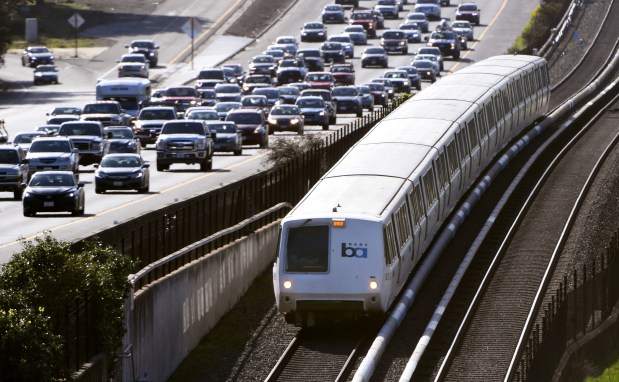
A BART train is seen next to commuter traffic on East bound Highway 24 in Lafayette, Calif., on Wednesday, March 20, 2019. (Doug Duran/Bay Area News Group) 

Meanwhile, traffic congestion, measured as the time people spend slogging along freeways at speeds of 35 mph or less, grew 80 percent from 2010 to 2016, and then held steady in 2017, according to the Metropolitan Transportation Commission, the region’s transportation planning agency. And there’s not enough space to keep building new freeways, which only get clogged with more cars as the population grows, she said.

“We designed a system 50 to 60 years ago around the concept that everyone would be able to get into their car and get from Point A to Point B,” John-Baptiste said. “As we’ve grown as a region, that’s simply not how it functions today.”

In Seattle, voters in 2016 approved a mix of property, vehicle and sales taxes to raise $54 billion over 20 years to fund 62 miles of new light rail tracks across three counties and a network of buses separated from traffic. The same year, Angelenos approved a county-wide, half-cent sales tax to raise $120 billion over 40 years for a dramatic expansion of the county’s rail, rapid bus and bicycle network.

But just how the Bay Area aims to raise $100 billion or more is still to be determined, said Jim Wunderman, president and CEO of the Bay Area Council. The organizations are beginning to conduct polls to test funding concepts that might include sales, business, property and other taxes. Earlier this year, this news organization partnered with the Silicon Valley Leadership Group on a poll that asked registered voters, among other questions, whether they would support a 1-cent sales tax to fund transportation projects in the Bay Area. Seventy-one percent of respondents answered, “Yes.”
bb490 spdn1029dumbarton 3 Mega measure: $100 billion traffic busting tax plan for the Bay Area taking shape
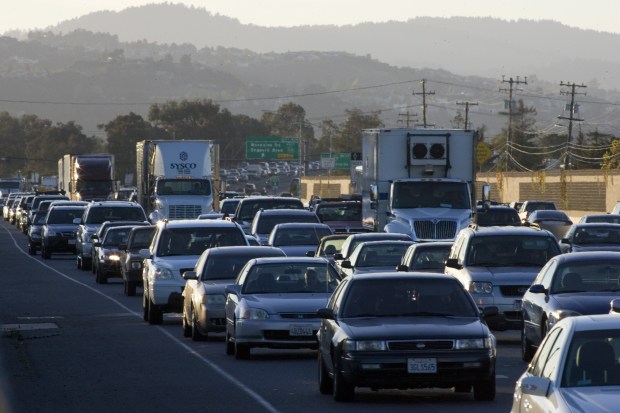
Slow traffic on Highway 101 in Redwood City heads toward the Dumbarton Bridge on Wednesday, Oct. 28, 2009. The Bay Bridge remains closed for repairs after a cable snapped Tuesday night. The closure has greatly slowed Bay Area commutes, sending traffic onto the other bridges, including the Dumbarton. (Kat Wade / Daily News) 

Already though, there appears to be disagreement about what qualifies as “transformational.” At the Santa Clara Valley Transportation Authority’s Board of Directors meeting Thursday evening, staff proposed a series of infrastructure improvements on interstates 880 and 280 and highways 101 and 85. But board member John McAllister shot back, arguing for a more regional vision that focused on corridors, not one-off projects.

“We’ve got a lot of projects,” he said, “but they don’t help the region unless we really work to reduce greenhouse gases, reduce congestion, and what’s our tag line? Get people moving.”

In order for the measure to appear on the ballot in all nine counties, the legislature would have to pass a bill allowing the vote, similar to the bill that placed Regional Measure 3 on the ballot, which voters approved last year. The $3 bridge toll increase, spread out over six years, will raise $4.45 billion over the next decade to partially fund some three dozen transportation projects across the Bay Area. Wunderman likened it to a test run for the $100 billion proposed “mega-measure.”
032af EBT L DELTACOVE 0318 9 Mega measure: $100 billion traffic busting tax plan for the Bay Area taking shape
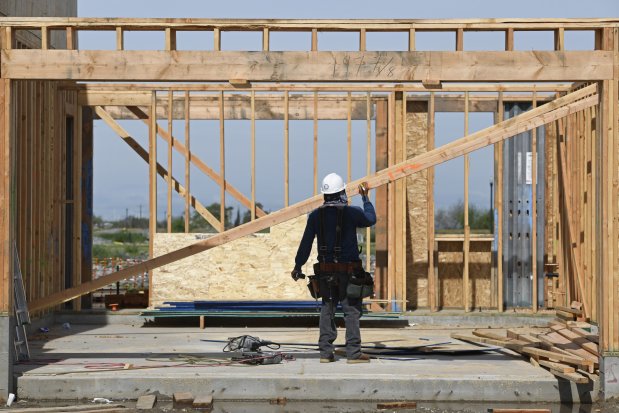
A construction worker works on a model home on Seaward Court at the Delta Coves housing development in Bethel Island, Calif. on Monday, April 8, 2019. Construction has begun on model homes at this marina community that has been decades in the making.  (Jose Carlos Fajardo/Bay Area News Group) 

Sure to be contested is whether some of the money from the measure would fund the development of affordable housing, as some public officials and advocacy organizations have suggested. As real estate prices have risen in the nine-county Bay Area, people are increasingly moving farther away in search of affordable homes, Wunderman said, often spending three or more hours each day in their cars getting to and from work.

“The farther people travel, the more demand there is for bigger solutions,” he said. “There is no question this region has to address housing, but how we do that, that is still to be discussed.”

Regional voters regularly list affordable housing and homelessness as the top issue in the Bay Area, Guardino said, with traffic and congestion taking the No. 2 slot. But while there is considerable consensus on how to improve the region’s transportation network, there’s far less agreement on the best way to get the region out of the housing crisis.

“We’re also not closed to including housing,” Guardino said. “But at the end of the day, voters have to be willing to pass something.”


Article source: https://www.mercurynews.com/2019/06/08/mega-measure-100-billion-traffic-busting-tax-plan-for-the-bay-area-taking-shape/
Posted in SF Bay Area News | Tagged | Leave a comment

Not-so-good news if you’re trying to sell your home right now


  • cc218 920x920 Not so good news if you’re trying to sell your home right now

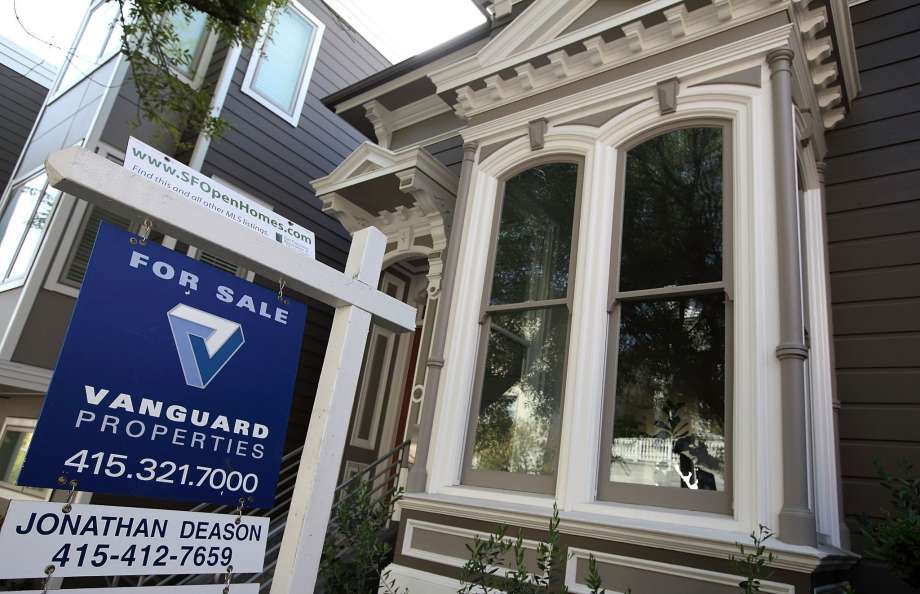
    FILE: A sign is posted in front of a home that is for sale in San Francisco, California.

    FILE: A sign is posted in front of a home that is for sale in San Francisco, California.


    Photo: Justin Sullivan/Getty Images

  •  Not so good news if you’re trying to sell your home right now

Caption

Close

FILE: A sign is posted in front of a home that is for sale in San Francisco, California.

FILE: A sign is posted in front of a home that is for sale in San Francisco, California.


Photo: Justin Sullivan/Getty Images


Seasonality effects real estate sales in virtually any market, and San Francisco is no exception. According to local experts, despite the “all hot, all the time” reputation the Northern California city enjoys, there are better times of the year to sell a home.

For every season, a turn


Unlike other parts of the country, weather isn’t severe enough here to seriously impact interest in buying homes. Further, the skewed supply and demand, coupled with the area’s wealth, make for a unique all-year-long sellers’ market.

Still, seasons do have an impact on the Bay Area’s selling season. We asked three experts about this impact, posing the question: When is the best time to sell your home in San Francisco?

Carrie Goodman of  Sotheby’s International Realty says, despite a nationally enviable year-round market, San Francisco has two outstanding selling seasons: Spring and Fall.


“The spring season is very robust, more of a runaway than fall. Spring can start in March and run all of the way through June. The Fall season is condensed: mid September to mid November,” Goodman said.

ALSO: $5 million San Francisco Victorian ‘fixer’: Should it be gutted or preserved?

She speaks from experience: Goodman has been in real estate in San Francisco for 13 years. “I grew up in the Bay Area and come from a long line of people in real estate. My mom is a contractor, my uncle is a commercial developer, my grandfather was a developer, and my great grandfather was a builder-developer in SF,” she said.

When asked if San Francisco, given its gentle year-round climate and fervid perennial demand for housing, has a slow selling season at all, Goodman said that there are only six weeks of the year where things really slow down—mid November through December—no doubt as the holidays take precedence over real estate.

Summer: Not hot in San Francisco?

Alex Clark, Realtor and founder of the FrontSteps, echos some of Goodman’s sentiments on spring, fall, and the holidays: “The best time to sell is by far Spring. List in March-April-May and be totally done and dusted by the beginning of June.”

But Clark stressed that summer is not our best season either. In fact, according to Clark, late summer is worse than late November and December: “The market falls off a cliff in mid- to late-June until Labor Day….. Absolute worst time to list is July-August,” Clark said. “Compared to the rest of the country, we are backwards…slow in the summer and not at all tied to families moving for schools.”


To back this insight, Clark also has over a decade of experience in the city’s real estate market. “I’ve been in the business for almost 19 years,” he said. During that time, he’s worked with many of the city’s premiere agencies, consistently ranking in the top 1 percent of all SF agents. Now, he has his own firm, the Front Steps.

The luxury effect

Patrick Carlisle of Compass Realty has been tracking and charting the Bay Area market for decades. He concurs that the mid-winter holiday period, which he designated as – mid-November to mid-January, is SF’s “doldrums. In the late winter and spring, the number of new listings as well as buyer demand climbs—and often peaks.

There is a similar pattern with summer to fall:

Summer usually brings a significant slowdown, hitting its nadir in August. In early autumn, listings start pouring on the market after Labor Day for the relatively short fall selling season through mid-November – with a concomitant jump in sales. Then before Thanksgiving, activity plunges dramatically for the mid-winter period. Many listings are pulled off the market at this time to await the beginning of the new year or the next spring market.

Indeed, as the charts in the gallery above attest, the longest waits on the market and withdrawn properties happen during the holiday season.

However, data such as prices should be looked at carefully. It would be easy to say homes are most expensive during the hottest seasons, but just how expensive they are is more complicated than looking at the median sold price in any given month.

This is the luxury home effect.

As Carlisle explains, “The luxury home market is even more fiercely seasonal than the general market.”

The seasonality of luxury home sales plays a significant role in median sales price changes – pushing median prices up during its active periods, spring and autumn, and letting them fall when luxury home sales decline in summer and mid-winter.

A chart in the gallery above shows this trend as well.

Sell, when? 

Overall, what’s the best time to sell your home in SF? It doesn’t seem like there is a definite bad time: If your home is in a desirable location, it’s likely always going to be desirable to buyers, even on Christmas Day.

There is logic in listing in the hottest seasons; there is logic in listing when there fewer homes to compete with. The climate in your neighborhood, particular features like a pool or a garden or s sunroom- might play into your choice as to when your property shows best. You should also gauge your appetite for multiple offers and crowded open houses.

Ultimately,  what’s “slow” for SF is relative: “You can generally sell for a pretty penny any time of year in San Francisco, just not have the frenzy,” Alex Clark said.

So then, best season would be subjective: if you want an open house of 450 people as happens in the spring, maybe pick spring-early summer. If you prefer to sell with less pressure, you might opt for late summer or even the holiday season.

Either way, it seems likely you will sell.


Article source: https://www.sfgate.com/realestate/article/best-time-to-sell-your-home-San-Francisco-14054304.php

Posted in SF Bay Area News | Tagged | Leave a comment

Housing crisis: Mountain View has some of country’s highest rents

The rental site Apartment Guide released two reports at the end of May, one compiling the cheapest cities to rent an apartment in the US and the other enumerating the most expensive.

It is probably not hard to guess which of the two the Bay Area had a strong showing on. Among the conclusions: Peninsula cities Mountain View and Redwood City have some of the most expensive apartment rents in the entire country, at least as this one rental platform reckons it.

Those communities, with a combined population of fewer than 200,000 people on the peninsula, jostled with San Francisco for some of the most expensive housing stock in the country in most categories, and in at least one of them actually beat out SF:

  • According to Apartment Guide, Redwood City is home to the least affordable studio apartments in the US, averaging more than $3,361 per month in asking rents. Comparatively, San Francisco came in second, with a studio median of $3,356 per month. Mountain View, surprisingly, didn’t make the top 50, but that’ll be the last time it pulls a no-show here.
  • For one bedroom apartments, the Redwood City outlook is not quite as dire; the city came in fourth on Apartment Guide’s single-bed rankings with a median of more than $3,974 per month, behind both SF (second place being NYC and averaging $3,854 per month) and Mountain View (third, and $3,828).
  • In two bedroom rankings, Redwood City again came in behind SF, landing in fifth place and asking more than $4,873 per month. San Francisco was fourth, with a median of $4,873. Mountain View peaked at seventh, asking more than $4,697.
  • Only for the three-bedroom listings did Redwood City fail to break the top five, and in fact wasn’t even in the top 50. Mountain View and SF landed in 11th and 15th places respectively.

How reliable are Apartment Guide’s numbers? The methodology for the report points out that “the rent information included in this article is based on May 2019 rental property inventory on ApartmentGuide.com.”

So this is less an objective measure of how much it costs to rent in the Bay Area so much as how much it costs to try to find an apartment on this one platform. Although since most renters searching for a home comes to sites just like this that is not an insignificant consideration.

In terms of sample sizes, Apartment Guide currently lists 33 studios in Redwood City, 95 one bedrooms, and 78 two bedrooms.

For Mountain View the site draws from ads for 26 studios, 99 one bedrooms, and 89 two bedroom homes.

Comparing to other sites, while a lot of online rental platforms compile median price listings, many analyses simply lump smaller communities in with SF or San Jose or just ignore them altogether.

SF-based site Zumper does breakdown Bay Area cities more specifically, and ranked Redwood City as the Bay Area’s fourth most expensive places to rent in June, with one-bedroom apartments on the site averaging $2,950 per month. Mountain View came in second, with a median of $3,450.

San Francisco, of course, was the single priciest point, averaging $3,700 per month on Zumper.

The US Census estimates that in 2017 (the most recent year for which census data is available for these communities), Redwood City’s average rent across all types of properties was $1,956 per month, and Mountain View’s was just more than $2,100 per month.

But those are not market rents, and new renters will have a hard time finding comparable listings today.

Article source: https://sf.curbed.com/2019/6/7/18656642/apartment-guide-most-expensive-cities-redwood-city-housing-crisis-studio

Posted in SF Bay Area News | Tagged | Leave a comment

People are flying in from across the country to look at this $99K Russian River house


  • 153a6 920x920 People are flying in from across the country to look at this $99K Russian River house

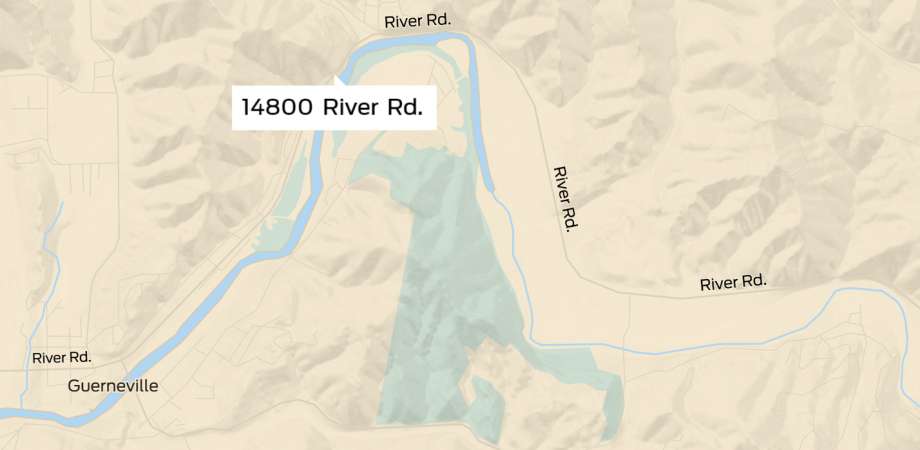
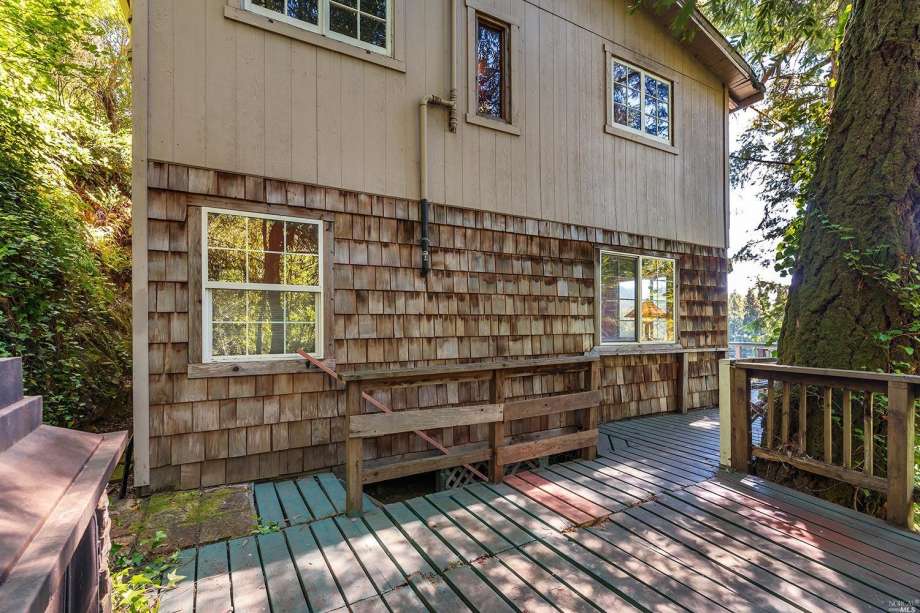
    A 1930 redwood cabin nestled on a hillside at 14800 River Rd. in Guerneville is listed for $99,000.

    A 1930 redwood cabin nestled on a hillside at 14800 River Rd. in Guerneville is listed for $99,000.


    Photo: 14800 River Rd, Guerneville

  •  People are flying in from across the country to look at this $99K Russian River house

Caption

Close

A 1930 redwood cabin nestled on a hillside at 14800 River Rd. in Guerneville is listed for $99,000.

A 1930 redwood cabin nestled on a hillside at 14800 River Rd. in Guerneville is listed for $99,000.


Photo: 14800 River Rd, Guerneville


Northern California real estate agent Milli Cannata‘s phone has been buzzing nonstop ever since she put a $99,000 price tag on a rustic three-bedroom, two-bathroom home on the Russian River, a popular vacation spot an hour from San Francisco.

“I’ve literally had 158 text message and more than 300 phone calls,” said Cannata, who is an agent with Vanguard Properties. “I have 164 people looking at disclosure packets. I can’t keep up. I have a whole team of people helping me.”

In the Bay Area where real estate is famously high, the price on the home is startlingly low and catching the attention of interested buyers from around the country.

“I have people flying in from different states,” she said. “Connecticut. Someone is coming in today from New York. Alabama, Texas, actually lots of Texas people, Louisiana, Florida, Oregon.”


A lot of this national buzz was likely created by the home being featured on Cheap Old Houses, a website that more commonly features dilapidated yet charming inexpensive homes in places like Pittsburgh, Pa., and Toledo, Ohio, not the San Francisco Bay Area.


153a6 920x1240 People are flying in from across the country to look at this $99K Russian River house

14800 River Rd. in Guerneville, Ca.

14800 River Rd. in Guerneville, Ca.


The 1,056-square-foot property is located at 14800 River Rd. in Guerneville, a sweet town with a commercial strip of restaurants and boutiques that hums with activity in July and August. The cabin-like home was built in 1935 on a hillside overlooking the Russian River that meanders through the region and is overrun by swimmers kayakers and people floating in inner-tubes in the summer.

Cannata says the owners didn’t want to do an official inspection before putting the property on the market, but disclosures reveal the foundation may be sliding.

“The reality is the footprint is there and the infrastructure is there but the house needs work,” she says. “We don’t know how much exactly, but it needs a roof, foundation work, a retaining wall. There’s no insulation and the only source of heat is fireplaces.”

ALSO: 450 people came through open houses at this Noe Valley Victorian listed for $2 million

The owners who live permanently in San Francisco purchased the property as a foreclosure for $35,000 in 2010 and have used it as a vacation getaway ever since. One reason they’re selling is the only way to currently access the home is via a staircase with 110 steps, and they’re at a point in their lives where they need a less strenuous entry.


A road runs behind the home and Cannata says a new owner may want to explore building a carport and a shorter stretch of stairs down the hillside that’s currently covered in poison oak.

Despite the need for work, the home exudes a tasteful and pleasingly casual aesthetic with its natural exposed redwood throughout. Downstairs exposed beams run across the ceilings and the hardwood floors are painted a handsome color of red. A stone fireplace is the focal point of a spacious living room, and sliding glass doors lead to a deck over looking the river. The bedrooms are all upstairs, and paneled walls, sloping ceilings and windows looking out into the trees make them cozy. All furnishings are included in the sale.

The home is next to the Rio Nido Roadhouse restaurant and there’s beach access across the street.

The property’s proximity to the river may make some people pause as the Russian River is known for occasionally overflowing its banks and flooding homes. Just this year some 2,000 homes and businesses were inundated by flood waters.

“The house is right above river on a hill so you could get stuck in the house if there was a flood but water can’t come into the house,” Cannata said.

With eager buyers circling the home, it’s likely to sell for over asking.

“I had one agent say he wouldn’t be surprised if it got $200,000 to $250,000,” she says.


With improvements, Cannata thinks the house could be worth $400,000 to into the $700,000s, depending on whether an owner builds a new entry with easier access and parking. The median sales price in Guerneville is $395,000, according to Trulia.

Amy Graff is a news producer at SFGATE. Got a real estate tip? Email her at agraff@sfgate.com.

Article source: https://www.sfgate.com/realestate/article/russian-river-house-guerneville-14800-river-road-13939875.php

Posted in SF Bay Area News | Tagged | Leave a comment

Harvest Properties and New York Life Real Estate Investors Complete the Sale of One Bay Plaza in Burlingame

OAKLAND, Calif.–(BUSINESS WIRE)–Harvest Properties and joint-venture partner New York Life Real Estate Investors on behalf of McMorgan Northern California Value Add Development Fund I recently announced the sale of One Bay Plaza, located in Burlingame, California, to local developer/operator Woodstock Development for an undisclosed amount. Centrally located along the shores of the San Francisco Bay within one of the area’s fastest growing submarkets, the 196,000-square-foot, nine-story class A office tower was originally purchased in 2016 for approximately $273 psf.

“Three years ago, we saw an opportunity to acquire this well-located but under-performing property and add value through active lease-up, expiration management and select building improvements,” said Griff King, partner at Harvest Properties. “Given our experience operating in the Highway 92/101 corridor, we anticipated the migration of demand from the technology sector and life science industry and viewed One Bay Plaza as a great opportunity to capitalize on that growth,” added King.

The Burlingame office market continues to exhibit strong leasing fundamentals supported by Google’s expansion into the north Peninsula and Facebook’s recent lease for 100% of the nearby Burlingame Point development.

“We are very pleased with the successes achieved on this investment and are appreciative of the efforts put forth on our behalf. We had confidence in our original basis and in the business strategy proposed and ultimately orchestrated. It was an enjoyable experience working with Harvest, a group with whom we hope to have further relations,” said Ross Berry, senior director at New York Life Real Estate Investors.

Paul Nelson, Stephen Van Dusen, Cartter Berg and Cameron Palmer of Eastdil Secured represented Harvest and New York Life Real Estate Investors on the transaction.

About Harvest Properties

Harvest Properties is a vertically-integrated, full-service commercial real estate investment firm that specializes in the acquisition, reposition, entitlement, development, management and financing of commercial property, primarily through joint-venture investments in Northern California. Over the last decade, Harvest has become an established leader in the marketplace by generating attractive returns for its financial partners, providing creative solutions and outstanding service. Harvest Properties’ portfolio comprises approximately ten million square feet of office, industrial, RD and retail properties in the San Francisco Bay Area. For more information, please visit www.harvestproperties.com.

About New York Life Real Estate Investors

New York Life Real Estate Investors is a division of NYL Investors LLC, a wholly-owned subsidiary of New York Life Insurance Company. Please visit New York Life Real Estate Investors’ website at http://www.newyorklife.com/realestateinvestors for more information.

New York Life Real Estate Investors is a full service, fully-integrated real estate enterprise with more than 100 professionals. The division has market-leading capabilities in origination, underwriting, and investment in real estate equity products and related debt, including real estate equity investments, commercial mortgage loans, commercial mortgage backed securities, and unsecured REIT bonds. With over $54.5 billion in assets under management as of December 31, 2018(1), New York Life Real Estate Investors is actively seeking to acquire additional properties throughout the U.S.

(1) Real Estate Investors AUM of $54.5B is gross and includes AUA ($1.6B), and debt ($0.6B) as of 12/31/18. Net AUM for Real Estate Investors is $53.9B as of 12/31/18.

Article source: https://www.businesswire.com/news/home/20190701005206/en/Harvest-Properties-New-York-Life-Real-Estate

Posted in SF Bay Area News | Tagged | Leave a comment