If you are on a personal connection, like at home, you can run an anti-virus scan on your device to make sure it is not infected with malware.
If you are at an office or shared network, you can ask the network administrator to run a scan across the network looking for misconfigured or infected devices.
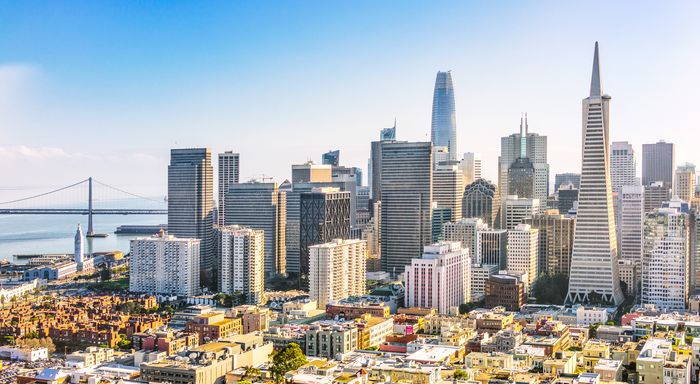
San Francisco is one of the areas with more new listings now than pre-pandemic.
Getty Images
Even as mortgage rates continue their upward climb (see the lowest rates you can qualify for here), home prices have continued to rise. And one big factor in those rising home prices is that America is currently facing a real estate inventory shortage. Between supply chain issues and material shortages, the United States is short more than 3 million homes, according to data from Freddie Mac, which isn’t helped by the speed bumps in building and low number of existing homes on the market. “If something is scarce, buyers have no choice but to offer more for it,” Bankrate analyst Jeff Ostrowski says of the reason home prices keep hitting records.
But in some markets there are actually more new listings now than before the pandemic. Indeed, the report reveals that six cities, out of 50, actually have more new listings now than they did pre-pandemic (measured by looking at the average of new listings — properties on the market for 14 days or less — from Jan-Apr 2022 vs. the average for Jan-Apr 2017-2019). These cities are: San Francisco, San Jose, Calif., Seattle, Portland, San Antonio and Kansas City, according to an analysis by a mortgage technology and data provider Black Knight.
Why do new listings matter? Black Knight explains that if new listings remain constrained — especially in an inventory-challenged situation like we are in now — that may be an indication that overall inventory levels may take longer to normalize. If, however, we are seeing more new listings, that may suggest that inventory could return (relatively) more quickly. Of course, the flip side of this equation is sales volumes, and the degree to which sales volumes slow by market will also impact overall inventory levels.
So what might be driving the uptick in new listings in some markets? Of course, this varies by market, but pros say some of this may have to do with how pandemic-related remote work has shifted housing demand away from less affordable urban markets toward more affordable markets. For example, as prices in San Francisco, San Jose, Seattle and Portland have soared, there’s been a trend toward homeowners leaving those places for more affordable destinations in the Mountain West region. “Idaho, Utah, Nevada and Arizona have seen an influx of buyers from California. Even so, the tech capitals have such an intense shortage of homes for sale that prices haven’t retreated in those markets,” says Ostrowski.
Zillow economist Nicole Bachaud says the Bay Area and Seattle are two areas that had fast-growing populations and subsequent housing affordability challenges long before the pandemic. “Inventory was very low in these areas before the pandemic, meaning there wasn’t as much room to fall as some of the other markets around the country where inventory is down big. But despite high costs of housing, competition for the available inventory remains high in these markets,” says Bachaud. In other words, though there are more listings, don’t expect it to be super easy to get the house you want.
When you look at active listings — which is simply properties on the market, for any number of days — San Francisco and San Jose also have a smaller deficit than many other cities (23% and 36%, respectively). Compare that to a spot like Raleigh: Out of the nation’s top 50 largest housing markets, Raleigh takes the top spot as the city with the biggest deficit: The number of active listings is down 83% from pre-pandemic levels, and new listings are down 37%.
If you are on a personal connection, like at home, you can run an anti-virus scan on your device to make sure it is not infected with malware.
If you are at an office or shared network, you can ask the network administrator to run a scan across the network looking for misconfigured or infected devices.
Redfin Corp. RDFN,
-2.16%
said Friday that it is seeing the northern California housing market, including the San Francisco Bay Area, cooling faster than any other U.S. market, as mortgage rates remain high and as the stock market has dropped. The San Jose housing market is slowing the fastest, with the supply of homes for sale up 10% from a year ago in May just three months after supply was down 43%. “The Bay Area is cooling quickly due to high mortgage rates, which hit pocketbooks harder in pricey areas, and the slumping stock market, a factor that’s particularly impactful in tech hubs where a lot of residents are compensated with equity,” Redfin said. “Sky-high home prices are another factor pricing many would-be buyers out of the market.” The online real estate services company said San Jose, Oakland and San Francisco are the most expensive metropolitan areas in the U.S. Redfin’s stock, which rose 2.3% in premarket trading, has plunged 74.7% year to date through Thursday, while the SP 500 SPX,
-0.08%
has dropped 18.1%.