Former Symantec CEO Greg Clark Selling $6.9M Home in S.F. Bay Area


  • 79d56 920x920 Former Symantec CEO Greg Clark Selling $6.9M Home in S.F. Bay Area

  •  Former Symantec CEO Greg Clark Selling $6.9M Home in S.F. Bay Area

Caption

Close


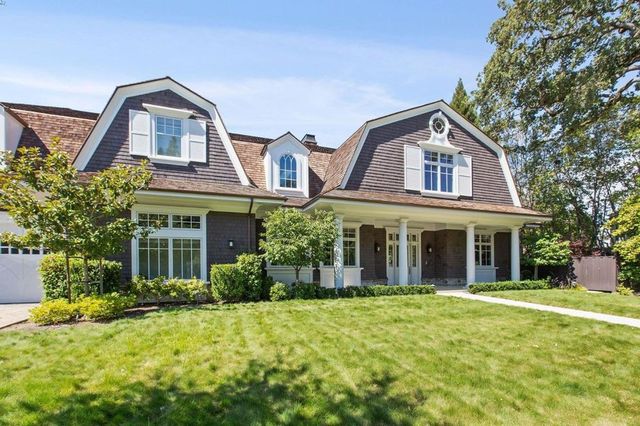
Former Symantec CEO Greg Clark has listed his Hillsborough, CA, home for $6.9 million.

The Australian businessman bought the newly built Hamptons-style abode in 2016, the same year he joined Symantec.

Records show the home in the exclusive enclave just south of San Francisco was purchased for $6.3 million. The current list price suggests he’s a motivated seller.

In May 2019, Clark stepped down from the Silicon Valley–based cybersecurity company to spend more time with his aging father. Sales at the company behind the popular Norton Antivirus software had missed financial targets, and the share price was on a downward swing.

3166a 90895310b2acec6353fa4c30e64a6aadw c0xd w640 h480 q80 Former Symantec CEO Greg Clark Selling $6.9M Home in S.F. Bay Area
Greg Clark’s Hillsborough, CA, home

realtor.com


3166a 0e94a96bbca4fdc5a16c58ddbee63fbew c0xd w640 h480 q80 Former Symantec CEO Greg Clark Selling $6.9M Home in S.F. Bay Area
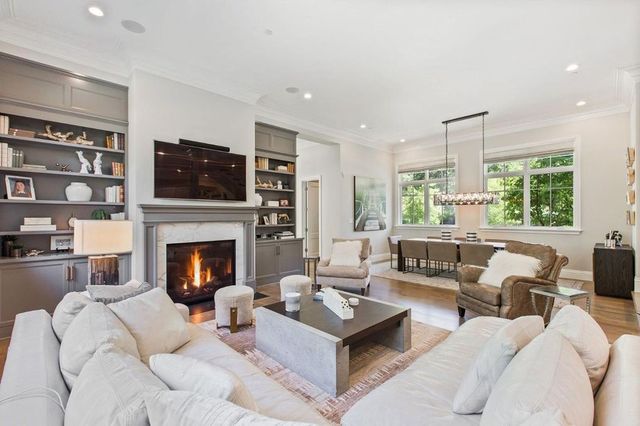
Great room

realtor.com


3166a d2de8ad8d18d0e33d2c0a34dde9e470ew c0xd w640 h480 q80 Former Symantec CEO Greg Clark Selling $6.9M Home in S.F. Bay Area
Eat-in kitchen

realtor.com


3166a 8d4c6c126e88795fce07af15aee7874ew c0xd w640 h480 q80 Former Symantec CEO Greg Clark Selling $6.9M Home in S.F. Bay Area
Dining room

realtor.com


3166a 168ac206f55a8945d97565be2cedecedw c0xd w640 h480 q80 Former Symantec CEO Greg Clark Selling $6.9M Home in S.F. Bay Area
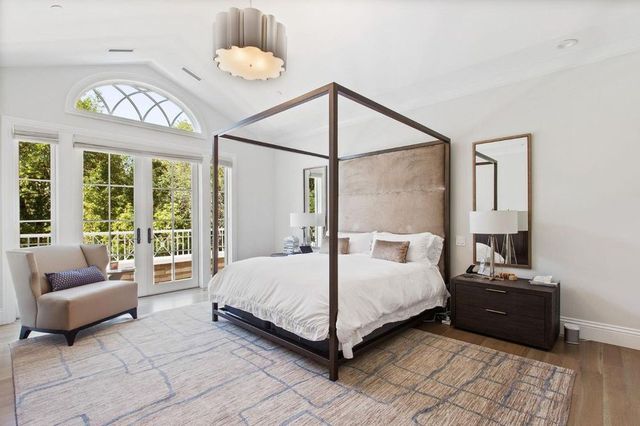
Bedroom

realtor.com


3166a 7240a8f24456b811405604416645925aw c0xd w640 h480 q80 Former Symantec CEO Greg Clark Selling $6.9M Home in S.F. Bay Area
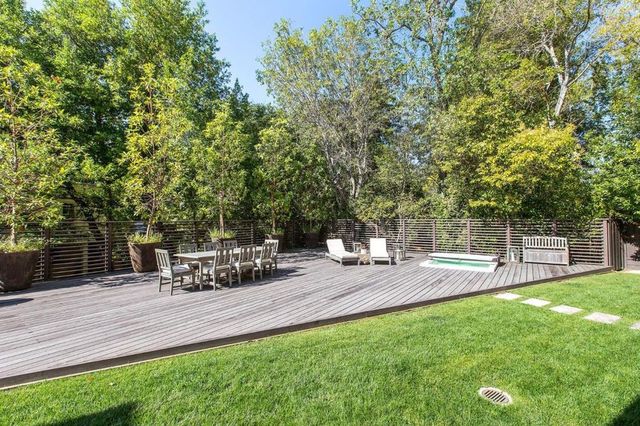
Deck and hot tub

realtor.com


3166a cbf1f9434397d50e772e318986cc0ec0w c0xd w640 h480 q80 Former Symantec CEO Greg Clark Selling $6.9M Home in S.F. Bay Area
Outdoor living and dining

realtor.com

The four-bedroom, 4.5-bath, 3,959-square-foot home features a luxurious great room with an adjacent room for an office or formal dining room.

The open “chef’s dream” kitchen includes Thermador appliances as well as a built-in casual dining space. A bed and bath on the main level is ideal for guests, or could be used as staff quarters.

Upstairs the luxe master suite comes with a “lavish” bath, and there’s an additional bedroom suite and two bedrooms with a shared bath.

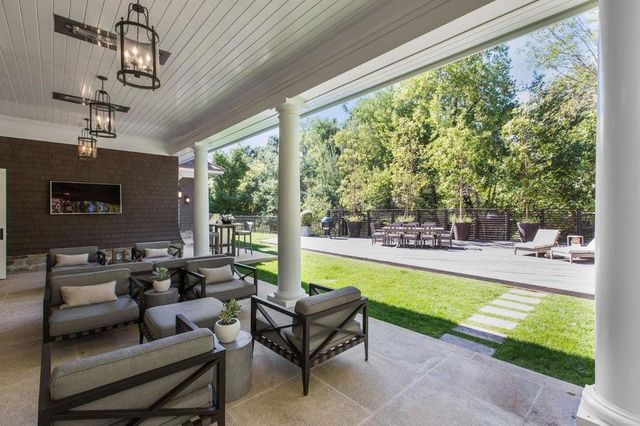
Outside the large lot includes a heated loggia wired for media, a barbecue area, and a large deck with hot tub, as well as level lawn for play or garden parties.

Clark became Symantec’s CEO in 2016. He arrived at the company through its acquisition of the security company Blue Coat, where he was also CEO. Previously, he was an executive at IBM, after it bought Dascom, a security company Clark founded.

Julie Baumann of  Compass holds the listing.

The post Former Symantec CEO Greg Clark Selling $6.9M Home in S.F. Bay Area appeared first on Real Estate News Insights | realtor.com®.

Article source: https://www.sfgate.com/realestate/article/Former-Symantec-CEO-Greg-Clark-Selling-6-9M-Home-15054451.php

Posted in SF Bay Area News | Tagged | Leave a comment

Oakland tenants refuse to pay rent, demand landlord sell building

CLICK HERE if you are having a problem viewing the photos on a mobile device

OAKLAND — A group of tenants living in a Fruitvale apartment building haven’t paid their rent since October, and they don’t plan to until their landlord gives them what they want — a chance to buy the building.

The tenants say they went on strike after a series of rent increases and the landlord’s failure to maintain their apartments. Now they refuse to make another payment until the landlord sits down and negotiates a deal that would allow them, with the help of the nonprofit Oakland Community Land Trust, to take over the property on 29th Avenue. Half of the building’s 14 households are participating, and with the strike in its fourth month, their tactics may be working — a tenant rights group says the landlord last week agreed to set up a meeting.

“We see it as a win,” said Israel Lepiz, housing organizer with the Alliance of Californians for Community Empowerment (ACCE). That’s the same organization that worked closely with Moms 4 Housing — a group of activists who recently took over an empty West Oakland house and succeeded in pressuring the owner to sell it to the land trust.

As prices continue to climb out of reach of many of the city’s longtime residents and wages don’t keep pace, a growing number of residents are getting fed up and refusing to pay rent, said Leah Simon-Weisberg, an attorney with ACCE. And such demonstrations can be powerful, she said, pointing out that it was rent strikes in Berkeley during the 1970s that eventually helped lead the city to adopt rent control.

“I think it’s growing,” Simon-Weisberg said of the rent strike movement, “and I think it will continue to grow unless we really change the relationship between investment and housing.”

The 29th Avenue building has been in a trust owned by trustees Calvin and Melinda Wong since April, according to the Alameda County Assessor’s Office. The Wongs could not be reached for comment. A voicemail left for the property manager was not immediately returned.

Though not involved in this case, San Francisco-based landlord attorney Daniel Bornstein has represented Bay Area property owners who have faced similar demands from activists to sell their buildings. To him, the strategy seems like something straight out of The Godfather films.

“To use the public flaying of someone to compel them to sell a property is, in my mind, ugly, unfortunate and only aggravates the polarization between community members,” Bornstein said. “We are looking at what looks like a shakedown.”

California law allows tenants to withhold rent if the landlord isn’t maintaining the property, Simon-Weisberg said. Many 29th Avenue tenants complain of everything from broken doors to cockroach infestations that they say the landlord has failed to rectify.

Most of the residents are native Spanish speakers working low-wage jobs, who have lived in the building for years. They’re all paying about $1,550 a month, up, for most of them, from about $750 when they moved in 10 or 15 years ago. As of December, one-bedroom apartments across Oakland were renting for a median price of about $2,500, according to Zillow.

The unrest in the building began in 2017, when 29-year-old Daniel Flores took the prior owner to court to fight a recent rent increase. He lost, with the court finding the increases were justified because the building is too new to be protected under rent control. After that defeat, Flores and some other residents, determined to keep fighting, got together and reached out to tenant rights groups for help.

The Oakland Community Land Trust, which buys buildings and converts them to permanently affordable housing, got involved about a year ago. After several months of negotiations — during which the landlord seemed interested in selling — the land trust scraped together a $3.2 million offer from various grants and investors, said Justin Tombolesi, who handles acquisitions and resident development for the nonprofit. If the deal had gone through, the tenants could have bought their units from the land trust at below market value — and never had to worry about another rent increase.

But the landlord rejected the offer.

ACCE and some of the tenants say they spent months trying to bring the landlord back to the negotiating table, with no luck. But after withholding their rent, they saw some progress last week when Calvin Wong agreed to a meeting. The meeting hasn’t yet been scheduled, and the tenants haven’t ended their strike. They might wait until they have more clarity from the landlord — such as an acknowledgment in writing of the Wongs’ intent to sell, Lepiz said.

Jesus Alvarez, a janitor who lives with his wife and two college-age daughters and is participating in the rent strike, said his family can afford the rent right now. But he’s worried about the next increase, and the one after that. That’s why he hopes the landlord will agree to sell.

“What will happen to me, to my family, next year?” he asked in Spanish. “We want a safe place for our families. That’s all.”


Article source: https://www.mercurynews.com/oakland-tenants-refuse-to-pay-rent-demand-landlord-sell-building

Posted in SF Bay Area News | Tagged | Leave a comment

Granny Flats, Backyard Cottages, ADUs: The Tiny Home Revolution in Bay Area Backyards

Housing may be the biggest challenge facing the San Francisco Bay Area — and for solutions, some enterprising builders are thinking small.

Among the providers of new Accessory Dwelling Units, or ADUs, is Alameda Tiny Homes. Founder Hank Hernandez recently welcomed dozens of prospective East Bay buyers to an evening seminar in Alameda, where they learned the ropes of building and owning an ADU.

“They came with questions,” Hernandez said. “We’ve been talking about it for two hours.”

Local


bb63e EvictionCouple Granny Flats, Backyard Cottages, ADUs: The Tiny Home Revolution in Bay Area Backyards


bb63e camp fire w silhouette Granny Flats, Backyard Cottages, ADUs: The Tiny Home Revolution in Bay Area Backyards

Hernandez calls his presentation “ADU 101″. He expects to build a lot more ADUs, now that the state has streamlined the permitting process, and loosened restrictions on renting them out.

“We’re in a housing crisis,” Hernandez said. “I truly believe it’s part of a solution.”

ADUs — also known as granny flats, backyard apartments, in-law units, and cottages — come with many potential benefits for both owners and tenants. For renters, there’s the opportunity to live in a semi-private space, sometimes at a lower rate than a similarly-appointed apartment or efficiency.

For homeowners, there’s the possibility of additional income, whether by renting the ADU to a tenant, or moving into the ADU and renting out the house to another family. An ADU can also provide an affordable, private place for an aging parent or a family member with special needs.

Those possibilities appeal to Colin Zak, an East Bay homeowner and contractor. Zak attended ADU 101 to learn more about building an ADU in his own backyard.

“It’s a good opportunity,” Zak said. “It’s too expensive to rent a house, for most people.”

Sophia Niu, a real estate agent, agrees.

“Now people see it as extra office space; home for in-laws; rental abilities,” she said. “It’s great.”

Hernandez is up-front about the cost: it’s not cheap. Prospective buyers should expect to pay upwards of $100,000 to $300,000 to build an ADU.

“If your house is your biggest purchase in your lifetime, this is basically your second-biggest purchase,” Hernandez said. “You’re just putting it on the same lot with the one you already own.”

You don’t necessarily have to pay for it yourself. Rent the Backyard, a San Francisco start-up, offers to do all the work for you — and even front the construction costs.

In July 2019, Rent the Backyard co-founder Brian Bakerman told NBC Bay Area all you need is the space for the ADU, and his company will take care of the rest.

“[We require] absolutely no money down for the homeowner,” Bakerman said. “We just ask that they enter into a partnership with us, and agree to split the rental income for the long term.”

So, who chooses the tenants? Who handles repairs? Can the homeowner evict the tenant, if they become a nuisance?

Rent the Backyard’s website says a property manager juggles those details.

If you agree to a deal like that, real estate attorney Monica Deka suggests a detailed contract.

“It could work out, as long as you plan accordingly,” Deka said. “You [should] really make sure the lease covers everything that needs to be covered.”

The same goes for renting out your backyard bungalow yourself — but Deka says hiring an expert could help you avoid major problems in the long run.

“I would recommend that you have an attorney review that, for sure,” Deka said.

Deka strongly cautions against using an ADU for short-term rentals, like Airbnb, VRBO, or HomeAway. For one thing, it might be illegal in your city or county.

“I can tell you cities are looking at Airbnb postings and going after homeowners who are violating this,” Deka said.

Another important factor to consider: property insurance. The Insurance Information Institute told NBC Bay Area traditional homeowner’s policies do not usually cover ADUs, especially if they’re used as a rental. You should talk to your insurance agent before committing to an ADU, to see how much coverage you need, and what it will cost.

For Zak, the costs are outweighed by the benefits.

“Long term, it’s a good investment,” he said. “The matter is: can you come up with the two, three, or even four-hundred-thousand dollars to do it?”

Article source: https://www.nbcbayarea.com/news/local/making-it-in-the-bay/granny-flats-backyard-cottages-adus-the-tiny-home-revolution-in-bay-area-backyards/2231314/

Posted in SF Bay Area News | Tagged | Leave a comment

San Francisco’s iconic ‘Full House’ home hits market for $5.5M

SAN FRANCISCO (KRON) – One of the most-seen homes in television history could be yours… for a few million!

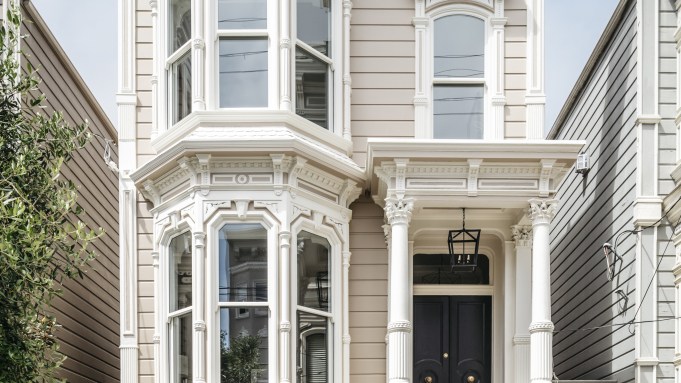
The popular Victorian home that was featured as the Tanner family’s in the popular sitcom “Full House” has returned to the San Francisco real estate market, according to TopTenRealEstateDeals.com.

It’ll cost you a cool $5.5 million – down from the original asking price of $6 million.

The 3,728-square-foot, four-bedroom, four-bathroom home was originally built in 1883 but has undergone a complete 21st century-redo.

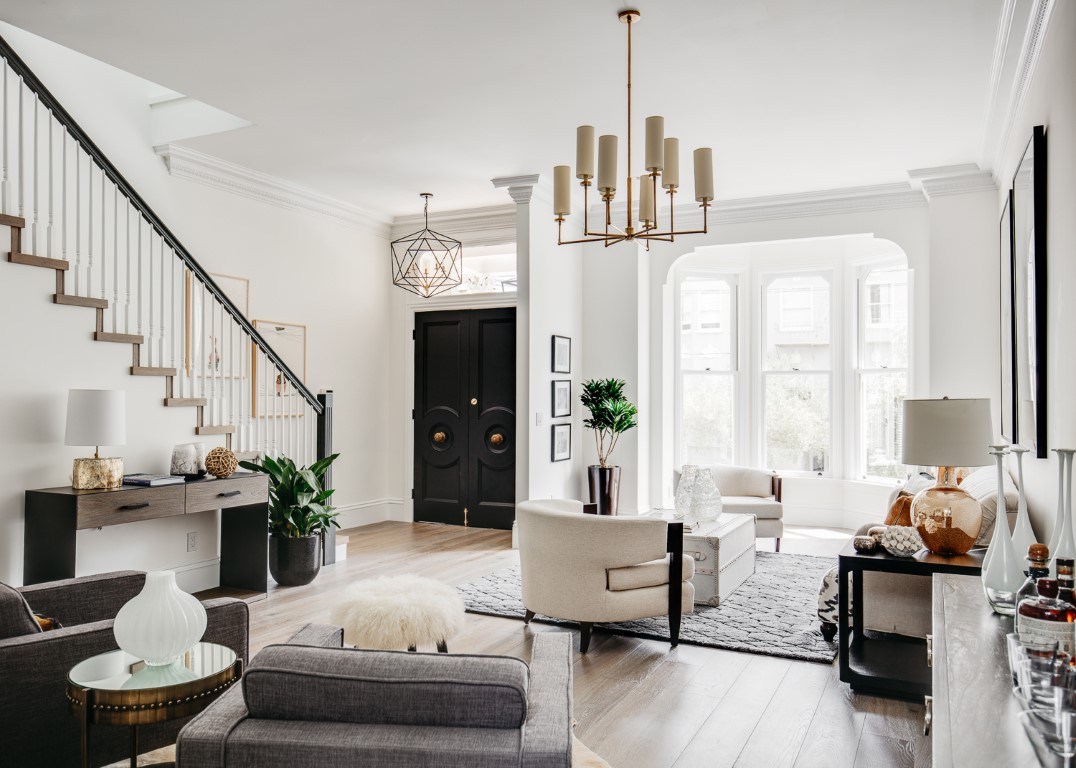
Elements such as the moldings, high ceilings and Corinthian columns have been preserved, but updates include the open floor plan, skylights, hardwood floorings and contemporary-tiled bathrooms.

The listing agent of this home is Rachel Swanna of The Agency, San Francisco.

Last week another one of San Francisco’s “Painted Ladies” located in the Alamo Square neighborhood sold for $3.5 million. That home was listed in January.

All photos and video courtesy: The Agency

Latest Stories:

Article source: https://www.kron4.com/news/bay-area/san-franciscos-iconic-full-house-home-hits-market-for-6m/

Posted in SF Bay Area News | Tagged | Leave a comment

Forex brokers that offer high trading leverage

San Francisco, along with the Bay Area, has the highest concentration of tech companies, making it the nation’s hotspot of innovation. By the latest approximations, there were at least 1,000 start-ups located in the Bay Area, and 18 of Fortune 500 companies have headquarters here. Although other cities in the U.S., such as Austin, Boston, and Chicago, are picking up speed and attracting tech investors, the Bay Area remains the incontestable leader in this sector. Thanks to this tech economy, the state of California is expected to outshine national economic growth in 2020 and even in the unlikely event of a recession, California’s outlook is still more optimistic compared to the rest of the country.

But the reach of the tech economy isn’t limited to these numbers. Being the nation’s tech powerhouse influences life in San Francisco in more ways than one and residents aren’t always as happy with the area’s growth as much as investors.

Tech employment is at an all-time high

Do you want to work in tech? Come to San Francisco. In May 2019, there were 835,600 available tech jobs in the Bay Area – a 16% increase compared to the dot-com bubble in 2000. This trend shows no sign of stopping. The tech industry has continued to expand and not even major events such as 9/11, the housing bubble, and the 2008 recession could halt it. Year after year, more companies have joined San Francisco’s growing tech scene and, experts argue, the jobs they have created are much more stable compared to the ones in the dot-com era. That’s because, unlike the companies that headlines twenty years ago, the ones of today report actual profit and produce products and services that are in high demand.

Opening headquarters in San Francisco is a top priority for tech firms, which don’t seem to be bothered by the soaring costs of office space – as much as $81 per square foot.

Investors are tapping into the potential of the Bay Area

Tech has always been a divisive topic among investors. On the one hand, there are those who say that innovative technologies such as Blockchain, Big Data, and AI, are still in their prime and we don’t know the long-term profitability of such investments. However, the Bay Area continues to attract record VC funding, along with New York and Boston. On the other hand, others say that this form of alternative investment is too promising to refuse and that in the following decade not even risk-averse investors will be able to deny its potential. San Francisco has some of the most forward-thinking tech companies in the world, which attracts venture capitalists and angel investors with an eye for innovation. Much like Forex brokers that offer high trading leverage, San Francisco’s tech companies offer investors the chance to make high profits in a relatively short time (the tech sector offers the highest average returns out of all ranked market sectors). However, no investment is without risk and investors need to carefully consider all their options and do their research before backing a startup.

51% of home buyers work in the software industry

San Francisco’s booming tech sector hasn’t only impacted employment, but also the housing market which, according to statistics, is mostly dominated by tech employees. 51% of San Francisco’s home buyers work in software, followed by 8.9% in finance and 4.5% in biotechnology. Mission Bay, South Beach, and South of Market are the top 3 most popular neighborhoods thanks to their highways and good commuter lines to Silicon Valley, while the poor commute conditions of Lower Pac Heights and Inner Sunset brought these neighborhoods at the bottom of the list. Who employs these buyers? According to data from Fidelity National Title, Google, Apple, Salesforce, Facebook, and LinkedIn are responsible for most tech buyers in the region.

Over the years, the increasing number of tech jobs has changed the local communities. Working-class neighborhoods on the north side that were racially and ethnically mixed a few decades ago have now become affluent, industrialized, and occupied mostly by highly educated white communities. San Francisco is still a multicultural city, since it attracts people from all over the world, but their socio-economic background is almost the same. Younger, richer, more educated residents also triggered a massive gentrification trend in San Francisco, but these moves on the real estate market also have a darker side.

Rent and property prices have spiked due to high demand, making life in San Francisco more difficult for average income families. Many residents were evicted or displaced which has led to an increase in homelessness on the one hand and an increase in unoccupied homes on the other hand. There are now about 38,000 empty homes in San Francisco, which means there are five empty homes per homeless person. Once proud to be part of the community, more and more residents worry about the unchecked homeless, the rising incidence of drug abuse and violence in wealthy neighborhoods.

Is the tech industry hurting local businesses?

San Francisco and the Bay Area definitely have booming economies, but tech companies are the main drivers behind it. Local businesses, however, seem to be struggling. Commercial spaces that aren’t occupied by tech companies are left to small businesses that can’t keep up with the high costs of rent. A new fancy restaurant or coffee shop pops up every week, but owners can’t stay in business for very long. Family stores have it even harder. Instead of going out to buy groceries from the store down the street, tech workers order them through Amazon Prime. In the past five years, this has led to a desolate landscape: one in eight storefronts is empty, long term leases are considerably harder to find, and small businesses that aren’t tech are facing a great deal of financial insecurity.

Article source: https://www.sfexaminer.com/marketplace/forex-brokers-that-offer-high-trading-leverage/

Posted in SF Bay Area News | Tagged | Leave a comment