By day’s end Monday, most of the Bay Area will have been holed up in their homes for two weeks — long enough, experts say, to see whether the unprecedented efforts to keep people apart are beginning to halt, or at least slow down, the coronavirus.
There are hopeful signs. Though the case counts keep climbing, they’re not rising so fast as to suggest the regional outbreak is out of control, as it is in New York. The death toll in the Bay Area is mounting, and while that’s sobering news, it’s not increasing faster than anticipated.
But this pandemic has been fast-moving, often exploding out of nowhere in communities and overwhelming hospitals in just a matter of days. On Saturday, Gov. Gavin Newsom said the number of coronavirus patients in intensive care had more than doubled overnight in California, and the number of people hospitalized grew by a third, to more than 1,000.
It’s too early to say whether the regional outbreak will mushroom into the kind of crisis striking New York. Public health authorities warn it may be several weeks before they can say that sheltering in place saved the Bay Area and the state.
And only then can everyone start to talk about what happens next: When is it safe to go back to some kind of normal?
“People want us to say when it’s going to be over, and we can’t tell them. We have to follow the data,” said Chris Farnitano, the Contra Costa County health officer.
“I think we’ve been ahead of the epidemic more so than other areas,” he said. “The Bay Area was the first to institute shelter in place. But we are still seeing our case numbers go up exponentially. It’s really, really important for all of us to continue to shelter in place and to do social distancing. We need to hang in there, because we won’t know whether it’s working for a while.”
The United States last week became the first country in the world to top 100,000 cases of COVID-19, the disease caused by the coronavirus. The U.S. has 30,000 more cases than China, where the pandemic began and spiraled out of control for weeks before public health authorities were aware the new virus existed.
But even with a month or two head start on China, the U.S. has struggled to control or accurately describe its own epidemic.
Reports of people who test positive for the coronavirus are the simplest and easiest to track, but they’re also not very reliable markers of the actual spread of disease or the severity of illness in a community. Other important signals include the number of people hospitalized, how many people have died and how many people in the community have symptoms. More than 2,000 people have died from COVID-19 in the U.S.
But much of that data isn’t reported publicly at all, and when available, it’s often a week or two old. The virus itself can incubate in an individual for up to 14 days before making someone sick. Those who are infected may not get tested or go to a hospital for care for another week or so after that.
In other words: Understanding when the outbreak has passed is going to take time and careful analysis.
Counting coronavirus cases
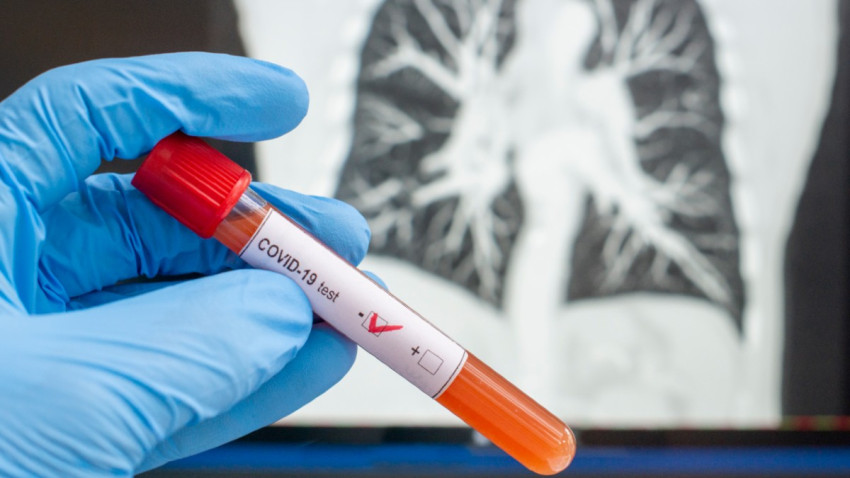
Testing has proved a major hurdle to understanding the epidemic, with missteps at federal and state levels hampering the process along the way. That in turn means public health officials don’t have a very good sense of how far and fast local outbreaks are spreading.
California has tested far fewer people than other states, including New York. As of Friday, 89,600 tests had been done in California, compared with 145,000 in New York. And about 64,000 of the California tests results are still pending.
Testing problems mean that the case counts that public health officials use to determine when the outbreak is starting to subside are unreliable. But case counts in many places are the only consistent, real-time marker available.
In the Bay Area, the pace of growth over the past month suggests that this region is doing better than other places. New cases have been roughly tripling every week for the past three weeks. In New York, the new cases have been doubling or tripling every few days.
The Bay Area had nearly 1,800 cases as of Saturday. New York City had nearly 31,000 cases.
As testing increases — and Gov. Gavin Newsom and other policymakers promise that it will — then so too will the case counts in the Bay Area and the rest of the state. But infectious disease experts say that even with more testing, the counts ultimately should be a good marker of when the outbreak is starting to slow down.
“The data are full of caveats, but at the end of the day, the case counts are what we know. And we need to see those going down,” said Travis Porco, a UCSF bio-statistician.
Hospital numbers
The most reliable marker of the outbreak is the number of people hospitalized with COVID-19, infectious disease experts say. But it’s also the least publicly available information.
Hospital numbers tell public health officials exactly how many people in the community are seriously ill with the virus. And yet, as of Friday, only Santa Clara County was reporting daily hospitalization numbers — and the county removed those numbers from its website Friday afternoon. The California Department of Public Health said it plans to start regularly reporting statewide hospitalization numbers soon.
Santa Clara County hospitalization numbers climbed about 10% to 15% a day for the past week, which is concerning but not surprising, said Steven Goodman, a Stanford epidemiologist. “We don’t want to see that going up too much higher,” he said. He hopes those daily increases will slow over the next couple of weeks.
As of Friday, 154 people had been hospitalized with COVID-19 in Santa Clara County. Statewide, 1,034 people who have tested positive were hospitalized Saturday — a 39% increase overnight, Newsom said in a news conference. About 410 people were in intensive care, more than twice as many as the day before, he said.
Hospital numbers, like case counts, will tell public health officials when the outbreak is growing and when it’s ebbing. But people don’t typically end up in the hospital until two to three weeks after they’re infected, so the numbers have a lag time.
Tracking symptoms
The U.S. already has in place a national surveillance system that tracks the percentage of people who see a doctor for flu-like illness. Because flu and COVID-19 share many symptoms, that system can also be used to track the coronavirus.
And it’s especially useful now, as the flu season winds down. This time of year, reports of flu-like illness would typically steadily drop, but in fact they’re climbing — that’s pretty strong evidence of COVID-19 in the community, infectious disease experts said.
The downside of that data is that it’s typically about a week old, and it’s reported on a statewide level. So it’s not a great marker of what’s happening in San Francisco right now, for example.
Still, health care providers study these reports to understand how many sick people are in the community and to adjust staffing and other resources accordingly. They’re doing that now with COVID-19, watching the flu reports and bracing for a rush of patients.
“If we start to see a spike in influenza reporting — this would be a weird time of year for that. So it’s a very useful source of information that is being monitored for sure,” said Porco.
As of last week, when the most recent data were available from the Centers for Disease Control and Prevention, reports of flu-like illness were higher in the second week of March than they were at the peak of the traditional flu season in February.
What the death tolls say
The most accurate portrayal of the spread of disease is how many people have died, public health experts say. These cases are the least likely to be missed by testing shortages or reporting delays.
The problem with using deaths as a marker of disease is twofold. First, most people die about a month or so after being infected, so the deaths that are being reported now are a reflection of what was happening in the community four or more weeks ago.
Second — and this is a good problem to have — there aren’t enough deaths yet in the Bay Area to accurately reflect whether the epidemic is expanding or waning, infectious disease experts said. Forty-five people have died in the region so far, 34 in just the past week. But day to day, deaths don’t reveal much about whether the outbreak is slowing down.
Statewide, the number of deaths is more significant: 119 people have died, 91 in the past week alone. And the numbers have been increasing steadily day to day.
None of the reports that public health leaders are looking at point to an end of the statewide near-lockdown. It seems very unlikely that the Bay Area shelter-in-place orders will lift on April 7, as was originally directed. The state should have more clarity by Easter — April 12 — but the outbreak probably won’t be over by then, either.
But there are signs that sheltering in place is working, said Santa Clara County Executive Jeffrey Smith. People just need to keep staying home, keep their distance from others, and keep their spirits up.
“Every little bit of hope helps,” Smith said at a news conference in San Jose on Friday. He’s hopeful that the case counts aren’t climbing too fast, and that other markers are, if not quite encouraging, at least not alarming. Two weeks from the shelter-in-place orders — which would be Tuesday — he hopes to have more answers.
“And then it takes four weeks before you actually see some substantial change,” Smith said. “We should know — we should have a much better idea by then.”
Erin Allday is a San Francisco Chronicle staff writer. Email: eallday@sfchronicle.com Twitter: @erinallday