‘It’s a feeding frenzy’: Palm Springs real estate inventory at historic low


  • 26f68 920x920 It’s a feeding frenzy: Palm Springs real estate inventory at historic low

    Late afternoon light cast a warm glow to a golf course in Palm Springs, California

    Late afternoon light cast a warm glow to a golf course in Palm Springs, California


    Photo: Ron And Patty Thomas/Getty Images

Caption

Close

Late afternoon light cast a warm glow to a golf course in Palm Springs, California

Late afternoon light cast a warm glow to a golf course in Palm Springs, California


Photo: Ron And Patty Thomas/Getty Images


Apartment dwellers want more space. Schools are extending distance learning. Workplaces are lengthening WFH timelines. All this means it’s no surprise that another popular getaway destination for the Bay Area is so hot, it can’t keep up with the demand for real estate.

The Coachella Valley, which includes Palm Springs, is having a record-breaking year that shows no sign of stopping. The median detached home prices for Palm Desert and Palm Springs have had year-over-year gains of 11.5% and 11.2% respectively, according to the Palm Springs Regional Association of Realtors. Since summer is usually considered the slow season for the hot, arid desert communities, real estate agents are predicting these gains to continue through the fall.


“I don’t see it slowing down, we’re not even in our season yet,” said Redfin agent Kimberlee Morgan. “The snowbirds will be coming back. We don’t anticipate it slowing down until at least 2021, especially with mortgage rates being low. It’s the perfect storm.”


Meanwhile, Valley inventory, at 2,050 units, is at the lowest level in history. That’s almost 700 units fewer than any previous August 1st, which has led to a fiercely competitive market full of multiple bids and little to no contingencies.


“We’re getting multiple offers on almost every transaction,” said Maria Krajco, an agent with KUD Properties. “Everything is going at asking or above. There’s a lot of cash offers. There’s just a lot of money coming in. You just can’t get as much for your money in the big cities.”


In years past, multiple overbids were uncommon, as were shortening or eliminating contingencies all together. This strength is confirmed by a median value of only 56 “days in the market,” which is the lowest number of days in over five years.

Another change Morgan didn’t anticipate was how many properties she’s sold sight-unseen. Especially because of intense competition, there’s simply no time to fly down to see a property you like. She said it’s put a renewed pressure on the agent to be trusted to find a home that fits a buyer’s needs.

“The market is crazy,” Morgan said. “We are seeing multiple offers 10 or 12 offers coming in over asking on homes coming listed 48 hours ago. Inventory is at an all time low. It’s a feeding frenzy when something becomes active.”


Both agents agreed most buyers are coming from California, with the next largest contingent coming in from Washington.


Krajco said another factor driving the market is the strong short-term rental market. Even if buyers don’t see themselves living there long term or fulltime, they still see properties as a good investment since it’s been cited in a recent study as the best place in the country to invest in an Airbnb property. As a host to both the Coachella and Stage Coach music festivals, as well as being a popular destination for bachelorette parties and winter tourists, analytics firm Airdna said it’s easy to cover your costs in just a few weekends.

“Ten years ago this was a little retirement community with avid golfers,” Krajco said. “Now there’s just so much happening out here it’s attracting younger people. They’re building surf parks. They’re bringing in a professional hockey team. Plus you can get to both the beach and the mountains within two hours.”

“Everyone just wants that Palm Springs vibe,” Morgan said. “They’re tired of being cooped up. Even if they’re working at least now they can look out at the pool and the palm trees and it’s just a different feeling.”

Tessa McLean is a digital editor with SFGATE. Email her at tessa.mclean@sfgate.com or follow her on Twitter @mcleantessa.

Article source: https://www.sfgate.com/realestate/article/Palm-Springs-real-estate-competitive-inventory-low-15465153.php
Posted in SF Bay Area News | Tagged | Leave a comment

Home Sellers Slash Prices In San Francisco As Number of Houses For Sale Reaches Recession-Era Level

It’s beginning to be more of a buyer’s market in San Francisco than it has been in over a decade as the number of homes for sale last week reached levels unseen since 2011. And this means that more and more sellers are having to cut their asking prices to garner interest and remain competitive.

Over the past week, as Socketsite reports, the number of homes for sale in the city rose 6 percent to 1,360, which is a 200-percent increase of inventory over the same time last year. Summer is of course high season for home sales, but San Francisco is clearly part of a larger nationwide trend as people working remotely — and living in cities that are half shut-down — are seeking new homes and more space in less dense places.

Not since 2010 and 2011 have so many homes in San Francisco been on the market at once, with almost 50 percent more single-family homes on the market than this time last year, and 130 percent more condominiums.

Sales of existing single-family homes in the Bay Area jumped 70 percent in June, as NBC Bay Area reports via the California Association of Realtors, following the quieter lockdown months of April and May.

All that inventory following a lengthy period of far less inventory means there is pent-up demand regardless of the pandemic — and as Socketsite reported last week, there were 150 percent more reduced-price listings on the MLS in San Francisco than the same time last year.

It helps that interest rates are historically low, and as one local realtor suggests to SFGate this week, San Francisco’s unique housing stock of two-, three-, and four-unit buildings in old Victorians provides maximum safety in pandemic times, with little or no shared common spaces. (This also spells bad news for condo sellers in big, high-rise buildings.)

If seasonal trends hold true, inventory is expected to go down again this month and next, and rebound once more in August — but can such usually predictable trends really be counted on in 2020?

Related: San Franciscans Continue Leaving for More ‘Comfortable Lives’ Elsewhere as Rental Prices Plunge

Photo: Bernadette Gatsby

Article source: https://sfist.com/2020/07/21/home-sellers-slash-prices-in-san-francisco-as-number-of-houses-for-sale-reaches-recession-era-level/

Posted in SF Bay Area News | Tagged | Leave a comment

Getting ‘revenge’: How some local tenants got their rents reduced


9f045 920x1240 Getting revenge: How some local tenants got their rents reduced

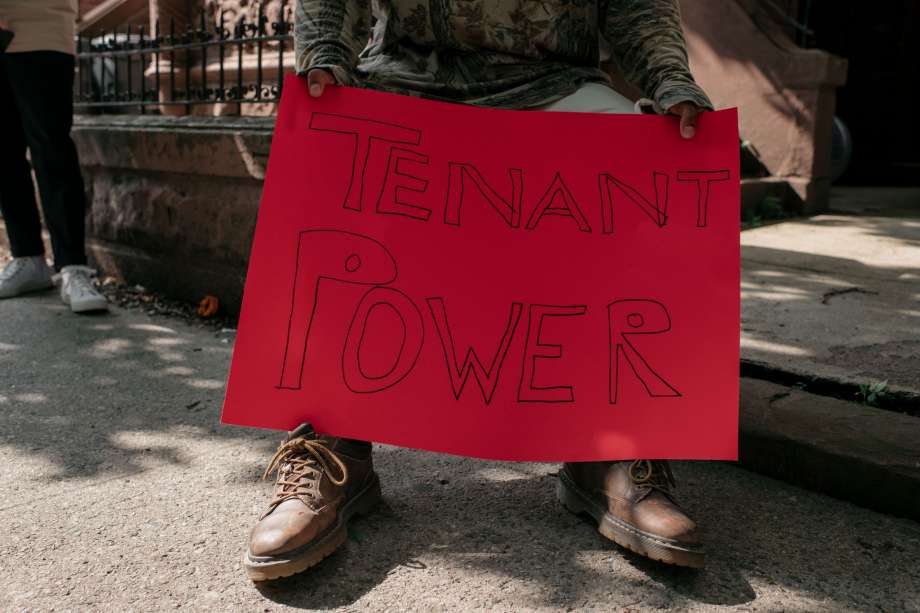
In a local housing market hit hard by the fallout of COVID-19, the price of rent is increasingly up for negotiation.

In a local housing market hit hard by the fallout of COVID-19, the…


Three months of 20 percent off rent for a house in the Excelsior District. Nine hundred dollars off per month for a condo in Hayes Valley. A 16 percent reduction in base rent, six weeks free and a $2,500 bonus for a luxury apartment in Jack London Square. Just a few months ago, deals like these would have read like Bay Area rental fan fiction. But in a local housing market hit hard by the fallout of COVID-19, the price of rent is increasingly up for negotiation.


“Many renters are discussing new arrangements with their landlords and property managers, largely because the pandemic has had such a devastating effect on incomes,” said Igor Popov, chief economist at online rental marketplace Apartment List.

In April, the company released the results of a national survey that found 11 percent of U.S. renters had their rent proactively lowered in the wake of shelter-in-place orders, while nearly half of those who could no longer pay their rent in full were able to negotiate for reduced or deferred payment.


On top of that, many local tech companies announced extended or indefinite plans to work remotely, prompting some workers to leave San Francisco in search of greener pastures, freeing up once highly coveted real estate in the process.


Popov believes that the majority of rental negotiations are “borne out of necessity” as a result of a COVID-19 related reduction in wages, as was the case with Julian Shipp, who lives in San Francisco’s Excelsior neighborhood.

“I pushed my roommates to let me start a negotiation because I was about to move in with my parents. My mom is high risk and I really wanted to avoid this, so we emailed the landlady. All of us had lost some or all work by [then] so my roommates agreed,” said Shipp, who ultimately received a temporary $700 per month decrease in rent.
 
Other Bay Area residents, however, are motivated to negotiate not by dire financial straits, but a desire to take advantage of a rental market that has finally tipped the scales in their favor. (Some sources in this story chose to remain anonymous for reasons of confidentiality.)


“I’ve lived in San Francisco since 2013 and I have had a really stressful time finding reasonably priced housing. I was really excited to turn the tables,” said one resident. She was able to negotiate four percent off of an already-discounted property as well as secure more favorable terms in her lease. “It gives me a feeling of getting ‘revenge’ for all of those years.”


Thinking of negotiating with your own landlord? Go in prepared with these tips we heard from successful negotiators, real estate professionals, tenants’ rights activists, and more.

Consult the experts

Fred Sherburn-Zimmer, Executive Director of the Housing Rights Committee of San Francisco (HRCSF), recommends that those trying to negotiate with their landlord reach out to a tenants’ rights organization first — especially if you feel you’re at risk of losing your housing.

Between the health crisis and the eviction moratoriums currently in place throughout much of the Bay Area, “no tenant should be moving out right now because they can’t pay rent. A huge percentage of tenants calling us right now do not know that,” Sherburn-Zimmer said.

Beyond the HRCSF, Sherburn-Zimmer recommends the San Francisco Anti-Displacement Coalition. Other local tenants’ rights organizations include the East Bay Community Law Center, Bay Area Legal Aid, Eviction Defense Center and Tenants Together.

Cite hard evidence

“Using data always helps make the case,” said Ben Metcalf, Managing Director for the Terner Center for Housing Innovation at UC Berkeley.

Look at online rental listings to get a feel for the going rate in your desired area, or use a tool like Rentometer. You can also check in with neighbors to see what they’re paying — try turning to Nextdoor if you’re feeling sheepish.

And remember, many vacant units are now sitting empty for a month or more, so “if you calculate a month’s rent on your home, subtract that from the annual rent and divide by 12, you have a new offer to present to your landlord” when renewing your lease, advised Lisa McCarrel, managing partner of MoveBayArea.com.

Lay your cards on the table

Don’t feel the need to beat around the bush — in the current housing market, you can afford to be upfront about your situation.

After his building manager reached out to set the terms of a lease renewal, Bob, a resident of Oakland, “replied saying basically, ‘Look, my first choice is to stay here, but here are these other buildings offering cheaper rents and promotional deals. It is hard to justify staying here when I can pay so much less elsewhere.”

“At first, the manager didn’t bite, but after another email saying I was ready to move and a few days of waiting, she came back with a lower offer, which I accepted,” he added.

Get it in writing

If your landlord tries to push for a phone or in-person conversation, insist on moving it to email or another form of written communication.
Although one Jack London Square resident’s landlord “tried to do as much [negotiation] as possible over the phone,” they insisted on continuing the conversation over email — something that later proved essential when their landlord doubled back on a particular offer. With a previous email serving as proof, they were able to negotiate on the terms they had originally agreed to.

Consider organizing

“Tenants are always stronger together, but now we see them organizing more than we’ve ever seen before,” Sherburn-Zimmer said. “It’s a really powerful measure to make sure people are protected throughout a building — especially really vulnerable tenants,” such as non-fluent English speakers or those with Section 8 Housing.

Ryan Perkins of Oakland consulted housing organization Tenant and Neighborhood Councils (TANC) to form a tenants’ union with five of the six units in his building. Together, they drafted and sent a letter to their landlord, then proceeded to successfully negotiate a rent reduction with the help of a tenants’ rights lawyer.

“The residents in the building are very happy that we came together and received some concession, even if it is minor,” Perkins said.

Be persistent

Of course, not all landlords are on board with negotiating, but as the COVID-19 pandemic rages on, that may very well change.

“I’ve negotiated with several landlords, but I find 99% of the landlords I speak with to be misinformed … [they] really, really want to believe they will still have tens of thousands of students coming into town, desperate for housing and willing to pay astronomical rental prices,” said one recent graduate of UC Berkeley. “The funny thing is that, at rentals where landlords denied my request for a modest $100 or $200 per month [off], those units are still vacant months later.”

Still, this didn’t dissuade them from attempting to negotiate in the future.

“Landlords certainly don’t hold back when it comes to treating their rentals as a pure business, instead of someone’s home, so tenants should also treat this as a business and negotiate.”

Emily Blaire is a freelance writer in the Bay Area. Contact her at  em.writes12@gmail.com

Article source: https://www.sfgate.com/living-in-sf/article/How-to-negotiate-with-landlord-bay-area-tenants-15458824.php

Posted in SF Bay Area News | Tagged | Leave a comment

$100 million fund to convert Bay Area hotels to homeless housing draws 20 applications — none in SF

California’s new Homekey program, which will dish out $100 million to convert Bay Area hotels and motels into permanent homeless housing, has attracted about 20 applicants in its first three weeks as cities and counties race to beat next Thursday’s tight filing deadline. And though there has been just one solid bite in San Francisco, there may soon be more.

As the coronavirus crisis stretches on and many hotels remain shuttered, some antsy owners are becoming more open to the idea of selling rather than hanging on to see how long they can survive the crippled economy. In hyper-expensive San Francisco, where plummeting tourism has led to 40% of the hotels temporarily closing, some owners might feel more confident than those in other regions in recovering financially once the pandemic eases.

But it doesn’t mean they’re not thinking about selling, officials said. San Francisco homeless policy leaders have said since early summer they are hoping to buy two or more hotels for conversion, and some leading players in the city’s Homekey process say several properties are in play — including one that sent in an application to the state on Friday.

The challenge, they say, is finding buildings that don’t need prohibitively expensive updating — in-unit bathrooms, disabled access and the like — whose owners are willing to sell at a fair price. All of that is no small ask, considering that while rents have dipped significantly during the pandemic, real estate prices have not.

Then there’s the follow-up cost. Overseeing a supportive housing operation costs about $30,000 a year — per person — so a modest, 50-unit complex alone would require $1.5 million a year. Most Bay Area counties say this doesn’t counteract the benefit of getting help buying real estate, particularly in San Francisco where Mayor London Breed’s office sees the program fitting neatly into her plan to add 1,000 supportive housing units in the city over the next 12 months.

 $100 million fund to convert Bay Area hotels to homeless housing draws 20 applications — none in SF

Breed has several divisions, including the Department of Homelessness and Supportive Housing, scouting for prospective properties, and Supervisor Aaron Peskin played a leading role in convincing the owner of a 237-room residential hotel in his northeastern district to submit an application on Friday.

“Every once in awhile, things line up right,” he said. “This is great news.”

He said another building in his district is also in the running, and he hopes others in the city will also send in Homekey applications.

“Before and during the pandemic people have been buying and selling stuff for affordable housing and supportive housing, and I’m not seeing marketplace desperation,” Peskin said. “It’s very promising.”

Rebecca Foster, head of one of the key funding organizations helping arrange Homekey deals in the city, said she was optimistic about finding projects “with this opportunity to bring tens of millions of dollars to San Francisco.” The pressure is on, though: The first deadline for applications is Aug. 13. And though subsequent bids will be taken up to the end of September, everyone is encouraged to get in before the money runs out.

“There are definitely a few possibilities in San Francisco,” said Foster, CEO of the San Francisco Housing Accelerator Fund, a public-private fund that raises money to build new affordable housing. “When there are state funds like this available and you have a huge need like we do, you have to work really hard to get that application in. This is a sprint.”

The state’s Homekey fund consists of $550 million in federal coronavirus aid and $50 million in state general funds. The federal money must be spent by the end of December, and properties accepted into the program must be occupied within 90 days. Those deadlines, tight by housing industry standards, have created a near frenzy as cities, counties and nonprofit agencies race to assemble their prospects.

Of that money, $100 million is aimed at the Bay Area’s nine counties.

 $100 million fund to convert Bay Area hotels to homeless housing draws 20 applications — none in SF

Throughout the state, about 100 applications — actually pre-applications, with further paperwork to follow — have been received, according to Gov. Gavin Newsom’s office. The program builds on Newsom’s Project Roomkey, which has rented hotel and motel rooms for more than 14,000 vulnerable or coronavirus-stricken homeless people statewide. Homekey will accept not just hotels and motels, but vacant apartment complexes and other buildings as well.

Homekey’s money could buy more than 3,000 or more units of housing around the state — hundreds of those in the Bay Area — and the aim is to make them permanent supportive housing, though interim housing can also be allowed. Considering there are 151,000 homeless people in California, the biggest such population in the nation, several thousand rooms of new housing seems small. But in the perpetual struggle to house street people and never enough money, homeless policy leaders say the program is a big plus.

“I am confident we will use this as a great resource,” said Vivian Wan, CEO of Adobe Services, a homeless aid nonprofit that oversees programs, including Roomkey complexes throughout the Bay Area. “It’s a crazy tight deadline, but if COVID-19 has taught us anything in California, it’s taught us that we can move quickly when we have to.”

She said she is helping agencies in Santa Clara and Alameda County with several Homekey applications, and county officials in Contra Costa and Marin counties are vigorously pursuing several properties as well. Calls to several hotels for comment went unanswered.

Tomiquia Moss, CEO of the All Home nonprofit that works on Bay Area-wide strategies for ending homelessness, pointed out that converting existing buildings can cost half or less that of new construction, depending on the area — “which is quite a savings, considering it can cost about $700,000 a unit to build new in San Francisco.”

Moss advised state planners as they crafted the Homekey program, and her organization is helping counties with applications. “There’s an incredible appetite for this,” she said, and not just for the money but for the prospect of housing people within 90 days.

“You can’t keep telling homeless people to wait five years for a unit to be built new,” she said. “We have to be creative.”

San Francisco Supervisor Hillary Ronen, who with other supervisors has been urging the mayor to lease more hotel rooms to temporarily shelter homeless people, said there should be few holds barred in the hunt for properties.

“If we can’t find willing sellers, we should consider addressing this major problem by eminent domain,” she said. “Homekey is a solution, but we need much more like it. We have to do everything we can.”

Kevin Fagan is a San Francisco Chronicle staff writer. Email: kfagan@sfchronicle.com Twitter: @KevinChron

Article source: https://www.sfchronicle.com/bayarea/article/100-million-fund-to-convert-Bay-Area-hotels-to-15465521.php

Posted in SF Bay Area News | Tagged | Leave a comment

Tenants in a giant co-living Bay Area palace are looking for new roommates


5c781 920x1240 Tenants in a giant co living Bay Area palace are looking for new roommates

A tenant at a co-living residence in Woodside, Calif., is seeking three new renters to join their palatial home.

A tenant at a co-living residence in Woodside, Calif., is seeking…


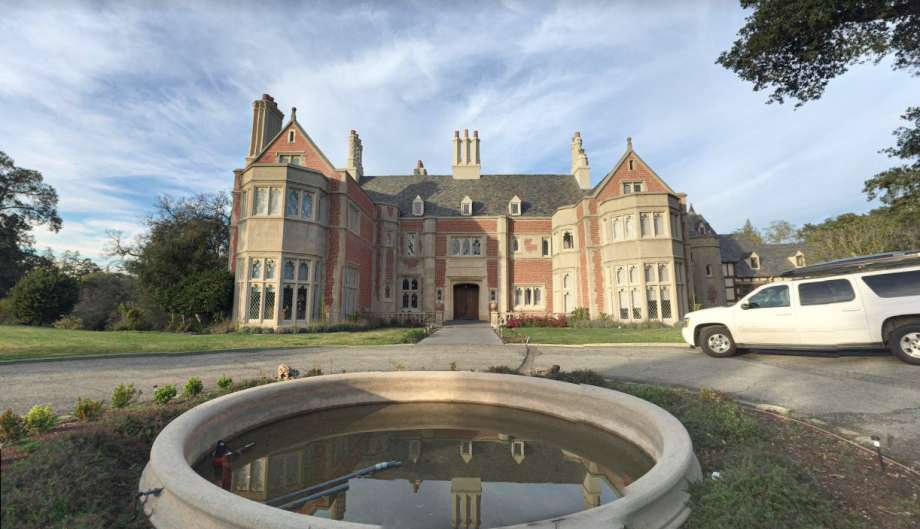
A group of self-governing, co-living tenants residing in a 17,000-square-foot grand mansion on the San Francisco Peninsula are looking for some new roommates.

A tenant at the unique living situation in Woodside, Calif., is seeking three new renters to join their sprawling palatial home, and started the search on Facebook Wednesday.

“We all enjoy developing quality relationships and maintaining a sense of community. We’re all open minded, educated, conscientious, and responsible professionals who work hard and like to enjoy ourselves on our time off. We are a diverse group of technologists, financiers, entrepreneurs, doctors, engineers, nurses, musicians, etc.,” the post read on “San Francisco Housing, Rooms, Apartments, Sublets,” a public group on Facebook with 115,000 members.


The post was widely shared on the social media platform by those interested in joining the co-living community and those just wanting to take a peek at the opulent mansion.

Interested applicants are encouraged to “FB Message a short bio about yourself and a summary explaining why you’d be a good fit for this type of coliving arrangement. Please include details about your background, lifestyle, and interests.”


Monthly rental rates for the three available rooms range from $1,400 to $1,900.

As more and more San Franciscans look to move out of small high-rent living quarters in the city to more spatial homes, communal living seems like a counter-intuitive solution, but this is no normal co-living space.

“There is ample space to seclude and isolate if you need alone time,” the post states.


The mansion in San Mateo County was designed to replicate Hampton Court, the English country residence of King Henry VIII. It was built in early 1934 for a wealthy San Francisco financier and the palace was known as “Camelot” by early owners.

A real estate listing for the mansion in 2011 described details such as “outstanding woodwork, towering ceilings with elaborate detail, and leaded glass on almost every window in the home are just a sampling of the extraordinary Tudor-inspired craftsmanship.”

While a sprawling building, its numerous bedrooms and 2.8 acres of grounds may provide space to isolate amid the pandemic, the tenant is apparently looking for renters who will socialize with others for “outings such as hikes, trips to the beach, kayaking, stand up peddle boarding, and cycling.”


“There are no social obligations, but we prefer those who wish to cultivate a community with others,” the post states.

The posting has since been deleted.

Andrew Chamings is an editor at SFGATE. Email: Andrew.Chamings@sfgate.com | Twitter: @AndrewChamings

Article source: https://www.sfgate.com/living-in-sf/article/Bay-Area-co-living-palace-tenants-Woodside-15464690.php

Posted in SF Bay Area News | Tagged | Leave a comment