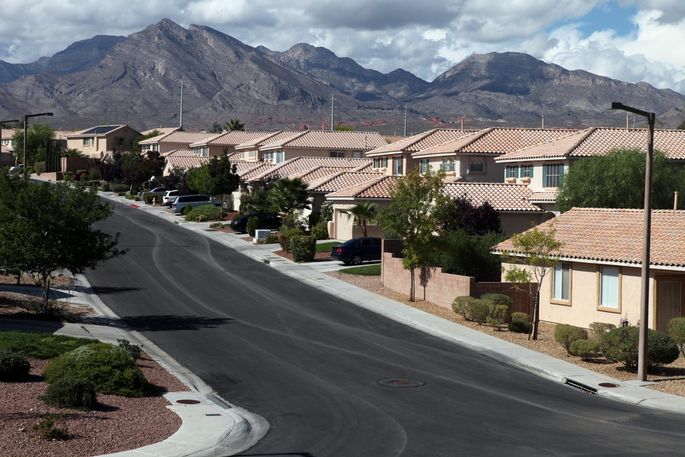
As renters have begun emptying out of the nation’s most expensive cities due to the one-two punch of the coronavirus pandemic and ensuing recession, monthly rental prices in those areas are nosediving.
Rents for September have plummeted the most in ultrapricey San Francisco compared with a year ago, according to a recent report from rental website Zumper. Median prices dropped by 14.1% in San Francisco, to a still very high $3,040 for one-bedroom apartments on the market.
This happened as some big tech companies based in the San Francisco Bay Area, like Google and Twitter, announced employees could work remotely for a year—if not forever. That enabled those accustomed to paying small fortunes on housing each month to relocate to cheaper parts of the country.
Prices dropped by about 7.2% for one-bedroom units in the nation’s most expensive rental markets compared with September 2019. Meanwhile, they rose by an average 4.8% in the country’s least expensive markets.
“Since [COVID-19] really started to affect the U.S. market in March, it has dramatically decreased the amount of people commuting to work every day—either because of social distancing measures or layoffs resulting from COVID-19’s effect on the economy. Given this, there is less of a reason for Americans to cluster in urban centers,” says Zumper analyst Neil Gerstein. “We believe this has caused a migration shift, and a subsequent demand shift, to historically cheaper cities.”
The site analyzed more than a million rental listings to calculate the median rents in the 100 largest cities and almost 300 more cities within larger, metropolitan areas. (Metros include the main city and surrounding suburbs, towns, and smaller urban areas.) Only listings on the open market, and not currently occupied, were included.
Other exorbitantly priced cities experienced similar double-digit declines. Median rents fell 11.5% year over year in San Jose, CA, in the heart of Silicon Valley, to $2,750 for a one-bedroom unit in September and decreased 10.9% in New York City, to a median $2,700. Rental prices also fell substantially in Salt Lake City, by 10.7%, to $1,000 a month; Denver, by 10.6%, to $1,430; and Washington, DC, by 10.5%, to $2,050. Median rents dropped 15.8% in the college town of Syracuse, NY, about four hours northwest of New York City, to $800.
Expensive cities that saw steep, but single-digit, price drops included Boston, where rental prices fell 8%, to a median $2,300 a month; Los Angeles, by 8.4%, to $2,040; and Seattle, by 9.6%, to $1,700.
“It is likely that prices will continue to decrease for some time into the future before they stabilize,” says Gerstein.
Where are monthly rents going up?
While prices fell in the country’s most expensive rental markets, they actually shot up dramatically in some of the more affordably priced Midwestern and Southern cities. Monthly rents have more room to grow in these places. And they may be seeing a boost in demand as renters from more expensive markets flee the big cities seeking more reasonably priced urban areas where they can get more square footage for their money.
“We largely attribute this to shifts in migration and demand within the country as Americans opt for cheaper places to live in the wake of COVID-19 and the recession,” says Gerstein.
Median rents surged in Chattanooga, TN, and Cincinnati, both by 15.9% year over year, to reach the same median $950 a month for one-bedroom apartments in September, according to Zumper.
There’s no point in sugarcoating it: The U.S. economy is a hot mess. The continuing coronavirus pandemic has led to scores of business closures, the worst unemployment since the Great Depression, and the steepest economic contraction on record.
Yet, despite it all, the U.S. housing market has come back—and then some. After monthslong pauses in many parts of the country, bidding wars and offers over asking price have returned. Cooped-up buyers seeking larger homes and wanting to cash in on record-low mortgage interest rates are battling it out over a very limited supply of properties for sale. Median list prices are up more than 9% over last year, a result of the lack of homes on the market, according to weekly realtor.com® data. (The median home price nationally rose to an all-time high of $349,000 in July.)
“Housing tends to be immune from economic downturns and slowdowns,” says realtor.com Director of Economic Research Javier Vivas. That’s excluding the past recession, which was caused by a housing bubble. “Right now we’re seeing markets recover faster where they’re able to contain the virus better. Markets with strong technology sectors have been more resilient.”
So where are these comeback kids—the housing markets rebounding the most since the start of the COVID-19 crisis?
Realtor.com found that more than half of the largest metropolitan areas have recovered from their pandemic lows. (Metros include the main city and the surrounding suburbs, exurbs, and smaller cities.) But the housing markets in less expensive, smaller cities as well as the suburbs and farther out towns where buyers can get more square footage for their money, the easier to social distance in, are more in demand than high-rise condos and apartments in the nation’s largest, most expensive city centers.
“People are looking for larger homes and also looking for value,” says Vivas.
To figure out which metros have boomeranged the best, realtor.com’s economics team looked at median home asking price growth, the percentage of new listings coming online, the number of days on market that it took homes to sell, and online home search growth. The team looked for year-over-year growth in each of the metrics. Then it created an index by comparing those stats in January—a relatively normal pre-COVID-19 month for the housing market—to the week ending July 18.
A score of 100% means the market is performing the same as it was in January. Anything higher shows how much better it’s doing. (The list was narrowed to just two metropolitan areas per state to ensure geographic diversity.)
These are the markets that have recovered the most since the beginning of the COVID-19 crisis:
Northeastern markets with low caseloads have recovered strongly
Boston, a finance, tech, and higher education hub, earned the No. 1 spot on our recovery list, with a median home price* of $675,050. But the metro, like many others across the country, has seen a huge shift in what buyers want.
The new townhomes and condos within walking distance to the city center—which have been selling like shares from hot IPOs for the past few years—are now sitting on the market. However, the McMansions and actual mansions that were popular in the ’90s are suddenly all the rage again, including this $1.5 million five-bedroom house on a half-acre in the suburb of Needham, MA.
“Sellers would have had to discount [these places] to sell” before the pandemic, says local real estate agent Gary Kaufman of Keller Williams Realty. “Now these properties are selling at full price.”
A similar scenario is playing out in other big, Northeastern cities. The New York City metro, which comes in third place, has also seen a demand shift. (The median price was $593,000 for the entire metro area, which includes swaths of upstate New York and parts of Connecticut, New Jersey, and Pennsylvania.)
Co-op and condo prices in tightly packed Manhattan have remained relatively flat. It’s the suburban and exurban markets, though, stretching from nearby Westchester, Fairfield, and Nassau Counties to mountainous Ulster County, that are exploding with high-wage earners who are either leaving the city completely or buying second homes with room to spread out.
“Almost overnight the tether between work and home just got infinitely longer,” says New York City–based real estate appraiser Jonathan Miller. “The suburbs of these metro areas, second markets, and the exurbs are all having their day right now. I think it continues in some form after there’s a vaccine because the technology is there [to enable folks to continue telecommuting].”
Buyers in pricey, Western tech hubs are also heading to the burbs
Seattle’s suburbs have become more popular as a result of the coronavirus pandemic.
Art Wager/Getty Images
Residential real estate markets in pricey, tech hubs on the West Coast are rebounding almost as well, if not better, than their Northeast counterparts.
In the tech meccas of Seattle, the nation’s second best bounce-back market, with a median list price of $629,900; Denver, No. 5, at $544,300; San Francisco, No. 6, at $1,054,210; and Los Angeles, No. 7, at $994,150, buyers also traded the crowded city for the surrounding towns and smaller cities. Ultralow inventory, down by double digits, year over year in each of these metros, has also played a big part in rising prices.
“Right now, everything that residents love most about San Francisco and other cities—clubs, cultural venues, and events, street fairs, restaurants, the ‘rush’ of social life in the city, being able to walk to work—has pretty much disappeared,” says Patrick Carlisle, chief market analyst at Compass. “What remains is the sense of feeling locked in, being more exposed to the virus, and trying to avoid people whenever they venture outside.
“San Francisco is the weakest market in the Bay Area.”
Sales in the four outer counties with the lowest population densities (Monterey, Santa Cruz, Napa, and Sonoma) are up six to 10 times more than San Francisco. In Napa Valley’s Saint Helena, this four-bedroom home listed at $2,995,000 is asking more than double its 2019 sale price.
Cheaper areas are popular with local and out-of-state buyers
The Las Vegas housing market has rebounded well from this recession unlike the last time around.
trekandshoot/Getty Images
More affordable, smaller metro areas are becoming increasingly popular with buyers, many of whom hail from other states and can work remotely from anywhere. That’s helped Las Vegas, No. 8, with a median list price of $340,050; Rochester, NY, No. 9, at $249,950; and Memphis, TN, No. 10, at $260,050, make our list. These metros had some of the least expensive home prices on our list, along with growing economies.
“You’ve got people priced out of California, Colorado, Washington state, and even Arizona now,” says realtor.com’s Vivas. “They’re looking for cheaper mortgages and a larger space for less money.”
This helps explain why Vegas, which was one of the poster children of everything that went wrong in the past recession, has rebounded so quickly. The big difference this time is inventory is low, down 14.4% in July compared with the previous year. Meanwhile, demand is high. The reverse was true during the past housing bust.
Memphis is also getting a rush of buyers trying to edge one another out for the limited number of homes on the market. In roomy suburbs such as Germantown, TN, sellers are asking top dollar for places like this three-bedroom home for $419,000 and this four-bedroom home for $595,000 that flew off the market in just four days.
“After being at home with their families, a lot of buyers have figured out they really want to be more active—and outside,” says Memphis-area real estate agent Kelly Erb of Marx Bensdorf Realtors.
* Median home list prices are as of July 1, according to realtor.com data.
SAN FRANCISCO — The technology industry’s strong performance amid an economic downturn spurred by coronavirus lockdowns could be protecting the Bay Area from some of the worst damage of the recession even as brick and mortar businesses struggles and the loss of federal unemployment benefits signal trouble ahead, San Francisco Federal Reserve Bank President Mary Daly said on Wednesday.
Daly said many businesses such as online retailers, tech firms, shipping companies and others have been doing well amid government-imposed lockdowns even as hospitality, bars and other brick and mortar industries face widespread closures. That’s been a “shocking” aspect of the current financial contraction, she said.
Mary C. Daly, President and CEO of the Federal Reserve Bank of San Francisco, spoke with reporters Wednesday, August 12, about the impact of COVID-19 on the economy. Courtesy of the Federal Reserve Bank of San Francisco
“It’s been incredibly uneven,” she said. “If you just roll that up to bigger firms, you see that reflected in the stock market.”
Apple’s stock is up almost 87 percent since lockdown orders were imposed in the Bay Area on March 16. Facebook’s stock is up 78 percent during that time, and Alphabet’s stock — the parent company of Google — is up almost 41 percent.
“It looks pretty promising for tech,” Daly said. “There’s not a sense that tech is being challenged right now.”
That’s helped maintain the region’s strong real estate market and to the extent that workers at tech companies are able to shop and spend money locally, they are boosting economic activity in the Bay Area. But Daly said she’s more concerned with brick and mortar businesses that are being harder hit by a pandemic that has gone on much longer than anticipated. That includes gyms and movie theaters, as well as commercial real estate companies those struggling businesses lease from.
Many businesses that in March were hoping to reopen in a few months are starting to close permanently and temporary layoffs are now turning permanent, Daly said, adding that she sees that in her own neighborhood in Oakland.
“Businesses that had a sign that said ‘We’ll be back,’ those signs are gone,” she said.
Daly also told reporters the expiration of the federal government’s $600 boost to state unemployment insurance could mean the loss of income that was helping some families keep up on rent and food.
“It creates the potential for a hole, a little bit of a hole in consumer demand and consumer spending,” she said. “We have evidence that suggests they were spending those resources to pay rent or to buy food or to buy other consumer goods.”
The virus, she said, is dictating the state of the economy right now and Congress will “need to build a longer bridge” across the pandemic for consumers and workers.
Summary: This article offers a fresh round of predictions for the California housing market through 2020 and into 2021. It is based on current real estate conditions around the state, as of late summer 2020.
It has certainly been an interesting year for the California real estate scene.
At the beginning of 2020, local markets across the state were bustling with activity and competition. Home prices were rising across the board, with only a few exceptions. It looked like it was going to be another solid year for the California real estate market.
And then the coronavirus came along. In April of this year, home sales plummeted as the state went into a pandemic-driven lockdown mode. Buyers stopped shopping, and many sellers pulled their homes off the market. The housing market essentially ground to a halt.
But then a funny thing happened. Home buyers started to come out again. Sales activity picked up. The real estate and mortgage industries learned to adapt, by implementing digital workflows that eliminated the need for face-to-face contact.
In other words, the market rebounded. Keep this turnaround in mind as we explore the five predictions for the California real estate market below.
Real Estate Market Shows Resilience
Speaking of a turnaround, consider this. In July, the California Association of Realtors (C.A.R.) reported that home sales across the state rose by a whopping 42% from May to June 2020. That’s partly due to state’s gradual reopening, which occurred at that time.
We will probably see another drop in home sales going forward, related to the economic rollback that started in mid-July. But that sharp increase in home sales tells us a lot about the level of demand within the market. Buyers still want to buy, Coronavirus be damned.
The forecast for California’s housing market in 2021 is relatively favorable, given the circumstances. Things could be worse than they are, given the seriousness of the public-health crisis. In fact, the nation’s real estate market is often referred to as the one “bright spot” in the economy right now, as we approach the fall of 2020.
As Frank Martell, CEO of the housing analytics company CoreLogic, recently stated: “Given the economic outlook, housing remains a bright spot for the foreseeable future.”
With that introduction out of the way, let’s look at five predictions for the California real estate market in 2021.
Five Predictions for the California Housing Market
A rebound in home prices. A shift in demand from urban to suburban areas. A gradual rise in inventory levels. A continuation of super low mortgage rates. Those are some of the things we expect to see in the California housing market during 2021.
1. A gradual rebound in home prices.
When this article was published, in early August 2020, home prices in most parts of California were still rising year-over-year. In August, Zillow reported that the statewide median home value had “gone up 4.4% over the past year.”
Through the rest of 2020, we expect that house values could slow down or even level off in some housing markets. Parts of the San Francisco Bay Area could see a modest decline in prices, through the end of this year. In fact, they’re already dropping (year one year) in a handful of cities.
But going into 2021, we expect home-price appreciation to pick up again.
Buyers and sellers are beginning to realize that real estate deals can still be conducted, despite the coronavirus pandemic. State officials have deemed real estate and closing companies “essential” business, due to their role in supporting the state’s infrastructure. So you can still go out and buy a house. And based on those sales stats from earlier, there are plenty of people who want to do that.
The advent of a coronavirus vaccine will also play into this prediction for the California real estate market.
If a vaccine goes into widespread production toward the end of this year, or in early 2021, it would give California residents a huge confidence boost. It would also bring more people into the housing market, increasing demand and home prices going forward.
2. A shift in demand from urban to suburban markets.
Our second prediction for the California real estate market in 2021 has to do with a shift in demand among home buyers. Actually, it’s not much of a prediction. It’s already occurring.
Back in April, the national real estate brokerage Redfin reported that more and more home buyers were looking at suburban and rural areas, as opposed to crowded urban areas:
“Small towns and rural areas may be set to boom in the wake of the coronavirus outbreak (COVID-19). Homebuyer interest in these less-populous areas surged in March as the coronavirus became a national emergency.” -Redfin report, April 2, 2020
“Urban flight” has been in the news a lot lately.
In June, National Association of Realtors chief economist Lawrence Yun predicted that “people will be much more cautious about living in high-density areas with so many people nearby.”
In July, Navy Federal Credit Union economist Robert Frick stated: “The numbers also verify that many people are leaving, or planning to leave, big cities as telecommuting becomes the norm for many businesses.”
It’s easy to understand the motivation behind this trend. The coronavirus pandemic has basically put a premium on space. It’s hard to practice social distancing when you live in a crowded city center.
As a result of all this, we expect that suburban and “small town” housing markets across the state will see an increase in demand and competition in 2021.
This prediction for the California real estate market has been echoed by a number of analysts and economists. So we can’t claim it as our own. Still, it’s a key housing market trend to watch out for in 2021.
3. A gradual rise in inventory levels.
Our third prediction for the California housing market in 2021 should come as welcomed news to home buyers.
Currently, many cities across the state are experiencing a shortage of homes for sale. There just aren’t enough properties on the market to meet the demand from buyers.
In July, C.A.R. wrote: “Housing supply continued to decline significantly across the state, with all areas falling more than 30 percent in active listings from last year.” Southern California, in particular, has experienced a major drop in supply.
Throughout the coronavirus pandemic — and especially in the early stages of it — a lot of sellers began to take their homes off the market due to fears of contagion. But that trend has eased a bit.
A C.A.R. poll conducted in July found that 44% of consumers thought it was a good time to sell, up from 40% a month earlier. So there appears to be a gradual shift in mindset taking place here.
Homeowners who want to sell are starting to realize that it’s reasonably safe to do so, with some common-sense precautions. So we could see a gradual increase in for-sale inventory through the end of 2020 and into 2021.
4. Mortgage rates hovering between 3% and 3.5%.
Here’s another housing market prediction that should please home buyers across California. Mortgage rates are expected to stay within their current low range for the foreseeable future.
Recent forecasts from industry groups like Freddie Mac and the Mortgage Bankers Association have predicted that the average rate for a 30-year fixed mortgage could stay within the low-3% range well into 2021.
Chart: Average rate for 30-year fixed mortgage. | Source: Freddie Mac.
During the week of July 16, 2020, 30-year mortgage rates dropped to an all-time record low of 2.98%. You can see that in the chart above, provided by Freddie Mac. That was the lowest average in 50 years of tracking, and it could fall even lower by the time you read this article.
Back in June, Freddie Mac’s research team wrote: “Going forward, we forecast the 30-year fixed-rate mortgage to remain low, falling to a yearly average of 3.4% in 2020 and 3.2% in 2021.”
This forecast relates back to some of the other California housing market predictions above. Low rates have increased demand among home buyers, which in turn could help prop up home prices going into 2021.
5. An eventual and gradual increase in home sales.
When Governor Newsom began to ease COVID-related restrictions back in June, we saw a huge uptick in home sales across the state. We expect to see another gradual reopening process later this year, which in turn could lead to another surge in home sales.
But this will be a regional trend, and it could be heavily influenced by the urban-to-suburban migration pattern mentioned earlier.
For example, recent reports show that many home buyers are leaving the San Francisco Bay Area for places like Sacramento. Through this year and into next, we could see a corresponding decline of Bay Area home sales and an increase within the Sacramento area.
Related: Sacramento housing outlook for 2021
The Inland Empire (Riverside and San Bernardino counties) is another housing market that could see a rise in demand and home sales going into 2021, as buyers relocate in from the more crowded and pricier coastal markets.
The key takeaway here is that the housing market continues to surprise economists and analysts. It has been referred to, repeatedly, as the one “bright spot” in the nation’s economy. We expected this surprisingly strong performance to continue through the end of 2020 and into 2021.
Disclaimer: This article includes forecasts for the California real estate market in 2020 and 2021. Housing and economic predictions are the equivalent of an educated guess based on current trends and conditions. They are not meant to be definitive. The Home Buying Institute makes no claims or assertions about future real estate market trends in California or elsewhere.
To gain some insight into the current real estate market, we talked to one of the most knowledgeable people in the business.
Alf Nucifora is the chairman and founder of LuxeSF. A native of Brisbane, Australia, Nucifora entered the advertising and marketing business on the corporate side working for two Fortune 500 companies, first in Australia and then in the United States. He is a graduate of the University of Queensland with an MBA from the Harvard Business School. Nucifora is a popular speaker, frequently addressing Fortune 500 companies, organizations, and associations across the country and abroad.
Here’s what Nucifora said about what is taking place today in the real estate market, and in the economy as a whole.
What do you see taking place in San Francisco’s real estate market?
What I’m about to tell you would be very much anecdotal. LuxeSF has a database of [more than] 7,000 productive agents in the Bay Area — representing some 15 brokerages, including all the major brokerages in the region. So I’m in constant contact with these people. When I ask agents if they’re going to make as much money or less money than they did last year, the majority anticipate making less. Understandable, given the circumstances.
Homes under $2 million continue to march off the shelf as before. In the $3–$10 million range, those sales are slowing down, but still moving; $10 million-plus, who knows? Those are very specific properties that will find a buyer at some point in time.
There’s an excess of condos on the market. I think we’re going to see price suppression there. And if I had a lot of spare cash, I’d buy condos in the city at bargain prices.
We’re going to see a lot of agents washed out of the business, just as in 2008. Agents who were doing one property sale every 12 months or so left real estate in the ’08 crash. I think the same is going to happen in 2020.
What about commercial real estate?
Watch the cratering of the commercial real estate sector. We know that a lot of leasing bills were not paid in those high-rise buildings. We know a lot of the monthly retail leasing costs were not paid by the lessees. Work from home has taught many of our corporate leaders that they could leave their people at home and not have to worry about bringing them into the office anymore. I think you’re going to see a reduction in the demand for office space — not immediately, but over the next 12–24 months. I suspect that somewhere between 20–50 percent of the marketplace eventually says the new model is going to be work from home.
What do you think about the consolidation of brokerages taking place in real estate?
There has long existed a trend in this country toward corporate consolidation. In the end I believe that there will be five of everything — five global accounting firms, five global law firms, five global advertising agencies, and by extension, five very large real estate companies.
Brokerages run on low margins. Up until now, agents have operated as independent contractors. That means thousands of them in the Bay Area marketplace, all trying to drum up business through referral and word of mouth, operating in a Velcro mode — if I throw my name out there hopefully it will stick. Marketing is going to become too sophisticated for that to happen in the future.
Ultimately the model will be exactly what Robert Rifkin with Compass has described. Analyzing big data, brokerages will identify a home buyer before the buyer even knows that he or she wants to buy. And these brokerages will have proactively identified a home that is perfect for that individual buyer based on his or her tastes, needs, and budget. If you’re a small brokerage with 50 agents, you just don’t have the wherewithal to do that.
What about the concept of luxury, given all that’s going on today?
I’ve always felt that the word luxury has been diminished and over-used through the years, much like the word quality. In the old days, luxury essentially meant conspicuous consumption. Today I think that the concept of luxury is moving away from the consumption of tangible wealth to the enjoyment of experiences that add to the quality of life. It’s a very European concept. You don’t put it on the outside for show. You put it on the inside where you can enjoy it. Which is the absolute antithesis of the way money is spent in aspiring environments — think the nouveau riche in China and Russia. And Texas.
What gives you concern?
The big thing, obviously, is Covid 19. I also get very concerned about the current lack of commonweal in this country.
The bigger issue to me is that we may be in for a cataclysmic financial collapse. The end of July is not going to be pretty. We’re going to start seeing second quarter corporate earnings reports released, and they are going to show an absolute collapse in numerous sectors, including retailing, travel, and hospitality. At the same time, amnesty for mortgage payments and corporate leases will be ending.
I cannot see how we’re going to get through December without some form of economic collapse. And that’s before even taking into account the November election.
Is there anything that makes you hopeful at this point?
Of course. I’m not an American by birth. I’m an American by choice. I came here because there’s a DNA in the American personality that is so much to be admired. I’m a long-term optimist about our ability to see sense and to wake up. In moments of extreme crisis, we find our better halves, our better souls, and that comes to the surface.
I don’t believe in exceptionalism for any country. But I believe there is something special in our DNA, and we need to nurture and encourage that. We will have to fix the economy again, just as we did coming out of the 2008 recession. But we will, because we’re a smart, resilient, and productive nation.