If you are on a personal connection, like at home, you can run an anti-virus scan on your device to make sure it is not infected with malware.
If you are at an office or shared network, you can ask the network administrator to run a scan across the network looking for misconfigured or infected devices.
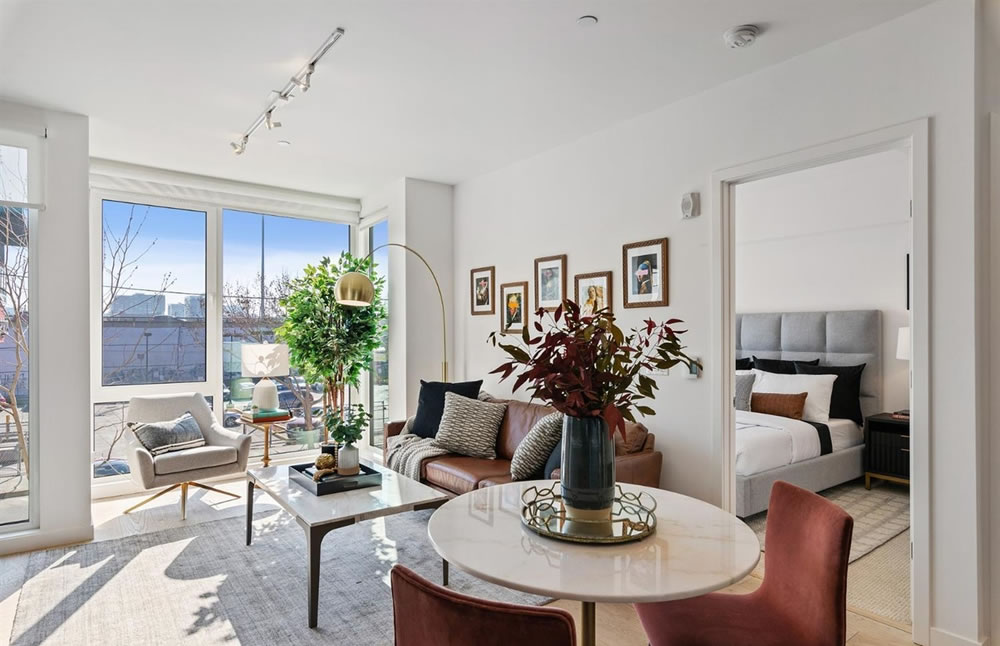
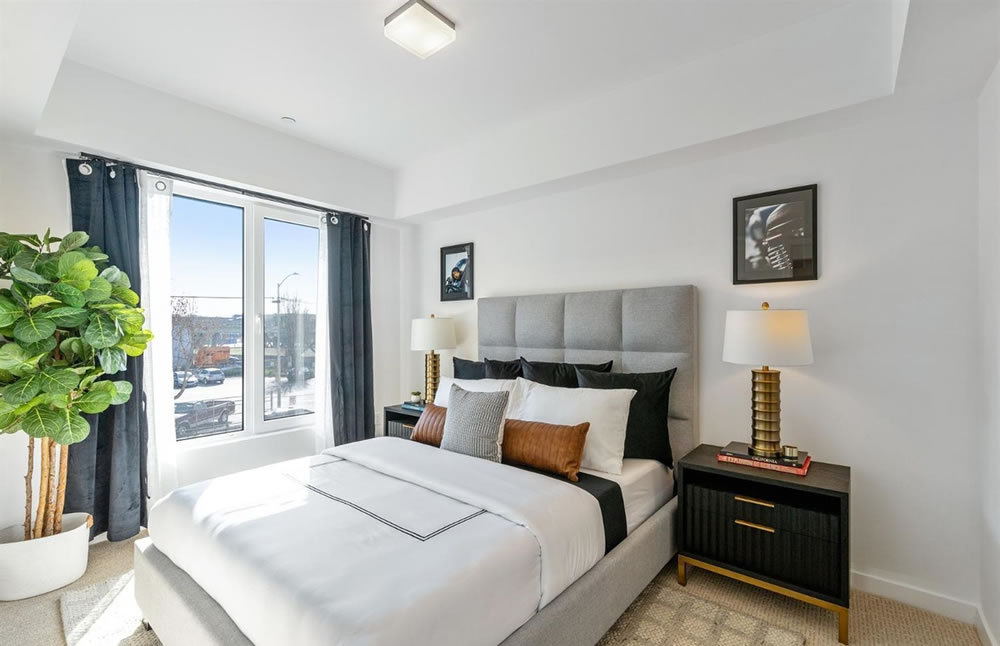
Purchased for $650,000 in March of 2016, the 545-square-foot, one-bedroom unit #206 at 870 Harrison Street, which was built by JS Sullivan in 2015 and features “floor-to-ceiling windows with an open layout creating a modern and open living space,” along with a Bertazzoni range in the kitchen and “abundant closet spaces throughout,” returned to the market priced at $699,000 last September, a sale at which would have represented total appreciation of 7.5 percent since the first quarter of 2016 or just 1.3 percent per year.
Reduced to $675,000 after a month on the market, the “well designed” unit was listed anew for $675,000 this past February, reduced to $649,000 in March and then to $639,000 in May.
And having just been relisted for $629,000, an “at asking” sale would now represent a 3 percent drop in value for the contemporary SoMa/Yerba Buena condo over the past six years on an apples-to-apples basis while the widely misreported index for “San Francisco” condos is up 36 percent over the same period of time.
If you think you know the market for new construction and/or SoMa condos in San Francisco, now’s the time to tell.
It’s no mystery that San Francisco’s housing demand far outstrips supply, and sky high prices have forced many to live elsewhere.
But even among other fast-growing tech hubs including Seattle and Austin, Texas, San Francisco’s housing production is way behind. U.S. census data shows that Austin and Seattle have approved construction for three times as many housing units per person as San Francisco since 2015.
“San Francisco has a wild imbalance between supply and demand,” said Joseph Gyourko, a professor of real estate and finance at the Wharton School of the University of Pennsylvania.
Adriana Rezal looked at six years worth of building permit data in 15 cities, and this is what she found.
Richard Henegan is facing eviction from the apartment he has lived in for 54 years.
Lea Suzuki/The Chronicle
Also: “I’m 61, and I’m going to be homeless for the first time in my life”: S.F. co-op residents face eviction on odd technicality.
Expanding abortion services
In the month since the Supreme Court overturned Roe v. Wade and stripped Americans of the constitutional right to abortion, California clinics are seeing an increase of out-of-state patients.
For Planned Parenthood Pacific Southwest, which serves San Diego, Riverside and Imperial counties, out-of-state patients have made up 21% of abortion visits, a 513% increase. Planned Parenthood Northern California is also seeing an increase, with clinics going from a couple out-of-state patients each month to three or four a week.
“We knew that it was likely that this was coming down the pipeline,” said Gloria Martinez, Planned Parenthood Northern California senior director of operations. “We’ve been planning for this as soon as we got word of the SCOTUS leak” ahead of the Supreme Court decision.
Roasted squab with smashed corn, Bloomsdale spinach and heirloom polenta at Cassava in San Francisco.
Santiago Mejia/The Chronicle 2017
Before the pandemic, San Francisco’s North Beach was struggling. In fact, the neighborhood posted some of the city’s highest rates of commercial storefront vacancy in 2019. But now, North Beach is experiencing a revival with its lively outdoor dining scene and a steady stream of new restaurant openings in the past couple years including North Beach Cantina, Red Window and Hilda Jesse.
Further west in San Francisco, the owners of popular Pacific Heights bar Snug will open another spot just three blocks away called Little Shucker. The raw bar and wine bar, expected to open next year, will feature oysters, crudo, wine and low-alcohol cocktails.
In less positive food news, the Bay Area saw a slew of restaurant closings in July including San Francisco spot Two Jacks Nik’s Place, which had been open 45 years; Wing Fat Chinese Restaurant in San Mateo, which was in business 84 years; and Oakland favorite Taiwan Bento.
Around the Bay
Smoke from the Oak Fire turns Mariposa County’s sky orange.
Brontë Wittpenn/The Chronicle
• California wildfires: The McKinney wildfire near the California-Oregon border scorched more than 52,000 acres as of Sunday, as fire crews contended with extreme heat and wind, and the prospect of lightning-strike ignition. Also: August used to be the perfect month for California’s High Sierra. It’s all different with climate change. Opinion: California needs to fight wildfires smarter.
• From Justin Phillips: Matt Dorsey’s first political test could be an inherited controversy. Also: The race for S.F.’s Sunset District supervisor is heating up.
• “The greatest champion”: Bill Russell, Bay Area legend and NBA icon, has died at age 88. Reactions to his death poured in Sunday. Also: Nichelle Nichols, Lt. Uhura on “Star Trek,” has died at age 89.
• “Coming back to normal”: San Francisco’s tourism industry, which was decimated by the pandemic, is finally bouncing back. Opinion: Why downtown S.F.’s COVID-19 pandemic recovery is dead last in the nation.
• Monkeypox: Federal regulators last week loosened stringent rules around prescribing the only antiviral available to treat monkeypox, but the drug remains scarce, even in S.F. Also: Concerns over contagion put a damper on Up Your Alley, the South of Market fetish fair.
• Paying homage: At the turn of the 20th century, a Yosemite mountain peak was named after a celebrity chef. His story is one piece of the national park’s abundant Chinese history.
• Oakland tech shooting: Three people, including a 5-year-old girl, were wounded by gunfire during a youth football game.
• Chronicle editorial board: Don’t count on Newsom’s CARE Courts to save San Francisco. More opinion: I spent more than a decade in solitary confinement. Trust me, it’s torture.
Ready to rock (and eat and drink)
Four-year-old Spencer Byrne attends his first concert during the Outside Lands festival last year.
Stephen Lam/The Chronicle 2021
Outside Lands returns to Golden Gate Park on Aug. 5-7 for its full, in-person summer experience that will bring 75,000 attendees each day. Before you head out to the festival, be sure to check out The Chronicle’s guide to everything you need to know, from how to get there to what to bring, and not bring.
This year, East Bay punk greats Green Day will headline Saturday. Post Malone is Sunday’s headliner, and SZA is Friday’s main act, among one of many notable female performers at this year’s festival.
The food and drink options are just as buzzworthy as the musicians gracing the festival’s six stages. Foodies can check out an array of delicious eats from Bay Area purveyors including Daytrip, Fowl + Fare and Om Sabor. There are also wine, beer and cocktail experiences.
Other festival news: Dave Chappelle presides over a historic weekend of music, laughs at Napa Valley’s first Blue Note Jazz Festival.
Bay Briefing is written by Kellie Hwang and Anna Buchmann and sent to readers’ email inboxes on weekday mornings. Sign up for the newsletter here, and contact the writers at kellie.hwang@sfchronicle.com and anna.buchmann@sfchronicle.com.
The Chronicle analyzed home value data from real estate listings company Zillow to see what ZIP codes across California had the fastest average growth in typical home values from May 2021 to May 2022. The analysis took only ZIP codes with populations of 1,000 or more into account, based on U.S. census data.
One pandemic hallmark trend that continues in California is people moving out of more expensive population centers to less-expensive, more suburban or remote areas, said Matt Kreamer, a data spokesperson for Zillow.
Data from January 2020 to January 2022 previously analyzed by The Chronicle reflected that trend, with communities in Southern California’s High Desert overwhelmingly represented in the top 10 ZIP codes with the fastest average growth in typical home values.
Now, other Southern California communities dominate the list, though two Northern and Central Coast vacation spots were at the very top.
As populations have grown in some areas, it’s been driving up home prices and making them less affordable, Kreamer noted.
“As more people look toward and move to those places seeking affordability, it creates more competition and prices start to grow more quickly,” he wrote in an email. “The pandemic and rise in remote work really put that trend into overdrive.”
Southern California ZIP codes dominate
Kreamer said this trend is playing out in a big way in Southern California, where Los Angeles residents looked to San Diego and the Inland Empire, particularly first-time home buyers who can find better opportunities in those locations.
According to our analysis of Zillow data, six San Diego ZIP codes made the state’s top 20 with highest home value growth from May 2021 to May 2022, including three in Carlsbad, about 30 miles north of San Diego.
“Interestingly, San Diego home values have grown much more quickly than Los Angeles home values during the pandemic, and the typical home in both places is now nearly the same,” Kreamer said.
Zillow’s Home Value Index measures a region’s typical home value and housing market appreciation, currently and over time, based on multiple data sources, including seasonal variations and the values of homes nearby. The approach differs from that used by many Realtors, whose data comes from regional Realtor and broker databases called multiple listing services; the methodologies can differ and the analyses would not be directly comparable.
Carlsbad Realtor Tina King said that in the past couple of years, many people have moved there from Los Angeles and the Bay Area, including executives, professionals and younger families who can work remotely.
“It’s not as crowded here,” King said. “It still feels a bit more sleepy, the weather is great, but it’s expensive just like anywhere else.”
The draws include the ocean views, great beaches and weather, and the “lifestyle community” that includes plenty of outdoor activities and sports, King said, adding that schools in the area are also very good.
The demographics for the three Carlsbad ZIP codes are somewhat similar, with the median age in the early 40s, about 64% to 75% white, and 8% to 20% Hispanic. The median household income is highest in the 92009 ZIP code at $138,000, followed by $115,000 in 92011 and $86,000 in 92008.
King noted that the market has cooled off some since about April.
“Prices are declining and inventory is up in these ZIP codes,” she said, going from two weeks of inventory a year ago to two months currently.
“There are more choices for buyers and sellers are competing against each other,” she said. “There are no longer 10 to 15 bids per home. Homes are sitting now.”
But even as the market is correcting, prices are “slightly ticking up” in some areas, King said. In 92009, the median list price was $1.8 million last month, but now it’s $2.08 million.
“Coastal towns will always do well,” she said.
Vacation areas are still hot
California spots where people normally go to get away have become more desirable during the pandemic, and not just for a second home or investment property. Some people from the Bay Area who can work remotely have picked up and moved to the coast or the forest for a change of pace.
“We’ve also seen areas that have traditionally been thought of as vacation towns heat up over the past couple of years,” Zillow’s Kreamer said. “Places like Tahoe, the Central Coast, etc., have seen significant price growth as people rethink how and where they want to live, given the expanded opportunity many have gotten because of the pandemic.”
He added that land constraints can limit inventory, usually a combination of “a lack of buildable land and regulations that make it a lengthy and expensive process to build,” which also increases prices, particularly when interest grows and more competition arrives.
The Iron Door Saloon is in Groveland (Tuolomne County). Remote work has allowed many to move to towns in the Sierra.
Jessica Christian / The Chronicle
The town of Groveland is a gateway to Yosemite National Park, about 25 minutes west of the popular tourist destination, and had the state’s third-highest home value growth at 38%, from a typical home value of $321,405 in May 2021 to $443,885 in May 2022.
Barry Scales, a broker and the owner of Pine Mountain Lake Realty, said most Groveland residents are over 60 and retired. The average age is 63, and 88% of residents are white, 5% Hispanic, 2% Asian and 2% Native American, according to the U.S. Census. The median household income is nearly $56,000.
But during the pandemic, that has started to shift, with “more inclusive buyers” and many people coming up from San Francisco and San Jose, Scales said. Within Groveland is Pine Mountain Lake, which includes about 3,000 homes in its gated community featuring a golf course, restaurant, airport, tennis courts and campground.
Groveland is not too far from other tourist attractions including Cherry Lake, Don Pedro Reservoir, Angels Camp, wineries and Dodge Ridge Mountain Resort. The trade-off, though, is “you have to drive 45 minutes to the nearest small city” to do more extensive shopping, Scales said.
California ZIP codes where home prices rose the most in past year. This home at Sea Ranch sold for $2.1 million in February.
Kennedy Associates
No. 1: Sea Ranch
Two picturesque towns along the coast have seen the state’s highest home value growth in the past year. The unique community of Sea Ranch along the Sonoma County coast, with a population of just over 1,100, is known for its timber-frame homes that blend into the landscape.
Following the familiar pandemic pattern, the ability to work remotely has opened up new living possibilities for many people. Patty Battega, a broker associate in the Mendocino Coast area, said the more recent addition of high-speed internet in Sea Ranch “changed everything” for the community, so new residents could work from home.
She said people were mostly coming from elsewhere in California, including many from around the Bay Area, Sacramento and Los Angeles. Some people just walked into Battega’s office and asked about the town, which was a new experience for her and her business partner, Lisa Hantzsche.
Battega said there are about 1,800 homes in Sea Ranch out of 2,225 lots, with quite a bit of building still happening. However, she added that costs have gone up substantially, and building in the area comes with strict rules and property limitations.
In Sea Ranch, the concept is to “live in harmony with nature,” she said.
Before the buying frenzy, only about a third of residents lived in Sea Ranch full-time, Hantzsche said. Now, it’s about half, with the rest vacation rentals and second homes.
“We’re getting more families now in Sea Ranch than we ever have,” she said.
The area has always had a “strong retirement community of active retirees,” Hantzsche said — though, while there is a good medical center, if residents need more hospital care, they often move out.
According to the U.S. Census, the median age in Sea Ranch is 68, and 83% of residents are white, 17% are Hispanic and 1% are Asian. The median household income is just over $78,000.
This home at Sea Ranch sold for $1.8 million in August 2021.
Kennedy Associates
The Realtors said the proximity to the Bay Area and private airstrip offers good access for those who need to travel. There are a few small schools in the area, but Battega and Hantzsche said it’s likely that many families homeschool their kids.
Sea Ranch is technically in a high fire danger area, which Hantzsche said is more of a concern on the ridge, which is more heavily wooded. But she said few fires have occurred there because of the coastal proximity and high humidity, and the air is usually mostly clear when inland wildfires burn.
One downside is that, even with the new residents moving in, “it’s harder to attract business owners” for members of the younger generation, who may be used to going out to eat in bustling metros, Hantzsche said. “I do think we could use more of a variety of restaurants.”
This home is on the market in Carmel-by-the-Sea for $2.8 million.
Provided by Lisa Talley Dean
No. 2: Carmel
The 93921 ZIP code, which includes Carmel-by-the-Sea, was second on the list with a home value increase of 43% from May 2021 to May 2022. Typical home values went up from $2.32 million to $3.33 million.
Like many other areas, sales are slowing down. About six weeks ago, Carmel broker associate Lisa Talley Dean said, available homes were in the single digits, and now that has nearly tripled. The area has “many more discretionary owners,” she said — which means “people don’t need to sell” and prefer to hold on if they can’t buy a replacement property.
Historically, Talley Dean said, 80% to 90% of homeowners in her market share of Carmel and Carmel Point have been in retirement or nearing retirement, who owned second homes in the area. Now, it’s about 50-50, at least from her experience.
“I’m seeing many more people moving here as full-time residents,” she said. “The demographic has shifted to younger, still working people with young families,” either working for themselves or able to work remotely. She said the shift has brought a “vibrancy to the community,” which has long had a “sleepy” reputation. Most buyers have come from within the state, with more than ever moving from Southern California.
However, “There is still a lack of diversity here,” Talley Dean said. “We don’t have a lot of casual ethnic restaurants, which you would find in a larger city. Most restaurants have gotten so expensive. … There is a lack of casual restaurants at a reasonable price.”
The median age in the 93921 ZIP code is 65; 89% of residents are white, 3% Hispanic and 2% Asian. The median household income is just over $93,000.
Kellie Hwang is a San Francisco Chronicle staff writer. Email: kellie.hwang@sfchronicle.com Twitter: @KellieHwang
After living in the Bay Area for nearly seven years, Hari Raghavan and his wife decided to leave for the East Coast late last year.
They were both working remotely and wanted to leave California because of the high cost of living and urban crime.So they made a list of potential relocation cities before choosing Miami for its sunny weather and what they perceived was a better sense of safety.
Raghavan said that their Oakland house had been broken into four times and that prior to the pandemic, his wife called him every day during her seven-minute walk home from the BART station because she felt safer with someone on the phone. After moving to Miami, Raghavan said they accidentally left their garage door open one day and were floored when they returned home and found nothing had been stolen.
“We moved to the Bay Area because we had to be there if you want to work in tech and start-ups, and now that that’s no longer a tether, we took a long hard look and said, ‘Wait, why are we here again?’ ” Raghavan said.
He said there wasn’t much draw in California’s quality of life, local or social policies, or cost of living. “That forced us to question where we actually wanted to live,” he said.
Riverside and San Bernardino counties saw population gains as California overall lost nearly 262,000 residents between July 2020 and July 2021.
An acceleration of people leaving coastal California began during the first year of the pandemic. But new data show it continued even after lockdowns and other COVID restrictions eased.
California ranks second in the country for outbound moves — a phenomenon that has snowballed during the pandemic, according to a report from the Federal Reserve Bank of Chicago, which tracked data from moving company United Van Lines. Between 2018 and 2019, California had an outbound move rate of 56%. That rate rose to nearly 60% in 2020-21.
Citing changes in work-life balance, opportunities for remote work and more people deciding to quit their jobs, the report found that droves of Californians are leaving for states like Texas, Virginia, Washington and Florida. California lost more than 352,000 residents between April 2020 and January 2022, according to California Department of Finance statistics.
San Francisco and Los Angeles rank first and second in the country, respectively, for outbound moves as the cost of living and housing prices continue to balloon and homeowners flee to less expensive cities, according to a report from Redfin released this month.
Angelenos, in particular, are flocking to places like Phoenix, Las Vegas, San Diego, San Antonio and Dallas. The number of Los Angeles residents leaving the city jumped from around 33,000 in the second quarter of 2021 to nearly 41,000 in the same span of 2022, according to the report.
California has grappled with extremely high housing prices compared with other states, according to USC economics professor Matthew Kahn. Combined with the pandemic and the rise in remote work, privileged households relocated when they had the opportunity.
“People want to live here, but an unintended consequence of the state’s environmentalism is we’re not building enough housing in desirable downtown areas,” Kahn said. “That prices out middle-class people to the suburbs [and creates] long commutes. We don’t have road pricing to help the traffic congestion, and these headaches add up. So when you create the possibility of work from home, many of these people … they say ‘enough’ and they move to a cheaper metropolitan area.”
The surge of migration eastward fits a pattern of families escaping densely populated cities, a trend that dates back to the mid-20th century.
Kahn also pointed out that urban crime, a growing unhoused population, public school quality and overall quality of life are driving out residents.
“In New York City, but also in San Francisco, there are all these fights about which kids get into which elite public schools,” he said. “The rich are always able to hide in their bubble, but if the middle class looks at this quality of life declining, that’s a push factor to leave.”
Redfin chief economist Daryl Fairweather cited a June report that tracked the change in spending power of a homebuyer on a $2,500 monthly budget. While 11.2% of homes in Los Angeles were affordable on that budget, using a 3% interest rate, that amount swelled to about 72% in Houston and about 50% in Phoenix.
“It’s really an affordability problem,” Fairweather said. “California for the longest time has prioritized single-family zoning, which makes it so people stay in their homes longer because their property taxes don’t reflect the true value. California is the epicenter of where the housing shortage is so people have no choice but to move elsewhere.”
While California experienced a major population boom in the late 20th century — reaching 37 million people by 2000 — it’s been losing residents since, with new growth lagging behind the rest of the country, according to the Public Policy Institute of California. The state’s population increased by 5.8% from 2010 to 2020, below the national growth rate of 6.8%, and resulting in the loss of a congressional seat in 2021 for the first time in the state’s history.
Although California has relied on immigration to offset its population decline for the past two decades, that flow has also shrunk, according to UCLA economics professor Lee Ohanian.
Delays in processing migration requests to the U.S. were compounded during the pandemic, resulting in the lowest levels of immigration in decades, according to U.S. Census Bureau data.
Estimates showed a net increase of 244,000 new immigrants between 2020 and 2021 — roughly half the 477,000 new immigrant residents recorded between 2019 and 2020 and a drastic reduction from more than 1 million reported from 2015 to 2016.
The state is also seeing a dwindling middle class, said Ohanian, who cited a report from the National Assn. of Realtors, outlining that the national median home sales price has reached $416,000, a record high. Meanwhile, California’s median home price has topped $800,000.
“[California is] at a risk for becoming a state for very, very wealthy people and very, very low earners who receive state and local and federal aid that allows them to be able to live here,” Ohanian said. “We should worry about those in the middle who are earning that $78,000 household median income and is, at the end of the day, really struggling, especially if they have interest in buying a home.”
Los Angeles County, in particular, has suffered from slowed population growth, as have rural parts of the state, while Orange County, Sacramento and some parts of the Bay Area have managed to see some gains, the Public Policy Institute of California found.
Fairweather said that since she last lived in Los Angeles in 2016, she’s noticed fewer affordable places to rent.
“It used to be that Santa Monica and Beverly Hills were expensive, but you could find affordable housing on the Eastside,” she said. “But that got expensive and you had to find housing near South Central. Now, there’s nowhere within a two-hour commute of downtown Los Angeles that’s still affordable.”
The state’s population declined by 173,000 between July 2020 and July 2021, bringing the estimated total population to 39.37 million.
Bay Area native Kenny Phung, who made the exodus from California last fall when his partner got into nursing school in Portland, Ore., said high rent prices helped cement the decision to move out of state. Phung was living with three roommates in Los Angeles for $3,600 total per monthbut found a two-bedroom apartment for less than half that price in Portland. He’s currently working as a project manager at a San Jose-based company that allows him to work remotely.
“It just didn’t make sense,” Phung said. “Why would I want to live in California when I’m working from home and paying something outrageous for such a small space when I can try things out and be able to save money on rent?”
Housing was also a major factor in Raghavan’s decision to leave the Golden State, he said, adding that downtown Miami has multiple skyscrapers, more affordable housing, well-paved roads and better infrastructure and services.
“The Bay Area has become a land of minor inconveniences, and some are not-so-minor anymore,” he said. “Housing and real estate have ripples across everything. It makes rent more expensive for restaurants, which raises food prices, and it causes people to commute over longer distances. Everything becomes a burden.”