Index for Bay Area Home Values Inches Up and Down

8326c SP Case Shiller Index Bay Area Returns 09 20 2 Index for Bay Area Home Values Inches Up and Down

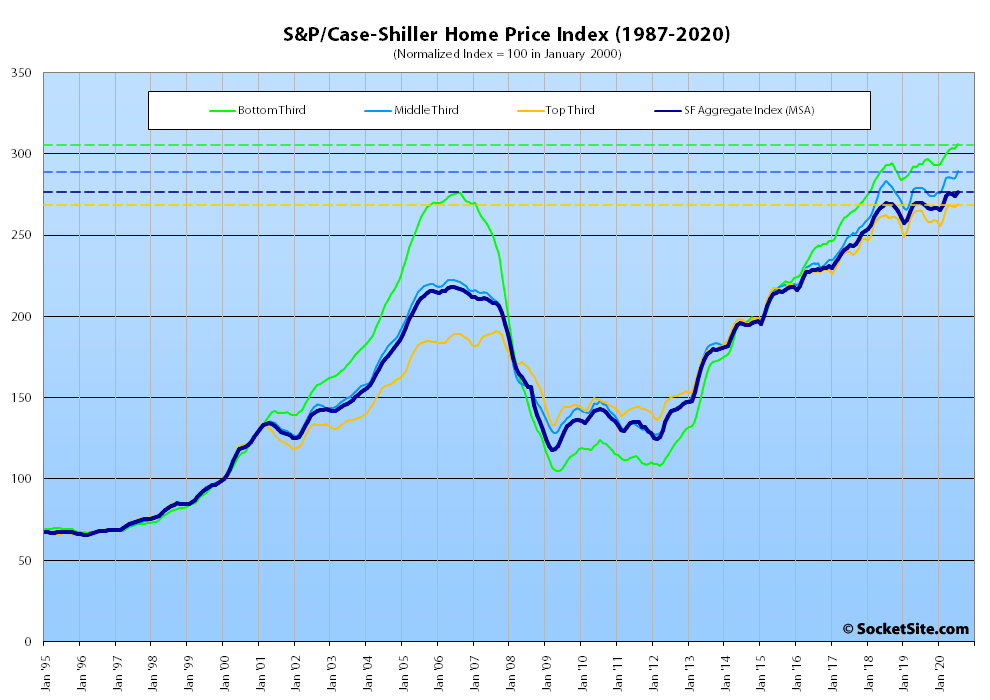
Having slipped in May and June, the SP CoreLogic Case-Shiller Index for single-family home values within the San Francisco Metropolitan Area – which includes the East Bay, North Bay and Peninsula – inched up 0.9 percent in July for a year-over-gain of 2.5 percent versus a 4.8 percent gain for the index nationwide.

At a more granular level, the index for the least expensive third of the market inched up 0.8 percent in July for a year-over-year gain of 4.1 percent, the index for the middle third of the market ticked up 1.6 percent for a year-over-year gain of 3.9 percent and the index for the top third of the market inched up 0.7 percent for a year-over-year gain of 1.8 percent.

97735 SP Case Shiller Index Bay Area Tiers 09 20 1 Index for Bay Area Home Values Inches Up and Down

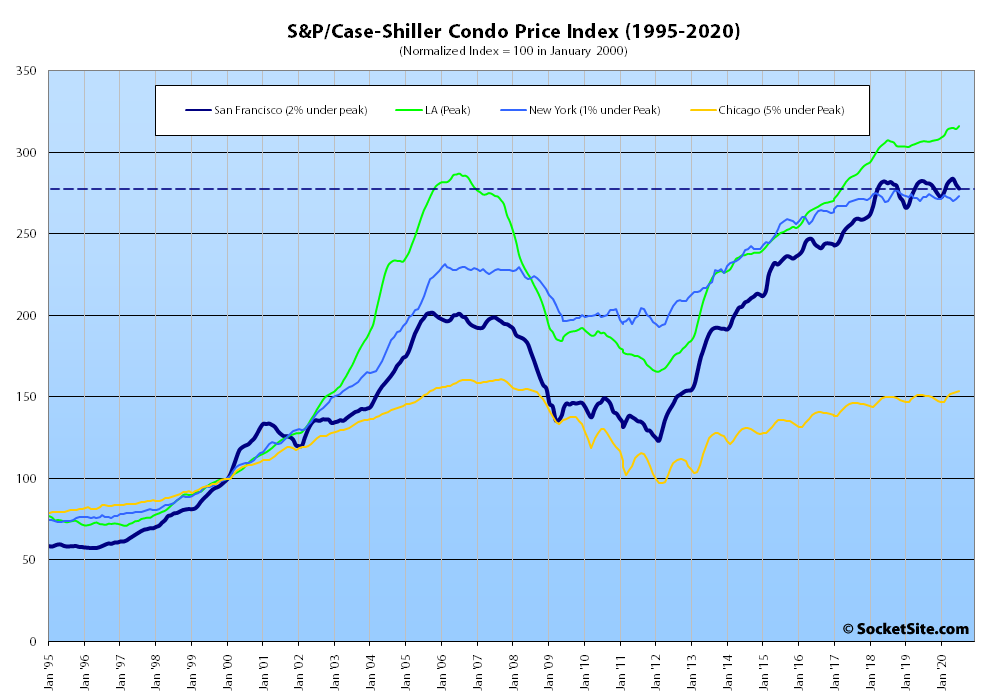
But the index for Bay Area condo values, which remains a leading indicator for the market at a whole, inched down 0.8 percent in July and is now down 1.6 percent on a year-over-year basis having ticked down 1.3 percent in June.

97735 SP Case Shiller Index Bay Area Condo Values 09 20 2 Index for Bay Area Home Values Inches Up and Down

And nationally, Phoenix still leads the way in terms of indexed home price gains (up 9.2 percent on a year-over-year basis), followed by Seattle (up 7.0 percent) and now Charlotte (up 6.0 percent), with Chicago (up 0.8 percent) and New York (up 1.3 percent) the only two major metropolitan areas yielding smaller year-over-year gains than the San Francisco market.

Our standard SocketSite SP/Case-Shiller footnote: The SP/Case-Shiller home price indices include San Francisco, San Mateo, Marin, Contra Costa and Alameda in the “San Francisco” index (i.e., greater MSA) and are imperfect in factoring out changes in property values due to improvements versus

Article source: https://socketsite.com/archives/2020/09/index-for-bay-area-home-values-inches-up-and-down.html

Posted in SF Bay Area News | Tagged | Leave a comment

Google expands S.F. office despite shift to working from home during pandemic

Despite closed offices and a hiring slowdown during the coronavirus pandemic, Google is still growing in San Francisco.

It’s a small addition, picking up what would have been enough space for 300 employees in the days before social distancing protocols. But the Mountain View search giant’s move to expand its real estate holdings, already among the biggest in the Bay Area, comes as other tech companies retrench, shedding excess space or canceling leases. Some startups have abandoned offices altogether, going virtual to save money.

Google confirmed exclusively to The Chronicle that it has leased around 42,000 square feet at Two Rincon Center, where it already has offices.

It’s one of the biggest San Francisco deals in a year chilled by the pandemic. It’s also one of the few signs of business expansion in downtown San Francisco, which has been economically devastated by the absence of hundreds of thousands of office workers since March. Google’s core advertising business was hit by the coronavirus, but it hasn’t had layoffs or listed any Bay Area office space for sublease.

Michael Appel, a Google spokesman, said offices will remain a core part of the company, and major expansions in San Jose and Mountain View are moving forward. The company is seeking a flexible work model that combines in-person collaboration and remote work, he said.

Last month, Sundar Pichai, CEO of Google parent Alphabet, said a hybrid model would best serve employees. Working from home sometimes will mitigate some downsides of always being in an office, such as the two-hour commute between San Francisco and Mountain View common during pre-pandemic rush hours, he said.

“We firmly believe that in person, being together, having a sense of community is super important when you have to solve hard problems and create something new, so we don’t see that changing. But we do think we need to create more flexibility and more hybrid models,” Pichai said at a Time magazine event.

Google is striking a middle ground compared to tech companies like Twitter, which is allowing workers to stay home forever, and Netflix, whose co-CEO Reed Hastings called remote work “a pure negative” and is eager to bring back employees.

The tech giant’s continued investment in San Francisco, where office vacancies spiked to 14.1% last month, is a positive sign for the battered economy, experts say.

“After a significant downshift in new leasing activity caused by the pandemic-related economic downturn, it’s certainly a positive sign that a major tenant in San Francisco has moved forward with its expansion plans,” said Robert Sammons, senior director of Bay Area research at real estate brokerage Cushman Wakefield. “It is a sign that companies will indeed require office space moving ahead in a post-pandemic world and in the resiliency of San Francisco.”

Google offices, along with all other nonessential businesses, remain closed in San Francisco. City officials have not yet released a timeline for when they will be allowed to reopen.

The company is allowing employees to work from home until at least July. Other tech giants like Facebook, Salesforce and Uber have similar plans.

Google previously leased 166,460 square feet at Two Rincon Center in 2017. Hudson Pacific Properties owns Rincon Center, which was previously a hub for Salesforce and near the Transbay neighborhood. Google has numerous offices near the Embarcadero, including at the Ferry Building, Hills Plaza, One Market Plaza, One Maritime Plaza and 215 Fremont St.

Google has also committed more than $100 million to support affordable housing in the Bay Area, as part of a $1 billion pledge made last year.

Ruth Porat, chief financial officer of Google and its parent Alphabet, said in June the company expected a “modest decrease” in capital expenditures this year as the company slows its real estate expansion compared to last year.

“We continue to be very much focused on the fact that place and space are important. We believe in collaboration. Serendipity is key to innovation,” she said on a quarterly earnings call with Wall Street analysts.

Roland Li is a San Francisco Chronicle staff writer. Email: roland.li@sfchronicle.com Twitter: @rolandlisf

Article source: https://www.sfchronicle.com/business/article/Google-expands-S-F-office-despite-shift-to-15652058.php

Posted in SF Bay Area News | Tagged | Leave a comment

Berkeley Thief Demands Sandwiches, Not Cash

Welcome to p.m. Intel, your midday roundup of Bay Area food and restaurant news from publications near and far. Tips are always welcome, drop them here.

  • A 7-Eleven store near the UC Berkeley campus was robbed at knifepoint this week, but the target wasn’t money, the Daily Californian reports. According to a spokesperson with the Berkeley Police Department, at 7:04 p.m. Tuesday, a suspect “pulled out a knife” and “threatened to kill the clerk” before fleeing with “seven to eight sandwiches.” As of publication time, no arrests have been announced in the case.
  • Concerns that legacy LGBTQ business the Eagle Tavern might never reopen intensified this week, when the Bay Area Reporter followed up on news that its building had been sold. Eagle owner Lex Montiel “told a reporter that he did not appreciate the call” about his bar’s future, and refused to comment on the building sale. Compass Real Estate, which is handling the transaction, also declined comment.
  • It was just last summer that Castro arcade bar Brewcade rebranded as the Detour, an homage to a Market Street gay bar that closed in 2005. Now, like its namesake, the new Detour is going dark, at least “until a vaccine is released,” co-owner Shawn Vergara said in a Facebook post reported by Hoodline. “If we were to stay open now and stay the course we would shut down permanently,” Vergara says. “That’s not what we wanted to do.”
  • The owners of pan-Asian fast casual chain Bamboo Asia have launched a food delivery company that “allows customers to order meal kits, prepared foods, wine and other grocery staples from restaurants that get delivered via refrigerated truck within two days, at zero upfront cost to restaurant partners,” the SF Business Times reports. Users of the app, which is called Feastin, pay a 20 percent fee per order to cover “service, tax and tip for full-time drivers.”
  • San Francisco tech worker Jessica Hershfield has toiled at Google, Uber and Lime, but quit the business to start a company called Just Enough Wines that seeks to “elevate” canned wine, KQED reports. She doesn’t have a background in booze, and said she was attracted to wine because of its “ubiquitous nature.”
  • “The number of primary Spanish-speaking Latinx families in the San Francisco Bay Area who cannot afford to eat balanced meals and go to bed hungry has more than doubled since the pandemic,” UCSF says of a new study published Wednesday.
  • I can only assume that SF Chronicle food critic Soleil Ho’s inbox is a living nightmare (people sure are, uh, passionate about food), but dropping a new best burgers list probably didn’t help matters.
  • Popular-in-the-90s Emeryville restaurant Townhouse Bar Grill is seeking 2020s relevance, Berkeleyside reports, with a new owner and chef Jake Kwan Rosenbush (Gary Danko, 15 Romolo) in the kitchen, and patio dining in a nearby parking lot.
  • Forward has a nice overview of the Bay Area’s new deli options, including pop-ups like Mark and Mike’s in SF, and JW Catering’s pivot to deli in Sunnyvale.
  • Zuni chef Nathan Norris is calling out what he sees as inequity in the local indoor dining reopening plan, saying that “most restaurants do not have access to the money needed to create the safest indoor space, such as modern HVAC systems, and serve a broader range of society, including the non-white populations disproportionately infected with COVID.” [SF Chronicle]
  • The Electric Smoothie Lab Apothecary is delivering smoothies to food banks across the Bay Area. [KQED]

Article source: https://sf.eater.com/2020/10/15/21517982/zuni-7-eleven-eagle-tavern-brewcade-detour

Posted in SF Bay Area News | Tagged | Leave a comment

Reduced Rents and Pricing for a Prized View Condo

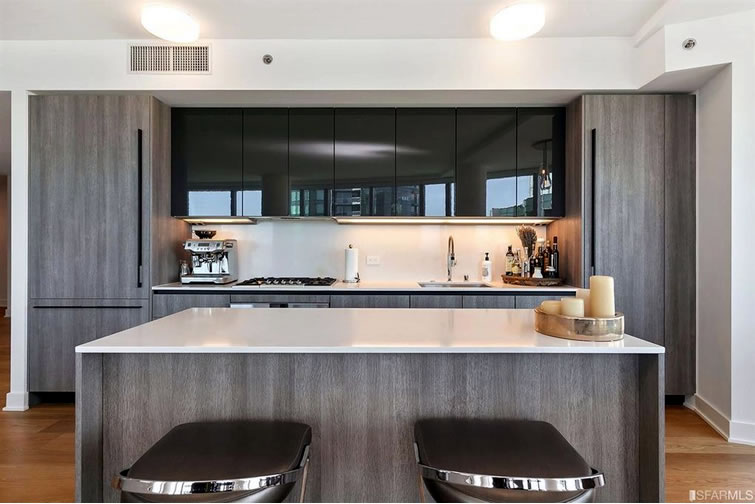
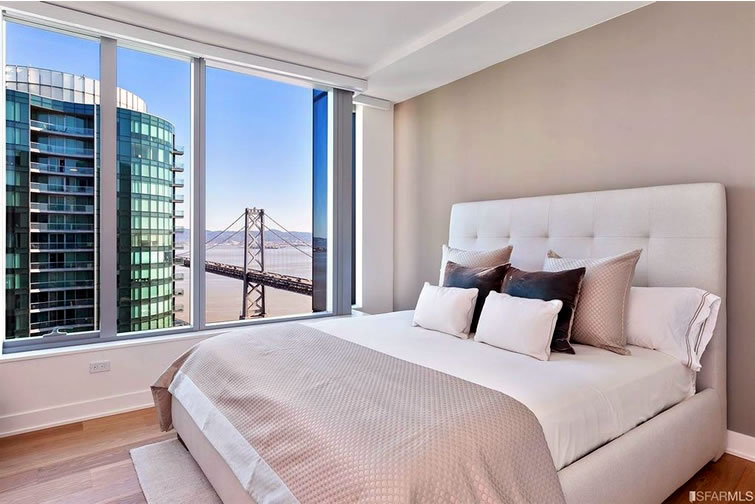
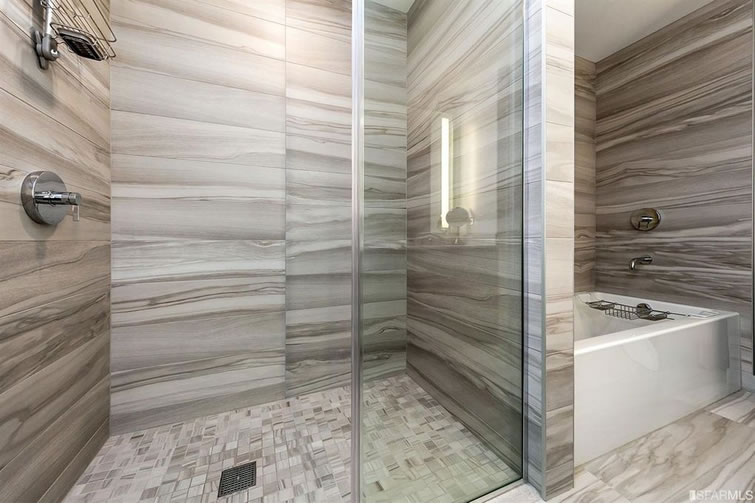
0a353 338 Main Street D35A Living Reduced Rents and Pricing for a Prized View Condo0a353 338 Main Street D35A Kitchen Reduced Rents and Pricing for a Prized View Condo0a353 338 Main Street D35A Kitchen Detail Reduced Rents and Pricing for a Prized View Condo0a353 338 Main Street D35A Bedroom Reduced Rents and Pricing for a Prized View Condo29955 338 Main Street D35A Bathroom Reduced Rents and Pricing for a Prized View Condo

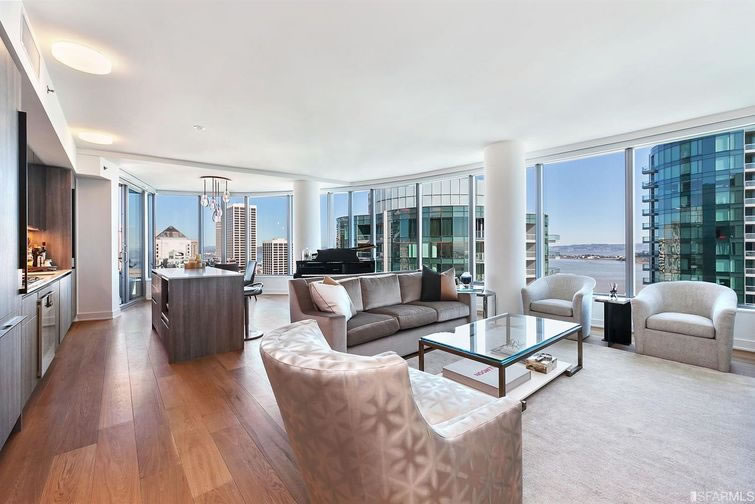
Purchased from the sales office for $3,149,500, or roughly $2,003 per square foot, back in June of 2016, the “highest and largest” two-bedroom, two-bath unit in the Lumina tower at 338 Main Street, unit #35A, was then listed for $3,449,000 in March of 2017 while alternatively being offered for rent at $15,000 a month.

Reduced to $3,199,000 and then to $2,995,000 in May of 2017, 338 Main Street #D35A was relisted anew for “$2,900,000” in November of 2017 but then withdrawn from the market when an acceptable offer failed to materialize.

Listed anew for $3,299,000 early last year, perhaps in anticipation of a completely mis-projected wave of millionaires that were going to “eat San Francisco alive,” the unsold 1,572-square-foot unit was then listed for rent at $11,000 a month (which was reduced to $10,500 after a week).  And in October of last year, the unit was listed anew for $3,150,000 and its days on the market were reset to “1.”

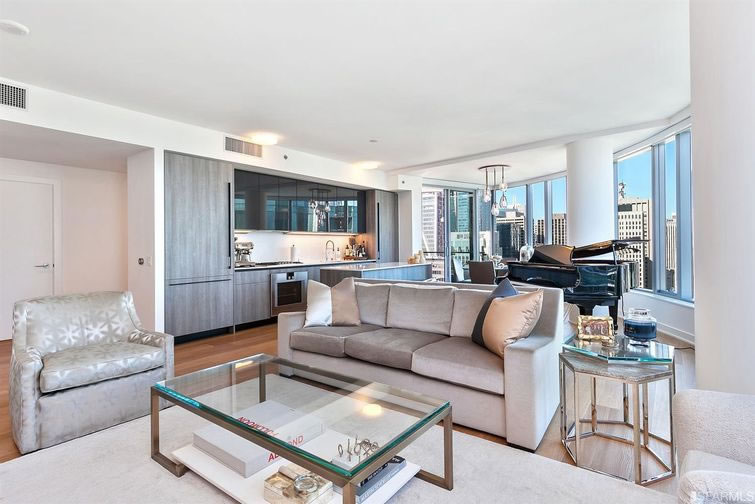
Reduced to $2,995,000 this past February, and then offered for rent at $9,000 a month in March, the list price for 338 Main Street #35A, the listing for which touts “unparalleled views of the Bay Bridge, water, city skyline Twin Peaks,” along with “one of the most desirable floor plans at The Lumina,” is now down to $2,875,000, or roughly $1,830 per square foot, a sale at which would be 8.7 percent below the the unit’s mid-2016 value on an apples-to-apples basis.

And for those running the numbers at home, the HOA dues for the unit have been running around $1,200 a month.

Article source: http://socketsite.com/archives/2020/10/reduced-rents-and-prices-for-a-prized-lumina-condo.html

Posted in SF Bay Area News | Tagged | Leave a comment

SF had a $6 billion vision for Central SoMa. Then the pandemic hit, and tech pulled back

After nearly a decade of planning, the transformation of 230 acres in San Francisco’s Central South of Market neighborhood into a booming tech and housing hub is suddenly in doubt as the economy sputters from the coronavirus pandemic.

Pinterest’s cancellation last month of a 490,000-square-foot office lease at 88 Bluxome St., one of the large office projects planned in the area, is a sign that once-insatiable tech demand has shrunk. The company cited plans to move more employees outside of San Francisco, and paid a hefty cancellation fee.

The lease was the only office commitment among $6 billion in planned commercial and housing projects, which include the demolition and redevelopment of the San Francisco Tennis Club, historic Flower Mart and now-closed Creamery cafe.

The Central SoMa plan, approved in 2018, would create more than 30,000 jobs and attract 20,000 new residents, which would expand the city’s tax base at a time that it faces a $1.5 billion deficit.

A delay or collapse in new construction jeopardizes not only the potential tax windfall, but also the city’s expected $2 billion in community benefits through 2040, funded mostly by fees that developers are set to pay in exchange for permission to build taller buildings.

The 88 Bluxome project’s community benefits include land for new affordable housing and public pools, but it isn’t clear when construction will start.

 SF had a $6 billion vision for Central SoMa. Then the pandemic hit, and tech pulled back

The developer behind 88 Bluxome, Alexandria Real Estate Equities, didn’t respond to a request for comment. Before Pinterest’s lease cancellation, executives said during a June earnings call that tech demand for office space had plunged by 50% in the Bay Area compared with last year.

Numerous tech companies plan to allow some or all employees to work from home even after the pandemic ends, including Facebook, Slack and Twitter, which just listed more than 100,000 square feet for sublease at its Mid-Market headquarters.

Real estate brokers say the shift is pushing residents out of San Francisco to the suburbs and out of state, and the city’s apartments rents have dropped more than 10% in the past year, according to Zumper. Landlords are offering more incentives to renters like gift cards and free months, trends that could make Central SoMa’s market-rate housing projects more challenging to build.

Before the pandemic, most office developers had planned to start construction as soon as possible even if no leases were signed. Now they’re being more cautious.

Boston Properties, the city’s biggest office landlord, bought land for its planned office project at Fourth and Harrison streets for $140 million this year. But it will no longer begin construction without office leases secured.

“With the pandemic, we’ve put the project on pause to wait to see what market conditions are going to be,” CEO Owen Thomas said on an earnings call in June.

The company also said San Francisco has slipped and is no longer the country’s strongest office market. Boston, bolstered by the biotech industry, has surpassed it.

 SF had a $6 billion vision for Central SoMa. Then the pandemic hit, and tech pulled back

Kilroy Realty, developer of the 2.3 million-square-foot Flower Mart project, the area’s largest, said it has been broken down into smaller buildings starting at 400,000 square feet, which creates more flexibility.

Bigger companies will “gravitate more and more to wanting to have absolute control of their premises, and that is easier when it’s a single building where they occupy all of it as opposed to being a portion of a much taller building,” CEO John Kilroy said in a July earnings call. The company declined to comment further.

Rich Sucre, the city planner overseeing Central SoMa, said all of the major projects are still moving forward with building permits, which can take at least a year.

“No one has pulled out or formally delayed their projects,” he said. “Some may be going slower than they ordinarily would be, but they are generally on track.”

He said the Boston Properties project may also be delayed because the company wants to buy a small neighboring building that wasn’t originally part of the project and it may require additional city approvals. A company spokeswoman didn’t respond to a request for comment.

In another setback, opening of the Central Subway expansion, the catalyst for the area’s ambitious plan, has been pushed back until the end of 2021, three years from the original date.

Real estate experts are confident in the area’s long-term viability, but said the near term is full of uncertainty.

“I feel confident that Central SoMa will bounce back,” said Colin Yasukochi, executive director of brokerage CBRE’s Tech Insights Center. “Right now, it’s difficult for companies to want to commit funds and capital expenditures to do anything.”

He noted that the Transbay plan, unveiled in May 2008, was also delayed by a recession. But now almost all the towers in the area are leased.

There’s still a desire by workers to return to the office and go back to their favorite local restaurants, Yasukochi said.

“People tend to have short memories. People want to get back to some sense of normalcy,” he said. “At the same time, remote work is going to increase, without a doubt.”

Another hurdle for projects is the high cost of construction in San Francisco, which has not budged much during the pandemic. That means developers will need to secure office leases around $100 per square foot annually, among the highest in the country, and have little room to offer discounts, Yasukochi said.

On the other hand, most of the developers such as Kilroy, Boston Properties and Alexandria are large, public companies with major portfolios, meaning they can wait to start construction without the threat of losing the land because of financial pressure, he said.

Robert Sammons, Bay Area research director at brokerage Cushman Wakefield, doubts there will be major office deals this year. On the bright side, biotech demand is strong as companies race to find a coronavirus vaccine, and Central SoMa projects could potentially try to attract those tenants, he said. Building labs could require additional city approvals.

According to Alexandria, biotech lab demand in the Bay Area totaled 2.3 million square feet in the second quarter, up slightly from 2.2 million square feet from the previous year.

“We do still have a deep pool of tech and life science talent,” Sammons said.

But until a vaccine is found, he said, leasing demand will be muted, and a slew of proposed taxes on the November ballot could also discourage companies.

John Elberling, a longtime activist who fought for community benefits and sued the city over the plan, said the prospects for San Francisco remain strong even if the near term looks difficult.

“Everyone knows the whole development industry is going to come to a screeching halt. What nobody knows is … how long it’s going to last. Right now it’s all speculation,” said Elberling, who is executive director of SoMa nonprofit Todco.

The city has come back from deep recessions in the past, and capital has flooded back in, he said.

“I’ve been watching this for 40 years. Of course there will be renewed growth at a future time,” Elberling said. “This doom and gloom is BS.”

Roland Li and J.K. Dineen are San Francisco Chronicle staff writers. Email: roland.li@sfchronicle.com, jdineen@sfchronicle.com Twitter: @rolandlisf, @SFjkdineen

Article source: https://www.sfchronicle.com/business/article/SF-had-a-6-billion-vision-for-Central-SoMa-Then-15562807.php

Posted in SF Bay Area News | Tagged | Leave a comment