Near-record pace for Bay Area home sales

Oakland real estate agent Katy Polvorosa cautions her first-time homebuyers these days — be ready to bid quickly, and don’t be surprised to lose. A lot.

“I’ve lost out so many times,” said Polvorosa, who has also scored her share of victories this year. “It’s really not for the faint of heart right now.”

Demand for Bay Area houses has soared in recent months, and some home sellers barely need to plant a “For Sale” sign in the front yard before getting an offer.

Homes in San Jose and Oakland have been selling in less than two weeks, a near-record pace for the region, according to online broker Redfin. A limited inventory of homes for sale and eager buyers looking for more space during the COVID-19 pandemic are driving the frenzy, real estate experts say.

East Bay homes and condos in March sold in an average of 13 days, matching the fastest turn-around from listing to sale since the online broker started tracking the measure in 2012. Residential properties in the San Jose metro sold in just 11 days, two days short of a record set in the spring of 2018. Only San Francisco, where homes and condos have taken an average of 25 days to sell and prices have dropped, have buyers been more cautious.

Saratoga-based agent Mark Wong said he’s seeing more pre-emptive offers, with bids coming in days before all shoppers have had a chance to tour the house.  “People are really desperate,” he said. “They don’t want to wait.”

Work from home routines have upended the work-life balance, sending many families into the market looking for bigger backyards, Zoom-rooms and home office space that doesn’t double as a dining room. But the supply of homes has lagged far behind demand.

The California Association of Realtors estimates the Bay Area has about 1.5 months of inventory — an indication that at the current pace, all homes on the market would sell in just six weeks. It’s the lowest level since at least 2005, according to the association’s data. In March 2020, for example, the region had about three months of inventory.

Redfin economist Taylor Marr said the Bay Area housing market has split: slow-moving condos and townhomes, and fast-selling single-family homes. “This is true everywhere,” Marr said, “but it’s very pronounced in the Bay Area.” The fast-selling homes drive down the average days on market.

Professional couples, spending less during the pandemic on vacations, commuting and other discretionary purchases, have bigger budgets and bigger demands for space in single-family homes, he said. They jump into “the roulette-wheel of home buying” and make multiple offers before they get lucky, Marr said.

Marr thinks the relatively tight market will continue. “I’m less confident that more vaccinations will mean more inventory,” he said.

Agents say the frenzy has pushed buyers to bust budgets, add cash to offers, bid on multiple properties and be ready to move at a moment’s notice. Motivated buyers come with a clear idea of what they want — and maybe a few battle scars from losing previous bids.

Before the pandemic, most sellers wanted to hold two weekends of open houses, allowing four days of crowds to tour and consider their homes. Collecting offers and agreeing on a price would take a minimum of two weeks on a normal transaction.

But the pandemic has eliminated open houses, Wong said, so scheduling a tour as soon as possible has become a priority. Wong has seen offers come in on a property a day or two after a tour.

“It’s very stressful for the homebuyer in today’s market,” he said.

Fremont agent Sunil Sethi said he typically sees single-family homes moving in five days. Prices have risen so quickly, appraisers have had a hard time keeping up.

In north Fremont, Sethi listed a four-bedroom home with space for in-laws and a landscaped yard for $1.88 million. “The offers started coming in and I’m like, ‘Wow,’” he said.

The first offer came in quickly at $200,000 over asking. Other, higher offers followed. It went into contract for $2.35 million, but the bank appraiser valued the property at $350,000 less. The new buyers made up the difference in cash, he said.

Sethi said the lack of inventory is driving fast sales, adding “people clearly have money, too.”

Polvorosa, a Redfin agent, said sellers have been asking “for the world. And they’re never happy.”

Buyers, in turn, have become more aggressive to try to land a home. Waiving contingencies, offering more than 20% down on a property or buying with cash have made their bids more attractive to sellers.

Still, many are coming up empty. “I practically write an offer every other day,” Polvorosa said.

One client has lost out on seven recent offers. He tried for a four-bedroom home in Berkeley listed for $1.1 million. The bids came quickly, and Polvorosa’s client jumped in at $1.47 million — about $100,000 short of the eventual sale price.

They’ll keep looking, she said.


Article source: https://www.mercurynews.com/2021/04/23/near-record-pace-for-bay-area-home-sales
Posted in SF Bay Area News | Tagged | Leave a comment

The East Bay real estate market is so hot, houses are selling for more than $1M over asking price

And that’s especially true in the East Bay. “People are not surprised when a home goes $1 million over,” said Josh Dickinson, the founder of real estate agency Zip Code East Bay. “When my clients see a house for $1.9 million they’re almost conditioned to think it’ll go over $3 million in Piedmont or North Berkeley.”

While he acknowledges that overbidding has always been common in the Bay Area, this past year has been far more frantic, with additional bids per home and more aggressive offers. 


“I think I could pull up the MLS and pull up a dozen [listings] that went more than a million over this year so far,” Dickinson said. “Most of them had the ‘it factor,’ but some of them were just in the right place at the right time.”

He said the “it factor” could include amazing views and a backyard (both in one property is rare) or room for a home office or two. For a recent home he sold in Berkeley, it was only the second time in 93 years the property had ever come to market after it was designed by a notable architect. Dickinson said given the history of the home and its lush and expansive backyard, he knew it would sell quickly, but he was nevertheless surprised when it sold for more than $1.2 million over the list price.

“Even we don’t know as savvy agents. We don’t know when the thing is going to go bonkers,” he said. “We just try to let the market do its thing.”

While an attractive financial offer is key, in true Bay Area fashion there are also plenty of offers that come in with extra pizzazz. Dickinson said one of the bids on the Berkeley home included free one-week stays at an Airbnb in Tuscany for the next 10 years. It’s not the offer the sellers accepted, but it certainly piqued their interest, he said.

Dickinson has also seen plenty of offers over the years that include stock options from major tech companies and a few that have included a glut of airline miles. 

When the offers are that high, the accepted bid is often cash. A five-bedroom home in the Elmwood neighborhood of Berkeley closed in April 2021 for $3.15 million, all cash, with a listing price of $1.995 million. According to MLS data, since March there have been at least 20 properties that have sold for more than $800,000 over the listing price in the East Bay and six of those, (three in Berkeley, three in Oakland, one in Piedmont), went for $1 million or more over the asking price.

Alameda County home sales have climbed in 2021, up 21% when compared to the same time period last year, according to recent data from Compass. Overbidding was most common in Alameda County when compared with all Bay Area counties in the past year, with homes selling for an average of 12% over list price. 

Alameda also had one of the lowest averages of time on the market with a median of 11 days. Typically, the lower median days on market, the stronger the demand. 

Overall, Bay Area home prices are up 6% as compared to the same time last year.

Redfin real estate agent Ena Everett said the East Bay market has always been busy, but it’s gotten much more competitive of late. “In Oakland and Berkeley … people could expect homes to go 20% over asking on a pretty regular basis,” she said. “Now that the supply is a lot smaller, instead of 20% over, it’s common to see houses go for 10 to 40% over asking or more.”

When looking at Redfin data, the Bay Area actually had fewer homes sell for more than $800,000 over asking from May 1, 2020, to April 30, 2021, than from May 1, 2018, to April 30, 2019, but the concentration of these types of sales looks very different across the Bay Area. In the 2018-2019 data, 20 homes in San Francisco and 19 homes in Palo Alto sold for more than $800,000 over asking, whereas in the 2020-2021, data only 10 S.F. homes and five Palo Alto homes experienced this type of sale. Meanwhile, Oakland and Berkeley, which had just one and five high overbids respectively in the 2018-2019 data, each had 12 sales with a closing price that was at least $800,000 more than its list price in 2020-2021. 

Everett’s also seen an increase in the number of offers. Between four and 10 offers was common, but now she’s seeing as many as 30 or 40 bids on certain places. But despite the drive toward more space and larger homes, she said she has more clients thinking about the future now than she did a few months ago, taking into account proximity to public transportation should they need to go back to the office sometime soon.

Both agents said despite the unrelenting market, they feel optimistic for buyers and are hopeful more inventory is coming soon. “The market still heavily favors the sellers, but there’s a lot of optimism for the buyers,” Dickinson said, adding, “There was a house in Berkeley this week that only got four offers. And that gives me hope.”

Article source: https://www.sfgate.com/realestate/article/2021-05-east-bay-real-estate-overbids-hot-market-16151227.php

Posted in SF Bay Area News | Tagged | Leave a comment

Top-rated Bay Area life science cluster attracts new development

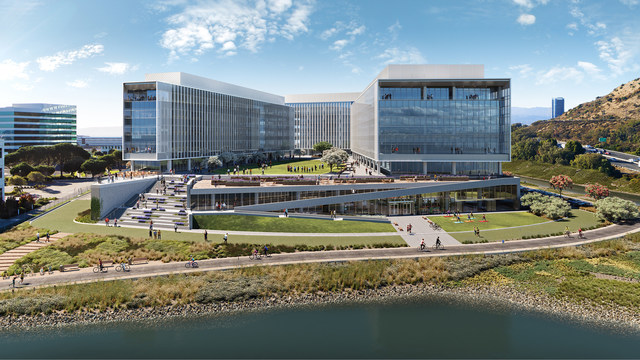
SAN DIEGO, May 3, 2021 /PRNewswire/ – JLL Capital Markets announced today that it has secured a $400+ million construction loan for Genesis Marina, a to-be-built, waterfront Class A+ life science campus totaling approximately 570,000 square feet in Brisbane, Calif.

Working on behalf of Phase 3 Real Estate Partners, Inc. and Bain Capital Real Estate, JLL placed the construction loan with Barings LLC.

6b72d JLL Marina Genesis Top rated Bay Area life science cluster attracts new development

Marina Genesis

Genesis Marina is located on an 8.7-acre site within South San Francisco’s life science cluster, which is rated the number two market in the United States. With limited nearby new development, Genesis Marina will provide a trophy life science campus offering.

The JLL Capital Markets team representing the borrower was led by Senior Managing Director Tim Wright, Managing Director Todd Sugimoto and Associate Daniel Pinkus.

“The financing opportunity for the Genesis Marina campus attracted a tremendous amount of interest as best-in-class life science developments are highly coveted at the moment,” noted Wright. “We are really excited to witness Phase 3′s vision for Genesis Marina come to life as one of the newest trophy life science campuses in San Francisco’s life science cluster.”

“The pandemic really accelerated the demand for life science space as well as attracted new entrants on the lending side,” Sugimoto added. “An aging population is driving greater demand for medical innovation and onshoring is driving accelerated demand for U.S. lab and pharmaceutical manufacturing space indicting the long-term strength of this sector.”

According to JLL’s recent Life Science Outlook, demand continues to grow in South San Francisco as funding sources are increasing and life science graduates from the surrounding colleges continue to flood into the market. Office-to-lab conversions have been the most popular solution to address the rising demand, however there is an ongoing shortage of highly amenitized, purpose-built projects such as Genesis Marina.

JLL Capital Markets is a full-service global provider of capital solutions for real estate investors and occupiers. The firm’s in-depth local market and global investor knowledge delivers the best-in-class solutions for clients — whether investment sales advisory, debt placement, equity placement or a recapitalization. The firm has more than 3,700 Capital Markets specialists worldwide with offices in nearly 50 countries.

For more news, videos and research resources on JLL, please visit our newsroom.

About Genesis 
Genesis is a life science real estate brand that leverages the deep experience and global breadth of its owners’ partnership to create an environment focused on meeting the needs of its tenants to accelerate their ground-breaking discovery. Genesis’ owners unique integrated venture combines Phase 3 Real Estate Partner’s decades of life science real estate development and tenant experience with Bain Capital’s pioneering value-add investment approach and the firm’s decades of leading experience in the Healthcare and Life Science industry  At Genesis, we relentlessly pursue not only to provide the right environment today but through our deep industry partnerships and participation provide the best environment for cultivating tomorrow’s undiscovered advances in science.  

About Phase 3
Phase 3 Real Estate Partners, Inc., (“Phase 3″) develops premier ready to occupy research and development facilities in the major innovation clusters of the United States. Phase 3′s focus on delivering the highest quality space with accelerated speed to occupancy within these key geographies allows companies to immediately pursue their scientific goals. The Phase 3 team delivers a clean, modern design aesthetic, the right combination of amenities to create community and appropriate infrastructure to meet the needs of the companies who call our facilities home. The firm’s expertise in development, construction and management of life science facilities results in a strong partnership between our tenants and our team.  Phase 3′s current portfolio consists of nearly 3 million square feet and is growing in San Diego, San Francisco and Boston.

About Bain Capital Real Estate
Bain Capital Real Estate was formed in 2018 and pursues investments in often hard-to-access sectors underpinned by enduring secular trends that drive long-term demand growth for real estate assets and services. The Bain Capital Real Estate team has been executing its strategy since 2010 (formerly as a part of Harvard Management Company), having invested over $4.5 billion of equity in over 440 assets across multiple sectors, including over $1.4 billion in over 5.7 million SF of life science assets. Bain Capital Real Estate focuses on small to mid-sized assets where the team applies its deep industry expertise to accelerate impact and drive operational improvements. Bain Capital Real Estate’s strategy aligns with the value-added investment approach that Bain Capital pioneered beginning in 1984 and leverages the firm’s deep expertise in healthcare and life sciences across numerous subsectors.

About Barings
Barings is a $327 billion* global investment manager sourcing differentiated opportunities and building long-term portfolios across public and private fixed income, real estate, and specialist equity markets. With investment professionals based in North America, Europe and Asia Pacific, the firm, a subsidiary of MassMutual, aims to serve its clients, communities and employees, and is committed to sustainable practices and responsible investment. Learn more at www.barings.com.

*Assets under management as of March 31, 2021

About JLL
JLL (NYSE: JLL) is a leading professional services firm that specializes in real estate and investment management. JLL shapes the future of real estate for a better world by using the most advanced technology to create rewarding opportunities, amazing spaces and sustainable real estate solutions for our clients, our people and our communities. JLL is a Fortune 500 company with annual revenue of $16.6 billion, operations in over 80 countries and a global workforce of more than 91,000 as of December 31, 2020. JLL is the brand name, and a registered trademark, of Jones Lang LaSalle Incorporated. For further information, visit jll.com.

Connect with us:  
https://www.linkedin.com/company/jll  
https://www.facebook.com/jll  
https://twitter.com/jll  
https://www.instagram.com/jll    

Contact: Kristen Murphy, JLL Senior Manager, Public Relations
Phone: +1 617 848 1572
Email:  [email protected] 

SOURCE JLL

Related Links

http://www.jll.com

Article source: https://www.prnewswire.com/news-releases/top-rated-bay-area-life-science-cluster-attracts-new-development-301282248.html

Posted in SF Bay Area News | Tagged | Leave a comment

I bought a house in the Bay Area’s hottest market. It was as wild as everyone said it would be.

A family shuffles cheerily out of the house we’ve all come for, and a couple shuffles in, and the friendly blond real estate agent assures us we’re next. At this point, it feels like we’d take any house, absolutely any house we could get.

Vallejo’s real estate market has been sizzling for months now. The city just across the Carquinez Strait from the East Bay is 40 minutes from San Francisco without traffic, 15 minutes from Napa and Wine Country and less than three hours from Lake Tahoe. It boasts a beautiful waterfront, ferry service to the city and one of the most diverse ZIP codes in the country. And when the pandemic forced many Californians to spend pretty much all day, every day at home, Vallejo’s affordable (by Bay Area standards) homes were suddenly in high demand.

“A lot of the advantages of the city were shut down or diminished this year,” said Jeff Zucker, an economist with Zillow. “But at the same time, a lot of the advantages of being further out, whether it’s affordability broadly speaking, by California standards, or larger homes, by California standards,” were in high demand.

Realtor.com ranked Vallejo the third hottest market in the country in March, based on how quickly homes were selling and how many people were clicking on real estate listings for Vallejo. It was the hottest housing market outside of New Hampshire.


And while Zillow’s own data contradicts realtor.com’s rankings somewhat (Zillow shows homes in Vallejo have an average of nine days to pending, about the same as both Sacramento and San Diego), Zucker said there’s no denying that Vallejo is hot. In December 2019, Vallejo homes spent an average of 28 days on the market. The winter is typically a time of slowdown for housing markets, so listed homes spend longer on the market. But this winter, the average number of days a house spent on the market just kept shrinking, failing to slow after a busy summer and fall. 

 I bought a house in the Bay Area’s hottest market. It was as wild as everyone said it would be.

Homes in Vallejo have consistently sold faster than the national average, though the typical winter slowdown all but disappeared in late 2020.

Courtesy of Zillow

“People just never stopped the house hunting,” Zucker said, “so the speed at which homes sell just kept accelerating into winter.”

Part of that acceleration is due to people looking for more space during the pandemic, part of it is due to historically low mortgage rates, and part of it is due to millennials in their early 30s finally entering the housing market, Zucker said.

“It’s just this miniature baby boom centered around 1990, and this created … an unusually large group of people poised at the edge to purchase their own home,” Zucker said. (Full disclosure: I am 31 and just purchased my first home, so when he said this I felt like I was having my tarot read.)

And that sense I had that fewer houses were coming on the market? It’s based in reality, said Redfin chief economist Daryl Fairweather.

“Very few listings are coming online,” she told me.

Redfin’s data showed that year-over-year listings were down 18% from 2020 to 2021, and listings also fell 12% in Vallejo from February to March, a time when the housing market would normally be ramping up for spring, its biggest season.

“So it’s not just that people are moving to Vallejo … but the people who own there are holding on. They’re happy there,” Fairweather said.

Like me, East Bay real estate agent Ena Everett has seen Vallejo’s popularity in person. In addition to San Francisco, she said she’s seen buyers coming north of the Carquinez Bridge from Richmond, Oakland and even the South Bay. She’s also experienced her fair share of crowded, waiting-on-the-sidewalks showings, which she said are a combination of high demand and COVID-19 precautions. 

“Normally, we would have open houses so buyers were able to be in the house with multiple parties at the same time, which we can’t really do now,” Everett said. “… Also, just having the ability to go out and see houses on your own, that’s been put on hold due to the pandemic.”

All of that competition has been driving up home prices, as well. While home prices were steadily climbing in Vallejo pre-pandemic, they’ve far surpassed other Bay Area metro areas, such as San Francisco and Santa Rosa, Zillow’s data shows. In March 2021, the average home sale price in the San Francisco metropolitan area, which encompasses San Francisco and the East Bay, had increased just 5.4% year over year, while Vallejo’s average sale price rose 10.8% in that time. Only Silicon Valley and Napa saw faster rates of growth.

 I bought a house in the Bay Area’s hottest market. It was as wild as everyone said it would be.

While the San Francisco area’s median home prices stagnated, Vallejo’s took off.

Courtesy of Zillow

That matches what economists are seeing throughout the country, said Zucker, where average home prices are spiking in suburbs and exurbs.

“We are seeing that hit, by some measures, the fastest pace of price appreciation … almost everywhere in the country except for San Francisco itself,” Zucker said.

And that price appreciation reflects growing wealth inequality exacerbated by the pandemic. While many people struggled to pay their rent during the pandemic, which prompted federal and statewide eviction moratoriums, other people, many of whom work in tech and could suddenly work from home rather than commute, found themselves flush with extra cash. Sales of second homes are up more than 100%, Fairweather said, and Bay Area homebuyers are pushing out local renters in popular regions like Lake Tahoe.

“The economy is doing so poorly while the housing market is doing so well,” said Fairweather. “That just really illuminates how much wealth inequality there is.”

When it’s finally our turn to see the busy cul-de-sac house, our agent walks us to the door, chatting excitedly, and swings it open to reveal hundreds of square feet of epoxy flooring, black and gray and covering every inch of the place. I’d seen the photos, of course, before we scheduled the appointment, but I thought I could look past the floors. I hadn’t really reckoned with how a floor is in literally every room of the house.

My partner peruses the bedrooms and kitchen and talks excitedly about the yard. This house has so many items on our wishlist — it’s more spacious than our apartment without being enormous or pricey, the extra bedrooms could be turned into offices or guest rooms, it has a tidy little yard where I can garden — but I can’t see beyond the epoxy. 

When houses are going fast and many people are interested in a single property, it’s easy to feel the pressure to jump at anything that looks remotely feasible. But Fairweather, who is an expert in the behavioral side of economics, advises buyers in a hot market to take it slow.

“Take a break if you need it,” Fairweather said. “A lot of people get really burnt out losing bidding war after bidding war.”

In a seller’s market, it’s also easy to overbid, which drives up the average sale price in an area, or to immediately get attached to a place and forget about your budget.

“Try not to fall in love too quickly with a home because that can make you feel like you own it already,” she said.

And while there’s no danger of me falling in love with the epoxy floor house, I’m still smarting from a beautiful adobe-style home we saw a week before. The price was right, the house was spacious and beautiful — and the electrical wiring was almost 100 years old and could burn the whole place down at any moment. 

After much debating and wringing of hands, we passed on the beautiful adobe, which ended up selling for almost $70,000 over asking price, an amount that, had we paid it, would have meant we had no money leftover to replace the electrical anyway.

Still, with the image of the beautiful adobe in my mind, I’m feeling beatdown and ready to say yes to just about any house, no matter how much I hate the flooring. Luckily my partner sees I’m not really feeling it, and we pass on the epoxy castle.

 I bought a house in the Bay Area’s hottest market. It was as wild as everyone said it would be.

The Napa River and Vallejo as seen from Mare Island.

Patricia Chang / Special to SFGATE

In the end, it wouldn’t have mattered: The sellers had accepted an offer and the house was off the market within hours of our visit, and we put in an offer on another property we saw that day.

That offer was outbid, but we did eventually find a home in our budget, with a garden and a fireplace, checking off items on our wishlist. And now that I’m one of those new millennial homeowners who had succeeded in one of the hottest real estate markets in the country, I just had to ask: Are we in a bubble?

“In short: no,” Zucker told me. “But prices have risen substantially, they’re rising substantially, and I do think that price appreciation will start to lock more people out of homeownership.”

Many people who lost their homes in 2008 and 2009 did so because of unstable mortgages that assumed buyers would pay the bulk of their mortgage later on down the line. Adjustable rate mortgages and balloon mortgages suddenly saddled people with much higher payments they just didn’t have the money for, Zucker said. 

But right now, “we just don’t see that kind of risky mortgage underwriting,” Zucker told me. Many homebuyers, including first-time homebuyers, have been saving for just this moment, building their credit and a stable financial foundation.

Fairweather agreed. 

“Bubbles burst, and I don’t see this bursting because it’s not driven by speculation,” she said. “It’s driven by people who are just super motivated to own a home and motivated to own a home in a new area like Vallejo.”

Article source: https://www.sfgate.com/realestate/article/Vallejo-real-estate-Bay-Area-hottest-market-16139418.php

Posted in SF Bay Area News | Tagged | Leave a comment

Housing guide: Where to live in Marin County

Supported by

56a10 1000x0 Housing guide: Where to live in Marin County

When most people in California think of Marin County, they picture nature and the outdoors, and no wonder. With an astonishing 58% of land protected as open space, Marin’s communities are quite literally surrounded by parkland. From the ancient redwoods of Muir Woods National Monument to the 2,500-foot summit of Mount Tamalpais to the sheltered coves and craggy beaches of the Golden Gate National Recreation Area and Tomales Bay, Marin is home to no fewer than six state parks and three national ones.

That fierce commitment to environmental preservation can also be felt today in tight building restrictions, and the resulting housing pressure makes Marin a notoriously pricey real estate market. Three of its ZIP codes (Ross, Belvedere/Tiburon and Stinson Beach) rank among the most expensive in the country, with seven in the top 100 nationwide. In recent years, prices have risen as much as 10-20% year over year.

That said, the predominant vibe of Marin’s communities is laid back and un-showy, thanks in part to the county’s history as a haven for musicians, hippies, artists and various heroes and anti-heroes of the counterculture. From Janis Joplin and Van Morrison to Bonnie Raitt and members of the Grateful Dead and Metallica, Marin has been home to dozens of musicians, while filmmaker George Lucas, actress Frances McDormand and authors Anne Lamotte and Isabel Allende are among the notables residing there today. While many of your Marin neighbors are likely to have houses in Tahoe or vacation regularly in Hawaii, Subarus, Toyotas and the occasional Tesla prevail over Mercedes and Jags, and locals are more likely to sport hiking boots than spike heels.

Article source: https://www.sfchronicle.com/projects/sf-bay-area-housing-where-to-live/marin-county

Posted in SF Bay Area News | Tagged | Leave a comment